
New Policies Open Path for Young Tech Science Talent
 | Vietnamese Universities Welcome Global Sci-Tech Talents |
| Mobilizing Overseas Vietnamese Talent for Vietnam’s Future |
According to the Ministry of Science and Technology, the Government has recently issued multiple new mechanisms and policies to attract and make effective use of talented experts, scientists and young researchers in the fields of science, technology, innovation and digital transformation.
For talented individuals and young scientists working in state agencies, recruitment and employment are carried out under Government Decree No. 179/2024/ND-CP on policies to attract and utilize talented people working in Party agencies, state bodies, the Vietnam Fatherland Front and socio-political organizations.
Meanwhile, mechanisms for young scientific talent and talented young engineers in science, technology and innovation are implemented under Decree No. 263/2025/ND-CP guiding the implementation of the Law on Science, Technology and Innovation.
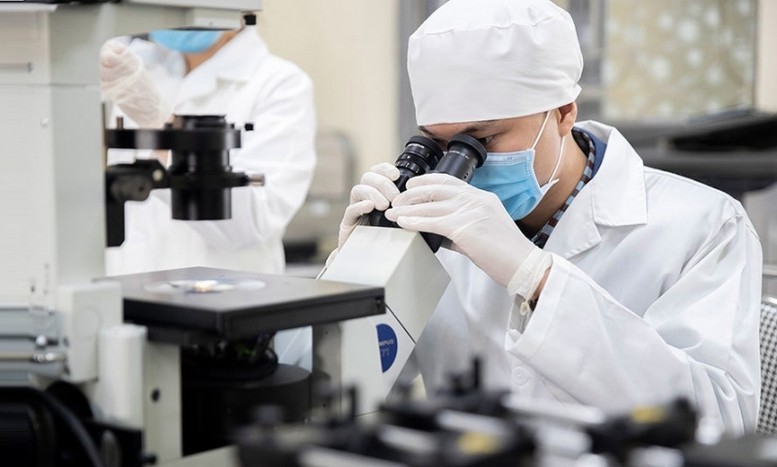 |
| For talented individuals working in state agencies, the Ministry of Science and Technology has recruited 33 people to work at agencies and units under the ministry (Illustrative photo) |
Separate mechanisms have also been introduced for digital technology and digital transformation. Specifically, digital technology talent is governed by Decree No. 353/2025/ND-CP; experts in science, technology, innovation and digital transformation fall under Decree No. 249/2025/ND-CP; while chief engineers and chief architects in science, technology, innovation and digital transformation are covered by Decree No. 231/2025/ND-CP.
According to the Ministry of Science and Technology, the continuous improvement of these mechanisms reflects a shift from a “human resource management” mindset to one focused on “competing to attract intellectual talent,” as science, technology, innovation and digital transformation become strategic growth drivers for the country.
Regarding implementation results, the ministry said it is carrying out policies to attract talented individuals to work in state agencies in accordance with regulations across its affiliated units.
To date, the ministry has recruited 33 individuals into agencies and units under the ministry through Decree No. 179/2024/ND-CP. All information will be updated in the National Database on Vietnamese Talent managed by the Ministry of Home Affairs.
In addition, several units under the ministry, including the National Digital Transformation Agency, are continuing to develop plans for recruiting civil servants and public employees under talent attraction mechanisms.
For newly issued policies targeting young scientific talent, talented young engineers and digital technology talent, the Ministry of Science and Technology is coordinating with ministries, sectors and localities to implement them and compile results in accordance with regulations.
The ministry said the synchronized policy framework is expected to create a foundation for identifying, attracting, utilizing and retaining high-quality science and technology personnel, especially in core and strategic technology sectors.
Up to VND1 Billion Per Year for Outstanding PhD Candidates
Alongside talent attraction policies, the Ministry of Science and Technology has also begun shifting toward direct investment in high-quality young researchers.
Most recently, the ministry launched the “Support Program for Outstanding Doctoral Candidates for 2026-2030” (VREF), featuring support of up to VND1 billion per year for each outstanding doctoral candidate with innovative and breakthrough research proposals, provided the host institution meets implementation requirements.
According to Dao Ngoc Chien, Director of the National Foundation for Science and Technology Development, the program was built on the view that doctoral candidates are central to scientific research activities, directly carrying out in-depth research and generating technological breakthroughs.
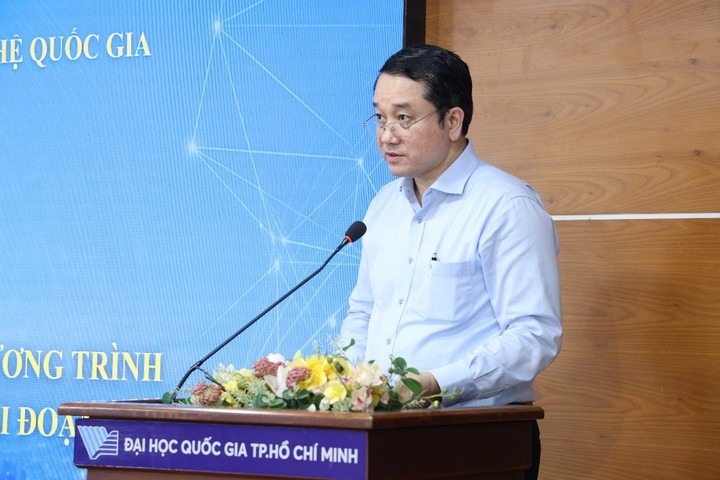 |
| Director of NAFOSTED, Dao Ngoc Chien, shared this at the workshop (Photo: Vietnam.vn) |
To be selected, doctoral candidates must meet four major criteria groups: the quality and creativity of research proposals; the candidate’s professional capacity; the supervisor’s qualifications; and the research infrastructure and technical conditions of the host institution. Applications will be competitively evaluated within each field and ranked from highest to lowest.
The program not only tightens entry standards but also imposes high output requirements. Supported doctoral candidates must publish in Q1 international journals or produce valuable inventions and patents.
“This is a benchmark reflecting the quality of doctoral candidates, supervisors and training institutions alike,” a representative of the National Foundation for Science and Technology Development emphasized.
Under the program design, the maximum support level of VND1 billion per year is not a uniform grant for all doctoral candidates but is based on specific budget proposals and approval by review councils.
Dao Ngoc Chien said the substantial funding would help young researchers confidently pursue long-term research while also increasing autonomy for universities and research institutes.
The program also applies supervision and evaluation mechanisms based on implementation progress. In cases where candidates fail to achieve expected results despite following procedures correctly, funding will not be reclaimed. However, intentional violations will be handled in accordance with the law.
This is the first time the Ministry of Science and Technology has launched a large-scale support program dedicated specifically to doctoral candidates, marking a shift from training support to direct investment in research activities.
Investing in Young Scientists to Drive National Technological Breakthroughs
Under the plan, the VREF program will select around 100 doctoral candidates each year, with support lasting no more than three years. The broader goal is to establish about 20 strong research groups nationwide, creating a young scientific workforce capable of mastering technology and contributing to the development of Vietnam’s strategic technology products in the new phase.
However, according to experts, the key issue now lies not only in issuing policies but in effectively implementing them in practice.
For many years, attracting and retaining science and technology talent has faced numerous barriers, including a research environment that is not yet fully internationally competitive, rigid personnel mechanisms, complicated financial procedures for research activities, and significant disparities in remuneration between the public and private sectors.
Amid increasingly fierce global competition for high-quality talent, the challenge is not only to “attract talented people” but also to create an environment where they can maximize their capabilities, be genuinely empowered and pursue long-term, breakthrough research.
The Government’s continuous issuance of new mechanisms, together with major investment programs for outstanding doctoral candidates, is seen as a sign that policy thinking is shifting strongly from incentive-based support toward strategic investment in high-quality science and technology human resources.
However, for these policies to truly take effect, the decisive factor remains implementation by ministries, sectors, local authorities, universities and research institutes.
If implemented in a synchronized, transparent and substantive manner, the new policies are expected to help build a generation of young scientists capable of mastering core technologies and gradually enhancing Vietnam’s national competitiveness in science and technology during the country’s next development phase.
 | PolyU, HKIAA sign MoU to Cultivate Young Talents and Conduct Research for the Aviation Industry The Hong Kong Polytechnic University (PolyU) and The Hong Kong International Aviation Academy (HKIAA) signed a two-year memorandum of understanding (MoU) with an aim of ... |
 | 3,000 ITE students to be equipped with workplace skills and competencies On 8 February 2024, Prudential Singapore ("Prudential") and the Institute of Technical Education (ITE) signed a Memorandum of Understanding (MOU) to support students in developing ... |
Related Stories
 National
Notable Policies Taking Effect from March 2026
 National
Vietnam News Today (May 22): Stronger Vietnam-Israel Cooperation Expected in Science, Innovation and Labor
Recommended
 Handbook
New VAT Refund Rules for Goods Purchased by Foreigners and Overseas Vietnamese upon Departure from Vietnam
 Handbook
Conclusion No. 57-KL/TW: Highest Priority to the Search, Recovery, and Identification of Fallen Soldiers' Remains
 Handbook
Elderly to Receive Free Annual Health Check-ups at Least Once a Year In Vietnam
 Handbook
Hanoi Recognizes Additional Historical and Scenic Sites
 Handbook
Plan for Organizing “Vietnam Culture Day” for 2026-2030 Period
 Handbook
Photo Exhibition by Three French Photographers on Vietnam
 Handbook
Free Film Week for International Children's Day Held Nationwide
 Handbook