
Promoting Vietnamese as Accessible and Friendly Language
 | Global Network for Vietnamese Language and Culture Teaching to Launch Soon |
| Three Core Goals of Global Network for Teaching Vietnamese Language and Vietnamese Culture |
- What led the University of Languages and International Studies, Vietnam National University, Hanoi to establish the program “Teaching Vietnamese as a Foreign Language” at this time?
The launch of the program “Teaching Vietnamese as a Foreign Language,” under the major of Vietnamese Language and Culture, stems from urgent and practical needs both domestically and internationally. As Vietnam becomes increasingly integrated into the region and the world, the number of foreigners wanting to learn Vietnamese for study, work, research, or cultural exchange has grown rapidly. At the same time, the overseas Vietnamese community is paying greater attention to preserving and promoting the mother tongue for younger generations. However, the number of professionally trained, highly qualified Vietnamese language teachers remains very limited.
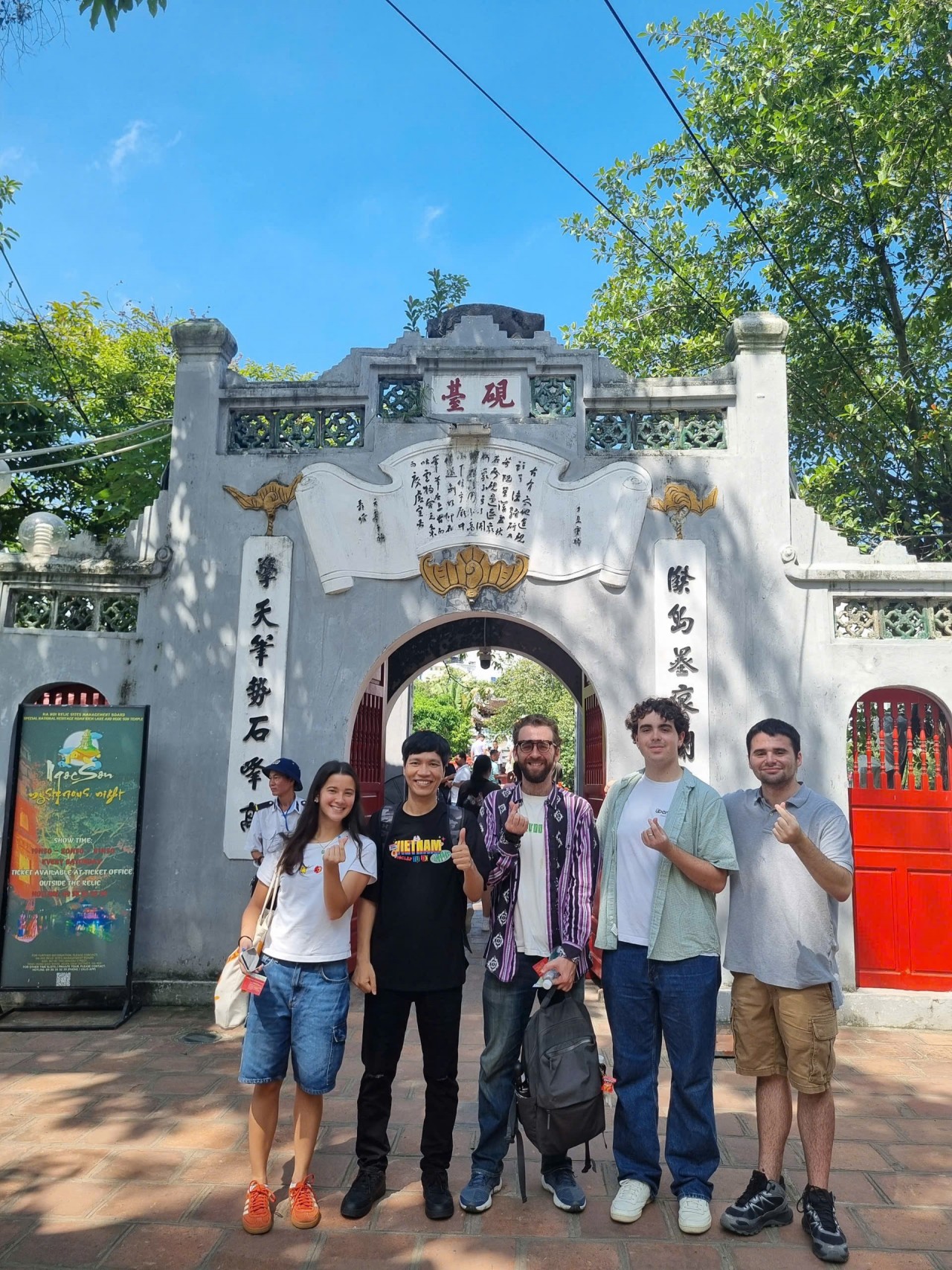 |
| Dr. Tran Huu Tri with American students participating in Vietnamese cultural activities. |
As a leading institution in foreign language education, the University of Languages and International Studies recognized the need to train professional teachers who possess not only linguistic knowledge but also pedagogical skills and intercultural competence to meet real-world demands.
The program includes systematic studies and research on the Vietnamese language and culture; cultural immersion through practical sessions; 100% of lecturers hold master’s or doctoral degrees with over 10 years of experience; opportunities for hands-on teaching practice through short-term Vietnamese language courses at the university; and direct interaction and connection with Vietnamese students in class.
- What is the main difference between “Teaching Vietnamese as a Foreign Language” and traditional language or pedagogy programs?
The key difference lies in the target learners and the teaching approach. While traditional language and pedagogy programs are mainly designed for native speakers or those learning a language as a professional tool, the “Teaching Vietnamese as a Foreign Language” program under the Vietnamese Language and Culture major is aimed at teaching Vietnamese to both Vietnamese and international learners.
This requires a training curriculum that combines in-depth knowledge of the Vietnamese language with modern foreign language teaching methodologies, while integrating cultural and intercultural elements to help learners approach Vietnamese in a comprehensive, effective, and context-appropriate manner.
- How do you assess job opportunities and the potential for exporting Vietnamese language teachers abroad in the coming years?
I believe the job prospects in this field are very promising. Not only do Vietnamese language centers, research institutes, and universities abroad have a growing demand for qualified teachers, but within Vietnam, programs for foreigners and overseas Vietnamese are also expanding rapidly.
In addition, many countries in the region - such as Laos, Cambodia, South Korea, Japan, and Australia - are increasingly emphasizing the teaching of Vietnamese as part of their multicultural workforce development strategies. With a well-structured training program, I am confident that Vietnam can build and export a high-quality workforce of Vietnamese language teachers, thereby promoting the global presence of the Vietnamese language in a systematic and sustainable way.
 |
| Foreign students experiencing Vietnamese cuisine. |
- In your opinion, what are the key factors for Vietnamese to become a “bridge language” in the region and the world?
The key factors are practicality, friendliness, and a national strategic approach to promoting the Vietnamese language.
First, Vietnamese needs to be linked with concrete opportunities in economics, education, and culture to become more appealing to learners.
Second, building the image of Vietnamese as a friendly language associated with a rich and distinctive culture will naturally motivate learners.
Finally, a national strategic policy is essential to support Vietnamese language teaching abroad—covering investment in learning materials, technology, teacher training, and bilateral cooperation. Only when Vietnamese is recognized as an effective communication tool with added value can it truly become a “bridge language” in the region.
- In the future, what goals will the program aim for: establishing an international Vietnamese proficiency certificate, developing digital learning materials, or expanding global online training?
All of these are strategic directions for the program. In the immediate term, developing a standardized system for assessing and certifying Vietnamese language proficiency at the international level is the top priority. This will create both legal and academic foundations for global recognition of learners’ proficiency. At the same time, developing digital learning materials, applying technology to teaching and assessment, and expanding cross-border online training are inevitable trends.
The long-term goal is to build a modern, flexible, and globally integrated Vietnamese language teaching ecosystem—capable of meeting the demands of globalization and digital transformation in language education.
- Thank you very much!
 | Brand New Vietnamese Language Training Program Launches in Hanoi On May 18, in Hanoi, the University of Languages and International Studies (Vietnam National University Hanoi) held a launching ceremony for the training program teaching ... |
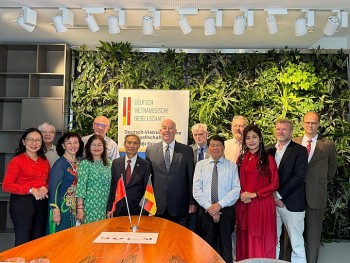 | Friendship Associations Promote Development of Vietnamese Language in Germany The Vietnam-Germany Friendship Association is conducting a working trip to Germany. |


Most read


Related Stories
 Friendship
I Have Become a Citizen of Viet Nam
 Overseas Vietnamese
Vietnamese Language Classes Held at Multiple Locations in Poland
 Overseas Vietnamese
Honoring Eight Individuals for Promoting Vietnamese Abroad
 Overseas Vietnamese
Creating Vietnamese Language Space for Vietnamese Community in Japan
In topics
 Expats in Vietnam
Three Foreign Writers Spreading Vietnamese Language
 Overseas Vietnamese
Dr. Tra My Reveals the Secret to Helping Her Child Become Fluent in Vietnamese
 Viets Home
Press and Media: Expanding Global Reach of Vietnamese Language
 Overseas Vietnamese
Vietnamese Language "Flourishes" in the Land of Tulips
Recommended
 Viets Home
Healthy Body, Strong Mind
 Viets Home
Career Guidance Through Familiar Everyday Activities
 Viets Home
Girls Takeover Program Creates Lasting Impact
 Viets Home
Brighter Streets, A Livelier Village
Popular article
 Viets Home
Sports Bring Students, Families and Schools Together
 Viets Home
Learning to Be Parents
 Viets Home
Ca Mau Launches 45-day Health Check-ups and Screenings Campaign for the Public
 Viets Home