
Strengthening Community Connections in the Fight Against HIV/AIDS
 | Vietnam to Share PrEP Treatment Experience at International AIDS Conference |
| US Helps Vietnam Maintain HIV/AIDS Community Infection Rate Below 0.3% |
Promoting the role of community networks
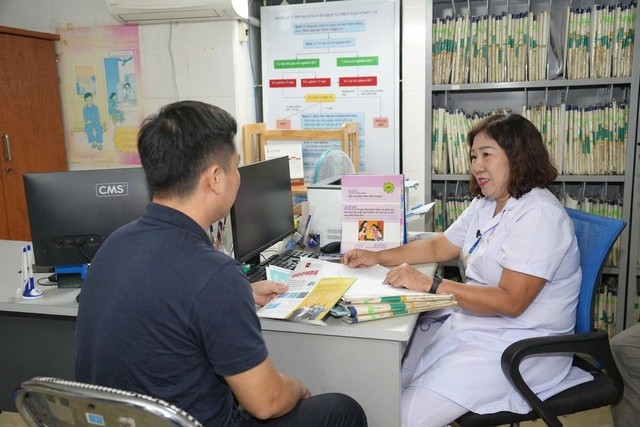 |
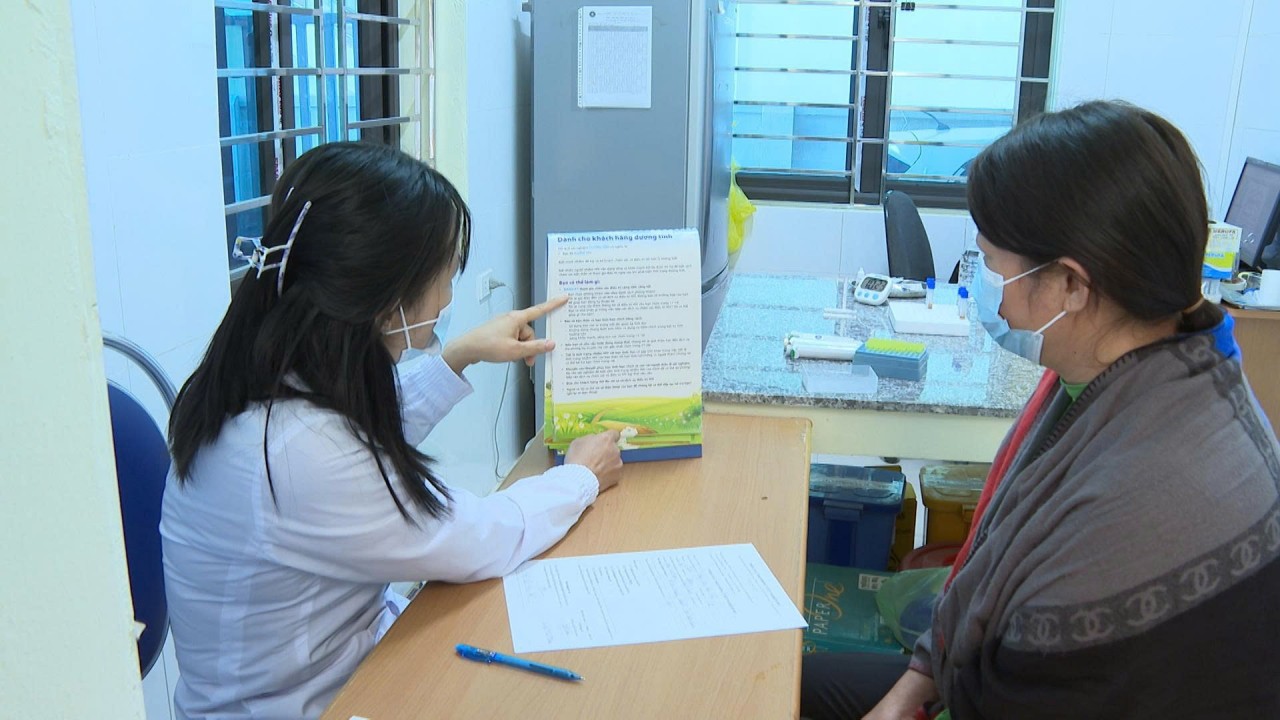
| Illustrative photo: Counseling and treatment support for an HIV patient. (Photo: VGP/Thuy Chi) |
According to the Nghe An Center for Disease Control, although HIV/AIDS prevention and control efforts in Nghe An have achieved many positive results, the risk of HIV transmission remains and is showing notable shifts among risk groups. The center reported that from the detection of the province’s first HIV case through the end of 2025, Nghe An recorded 11,169 HIV infections, including 4,727 deaths, with 6,442 people currently living with HIV under management.
As of September 2025, the province had documented 11,148 reported HIV cases, including 6,677 cases progressing to AIDS and 4,716 deaths related to HIV/AIDS. In the first six months of 2025 alone, Nghe An detected 70 new HIV infections, while 23 people died from AIDS-related causes.
Against this backdrop, the role of community-based organizations, peer networks, and support projects has become increasingly evident. According to representatives of the Center for Supporting Community Development Initiatives (SCDI), in 2025 community groups reached more than 3,700 clients from high-risk populations, conducted nearly 3,000 HIV tests, and identified 37 new positive cases.
Many experts believe that to improve the effectiveness of HIV/AIDS prevention and control, it is necessary to further strengthen the role of peer networks in reaching patients, promoting behavioral change communication, and supporting treatment adherence. In particular, in remote and isolated areas, community networks play a crucial role in connecting, referring, and assisting patients in accessing healthcare services.
To move toward the goal of ending the AIDS epidemic by 2030, experts say Nghe An should continue expanding multi-platform communication campaigns, increasing community-based HIV testing, strengthening outreach worker networks, and enhancing inter-sectoral coordination in patient management and treatment.
To realize this goal, Nghe An is continuing to implement a wide range of key measures in a synchronized manner. Pham Dinh Du, Deputy Director of the Nghe An Center for Disease Control, said that in the coming period, the province will continue expanding counseling, early testing, and treatment services at 25 HIV/AIDS treatment facilities; strengthen health communication and education down to villages and schools; and further develop community outreach worker networks, especially in mountainous, remote, and isolated areas.
At the same time, Nghe An will continue maintaining and expanding PrEP and Methadone programs, particularly for MSM, transgender people, and partners of people living with HIV. The province will also intensify efforts to reduce stigma and discrimination so that people living with HIV can live, work, and integrate into society like everyone else.
Close coordination between educational institutions and local healthcare facilities
According to data from the Hai Phong Center for Disease Control, as of March 2026, the number of people living with HIV in Hai Phong stood at 9,116, while the cumulative number of HIV/AIDS-related deaths reached 7,358, including 15 recorded deaths during the reporting period. Notably, 99.4% of patients possess health insurance cards, ensuring uninterrupted and continuous treatment. The 12-month treatment retention rate reached 96%, while treatment discontinuation and mortality rates fell to only around 1.2-1.3%. In addition, the program to prevent mother-to-child HIV transmission achieved positive results, with 14,758 pregnant women receiving HIV counseling and testing services.
The city is currently implementing a wide range of coordinated HIV/AIDS prevention and control programs, including community outreach initiatives, HIV counseling and testing services, Methadone maintenance treatment programs for drug addiction, and HIV/AIDS care and treatment services.
The HIV prevention model for university students in Hai Phong has been implemented since 2024 with the goals of raising students’ awareness and knowledge about HIV/AIDS prevention and control; providing several HIV/AIDS-related services for students, including self-testing kits and intervention supplies; offering HIV counseling and testing for students at high risk; and referring and connecting students to PrEP, PEP, or ARV treatment services when needed.
The Hai Phong Center for Disease Control, the Hai Phong Confederation of Labour, Vietnam Maritime University, group leaders, members, and collaborators from CBOs (community-based organizations) have discussed and proposed several solutions, including innovating communication methods and formats, diversifying outreach approaches, leveraging the strengths of digital platforms to improve workers’ access to information, and mobilizing project resources to support communication activities in industrial parks.
Within universities, there should be close coordination between educational institutions and local healthcare facilities to provide support when necessary and to create favorable conditions for students to easily access services such as HIV counseling and testing, pre-exposure prophylaxis (PrEP), and ARV treatment.
In the context of declining international aid, the Hai Phong Center for Disease Control will continue working closely with industrial parks, universities, and CBO groups to implement sustainable HIV/AIDS prevention and control activities. The city will further expand access to PrEP and ARV treatment services for high-risk groups. This coordination aims to fill financial gaps, make use of community human resources, and ensure that essential healthcare services remain uninterrupted.
 | Vietnam, US Celebrate 20 years of Cooperation for HIV/AIDS Prevention and Control For 20 years, the cooperation program between the United and Vietnam on HIV/AIDS prevention and control helped more than 144,000 Vietnamese people living with HIV ... |
 | Vietnam Leads Asia-Pacific in HIV Pre-exposure Prophylaxis Pre-exposure prophylaxis (PrEP) in Vietnam officially started in 2020, and just after three years, the cumulative number of PrEP clients has already reached 67,000, with ... |



Most read




Related Stories
 Viet's Home
“Extended Arms” in HIV/AIDS Prevention and Control
 Viet's Home
Innovating Approaches to HIV/AIDS Prevention and Control
 Viet's Home
Vietnam Leads Asia-Pacific in HIV Pre-exposure Prophylaxis
 Friendship
US Helps Vietnam Maintain HIV/AIDS Community Infection Rate Below 0.3%
Recommended
 Viet's Home
Vietnam Allocates VND 50 Billion to Lai Chau for Post-Flood Recovery
 Viet's Home
Da Nang Contributes VND 1 Billion to Quang Tri's Gratitude Fund
 Viet's Home
Vietnamese Intellect Showcased at International Economics Olympiad 2026
 Viet's Home
Hanoi Steps Up Care for People with Meritorious Service
Popular article
 Viet's Home
Lai Chau Calls for Support to Help Residents Recover from Flood Damage
 Viet's Home
Vietnam to Host Its First International Olympiad in AI
 Viet's Home
Dak Lak, Mondulkiri Sign Memorandum of Understanding for Cooperation
 Viet's Home