
 Vietnam News Today (Aug. 11): Vietnam, Australia Look to Build New Growth Drivers, Expand Economic Ties Vietnam News Today (Aug. 11): Vietnam, Australia Look to Build New Growth Drivers, Expand Economic Ties |
 Vietnam News Today (Aug. 12): Vietnam and Australia Chart New Areas of Cooperation Vietnam News Today (Aug. 12): Vietnam and Australia Chart New Areas of Cooperation |
Vietnam News Today (Aug. 16): Vietnam, New Zealand Advance Strategic Research Cooperation
Vietnam News Today (Aug. 16): Vietnam, New Zealand advance strategic research cooperation, plan Vietnam Center; US supports Vietnam in accelerating identification of martyrs’ remains; Courts of Vietnamese, Cambodian, Lao border provinces step up judicial cooperation; Closer destinations drive Vietnamese travel demand in second quarter.
| Vietnam News Today (Aug. 16) notable headlines Vietnam, New Zealand advance strategic research cooperation, plan Vietnam Center US supports Vietnam in accelerating identification of martyrs’ remains Courts of Vietnamese, Cambodian, Lao border provinces step up judicial cooperation Closer destinations drive Vietnamese travel demand in second quarter Central Vietnam braces for intense heat through August 18 Hanoi seeks Russian expertise, investment for urban railway development Maritime culture guides northern port city of Hai Phong’s global reach Artisan breathes new life into Vietnam’s traditional toy figurine art International tour operator growth signals increased travel demand |
 |
| The delegation from the Ho Chi Minh National Academy of Politics and the Central Theory Council works with the New Zealand Asia Institute. (Photo: VNA) |
Vietnam, New Zealand advance strategic research cooperation, plan Vietnam Center
Research institutions from Vietnam and New Zealand have agreed to establish regular, substantive cooperation mechanisms, highlighted by a proposal to set up a Vietnam Center at the New Zealand Asia Institute (NZAI), University of Auckland.
The initiative was discussed during an working session between a high-level Vietnamese delegation, led by Prof. Dr. Nguyen Xuan Thang, Politburo member and Chairman of the Central Theory Council, and NZAI leaders, headed by Institute Director Associate Prof. Antje Fiedler.
The delegation’s visit formed part of academic exchanges surrounding the state visit to New Zealand by General Secretary of the Communist Party of Vietnam Central Committee and State President To Lam.
NZAI, a research center under the University of Auckland, focuses on New Zealand’s engagement with Asia while linking academics, businesses, and policy makers. During the meeting, both sides noted that the elevation of bilateral ties to a Comprehensive Strategic Partnership provides a solid political foundation to deepen academic and research collaboration.
NZAI leaders glowingly spoke of President To Lam’s state visit, stating it creates fresh impetus for materializing the Comprehensive Strategic Partnership. They also acknowledged Vietnam’s development achievements and its growing role regionally and in bilateral relations.
In discussions with New Zealand scholars, Prof. Dr. Nguyen Xuan Thang reaffirmed that Vietnam attaches great importance to deepening its Comprehensive Strategic Partnership with New Zealand and enhancing ties with South Pacific nations, cited VOV.
He stressed that strategic research bodies, including the Ho Chi Minh National Academy of Politics, the Central Theory Council, and NZA, should take a proactive role in research, analysis, and policy advisory to strengthen mutual understanding among governments, business communities, and the public.
Both sides agreed that future cooperation must move beyond isolated academic exchanges toward institutionalized, regular, and sustainable exchange mechanisms. On this basis, they identified key areas with strong potential for joint work, including international trade, digital transformation, artificial intelligence (AI), emerging technologies, green growth, renewable energy, circular economy, and energy transition.
Vietnam showed particular interest in New Zealand’s expertise in green growth and renewable energy. Discussions covered potential experience-sharing in wind power development, including offshore wind, as well as comprehensively addressing issues related to the environment, ecosystems, planning, and policy mechanisms.
The meeting also highlighted the role of the Vietnamese diaspora in New Zealand. With approximately 15,000 Vietnamese living, studying, and working in the country, including scientists, lecturers, experts, and entrepreneurs, the community represents a vital resource to advance bilateral ties.
Both sides agreed that Vietnamese experts in New Zealand can engage more deeply in research networks, policy advisory, and academic connectivity between the two nations, particularly in sectors where Vietnam faces high demand for international expertise. In this context, the proposed Vietnam Center at NZAI serves as a major initiative.
Under the initial framework, the center will be based at the University of Auckland but will operate beyond a single institution. It aims to mobilize a network of experts across multiple research facilities and universities in New Zealand, including those in Auckland and Wellington.
The model is expected to create a broader platform connecting scholars, research agencies, and experts from both countries, while supporting research on Vietnam, Vietnam-New Zealand relations, and shared economic, technological, and development issues.
US supports Vietnam in accelerating identification of martyrs’ remains
A delegation from the National Steering Committee for the Search, Collection and Identification of Martyrs’ Remains, led by Sen. Lieut. Gen. Nguyen Van Gau, Deputy Minister of National Defence and standing deputy head of the committee, held a working session with the Defense POW/MIA Accounting Agency (DPAA) under the US Department of War on August 14.
DPAA currently operates large-scale remains identification and skeletal anthropology laboratories in Hawaii and Nebraska, applying field archaeology, dental analysis, forensic anthropology and next-generation DNA sequencing to identify remains, including small or severely damaged fragments.
At the meeting, the two sides reviewed the results of cooperation in searching for servicemen missing in wartime. The search for US servicemen missing in action (MIA) has been one of the earliest areas of humanitarian cooperation between the two countries, spanning decades and involving hundreds of joint field operations.
Vietnam’s responsible, goodwill-based and unconditional cooperation has helped recover and repatriate the remains of hundreds of US servicemen, laying an important foundation for bilateral relations, according to VNA.
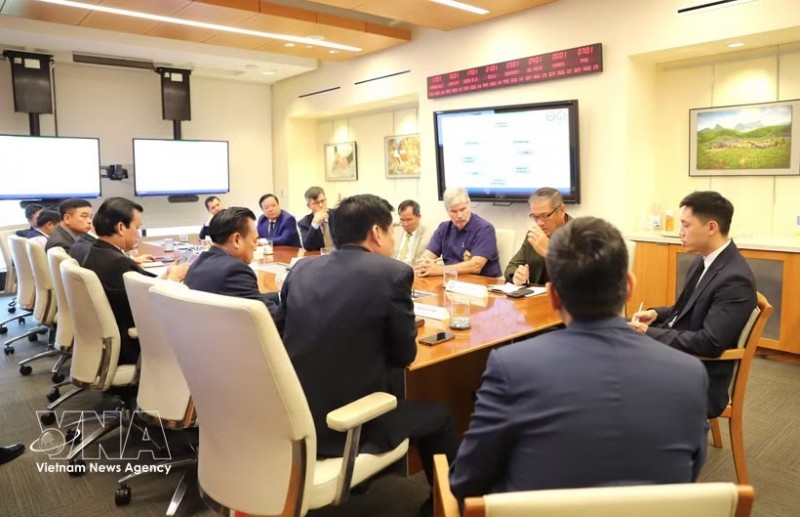 |
| An overview of the working session (Photo: VNA) |
The Vietnamese delegation called on US agencies to accelerate the declassification and transfer of relevant records and documents, and actively encourage US veterans to provide additional information on burial sites of Vietnamese servicemen.
It also proposed DPAA strengthen the sharing of technical procedures and transfer advanced solutions for DNA extraction and next-generation sequencing, including single nucleotide polymorphism (SNP) technology; optimise mitochondrial and nuclear DNA testing; share forensic skeletal anthropology procedures and new methods such as stable isotope analysis; and provide equipment, testing reagents and training programmes to enhance the professional capacity of Vietnamese specialists.
With its modern equipment, highly qualified personnel and advanced procedures, DPAA said it takes an average of around two years to conclusively identify a case. Given the large volume of remains Vietnam still needs to search for and identify, this presents a considerable challenge.
DPAA representatives affirmed that US agencies regard supporting Vietnam in the search for and identification of martyrs’ remains as a moral responsibility and a top priority, and will make every effort to provide the greatest possible support, particularly in areas where the US has expertise and Vietnam has pressing needs.
The meeting reached important areas of consensus and opened up new avenues of cooperation in addressing war aftermath, helping accelerate the search, collection and identification of martyrs’ remains in Vietnam, thereby easing the pain of war for families and further strengthening trust between Vietnam and the US.
Courts of Vietnamese, Cambodian, Lao border provinces step up judicial cooperation
The 8th conference of courts of border provinces of Vietnam, Cambodia and Laos took place in Phnom Penh, Cambodia, on August 14.
The event brought together delegations led by Chief Justice of the Supreme People’s Court of Vietnam Nguyen Van Quang, President of the Supreme Court of Cambodia Chiv Keng, and Chief Justice of the Supreme People’s Court of Laos Phayvy Syboualypha.
In his opening remarks, Chief Justice of the Supreme People’s Court of Laos Phayvy Syboualypha said the conference provided an opportunity for the judicial bodies of the three countries to exchange expertise, share experience and strengthen coordination in addressing issues arising in border areas.
He called on the sides to review cooperation outcomes over the past two years, draw lessons and map out more effective coordination in the time ahead.
Meanwhile, Chief Justice of the Supreme People’s Court of Vietnam Nguyen Van Quang welcomed increasingly substantive and effective cooperation among the three judicial systems.
He noted that after 16 years and eight editions, the conference has become an important forum for courts to share experience, strengthen mutual trust and understanding, and contribute to the friendship and cooperation among Vietnam, Cambodia and Laos.
According to Quang, against the backdrop of deeper international integration and growing economic, trade and investment exchanges, transnational crimes, particularly cyber-enabled crime and drug trafficking, as well as cross-border civil and commercial disputes, are on the rise. This requires stronger coordination and mutual assistance among judicial bodies to ensure law enforcement, uphold justice and build peaceful, friendly, stable and sustainably developing border areas, he said.
Quang spoke highly of the topics selected for this year's conference, describing them as practical issues requiring closer and more regular coordination among the judicial authorities of the three countries. The Supreme People’s Court of Vietnam, he affirmed, attaches great importance to and wishes to further foster cooperation among the three court systems, cited VNA.
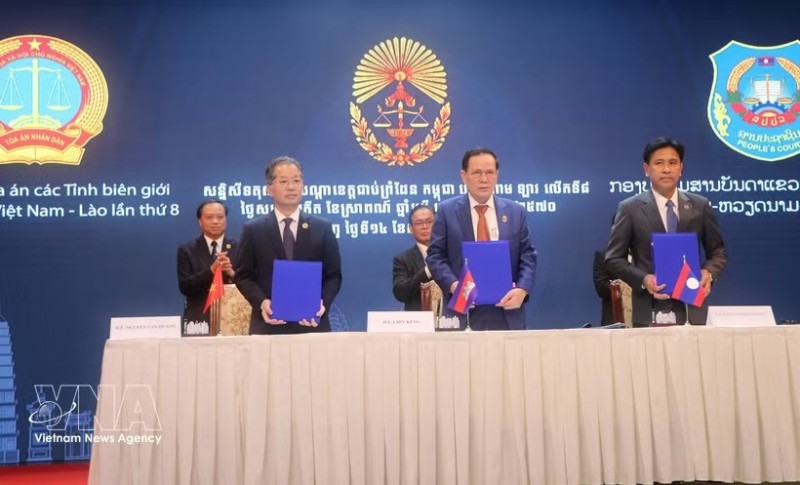 |
| The heads of the Vietnamese, Lao and Cambodian delegations sign the joint communiqué of the conference. (Photo: VNA) |
For his part, President of the Supreme Court of Cambodia said the conference offered an opportunity to review the implementation of the joint statement adopted in Da Nang in 2024, while strengthening cooperation in combating transnational crime and handling civil and commercial cases involving cross-border elements.
The conference focused on four key areas: reviewing implementation of the 2024 joint statement; sharing experience in preventing, combating and adjudicating technology-enabled fraud; improving the settlement of cross-border civil and commercial disputes; and adjudicating cross-border drug trafficking cases.
At the end of the conference, the three sides signed a joint communiqué, agreeing to further strengthen judicial cooperation.
On the sidelines, Quang held separate meetings with his Lao and Cambodian counterparts, Phayvy Syboualypha and Chiv Keng. The sides highly valued cooperation outcomes to date and agreed to continue delegation exchanges, enhance coordination and study the signing of new cooperation documents to deepen ties among the three judicial systems and deliver more practical results.
Earlier, on August 13, Chief Justice of the Supreme People’s Court of Vietnam Nguyen Van Quang paid a courtesy call on Cambodian King Norodom Sihamoni. The King applauded the organisation of the conference, describing it as a useful forum for the courts to meet, share experience and coordinate their work, contributing to the building of peaceful and friendly borders.
On August 15 morning, Quang visited the Vietnamese Embassy in Cambodia, where he was briefed by Ambassador Nguyen Minh Vu on Vietnam-Cambodia relations. He expressed his hope that the embassy will continue promoting friendship and mutual trust between the two countries
Closer destinations drive Vietnamese travel demand in second quarter
According to the Traveloka SEA Index Quarter II/2026 report, while tourist flows from across Southeast Asia are increasingly shifting towards East Asian destinations, growth in Viet Nam’s tourism sector is being driven mainly by the domestic market. Domestic travel is being promoted by coastal destinations such as Phu Quoc, Con Dao, Hoi An, and Da Nang.
Vietnamese travelers continue to favour beach and island destinations
Prestigious online travel platform Traveloka has released its Traveloka SEA Index report, providing an in-depth analysis of quarterly travel trends. The report is based on the platform’s proprietary search, research, and booking data across Southeast Asia.
The Traveloka SEA Index report recorded notable market movements in the second quarter of 2026, ranging from fast-growing destinations and emerging travel trends to changes in traveler behaviour. It provides useful insights for businesses and management agencies in developing tourism products and destinations.
Accordingly, Ho Chi Minh City, Ha Noi, and Da Nang continued to be the three most-booked destinations on the platform. Specifically, Ho Chi Minh City maintained its role as the country’s urban tourism hub, with approximately one in five domestic trips ending in the city. Meanwhile, Ha Noi maintained steady growth thanks to its cultural and historical advantages and diverse range of services.
Da Nang also recorded growth across multiple categories, from hotel bookings and attraction tickets to family travel. In particular, bookings for tickets to Sun World Ba Na Hills increased 132% year-on-year, reflecting the growing appeal of the coastal city’s experience ecosystem, cited NDO.
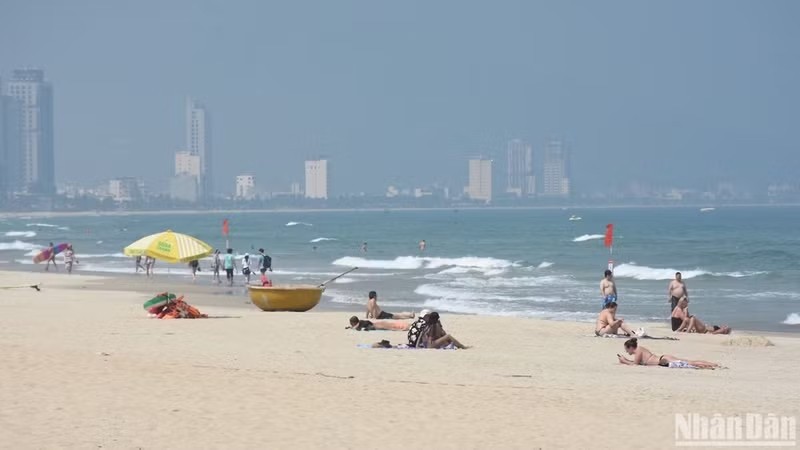 |
| Tourists explore My Khe Beach in Da Nang. (Photo: Anh Dao) |
While the ranking by booking volume features familiar destinations such as Ho Chi Minh City, Ha Noi, and Da Nang, the growth in domestic bookings reveals a different picture. The strongest driver of domestic tourism currently comes from Viet Nam’s islands and coastlines.
According to Traveloka SEA Index’s demand score — a measure of a destination’s booking growth compared with the overall market — Phu Quoc ranked first with a score of 100, while also recording an 86% year-on-year increase in bookings. It was followed by Con Dao with 96 points, Hoi An with 92 points, and Da Nang with 88 points.
Traveloka Viet Nam Director Huynh Thi Mai Thy analysed: “While travel demand in other markets across the region is shifting towards East Asia, tourism growth in Viet Nam continues to be driven by coastal destinations, led by Phu Quoc, Con Dao, Hoi An, and Da Nang.”
This shows that domestic travel demand is strongly concentrated on coastal destinations, where relaxation and cultural experiences are harmoniously combined.
Bangkok draws particular interest from Vietnamese travelers
According to Traveloka Viet Nam Director Huynh Thi Mai Thy, the Traveloka SEA Index report shows that Vietnamese travelers continued to favour destinations closer to home during the quarter. At the same time, demand for international travel is gradually picking up again.
“Bangkok was the most-searched destination among Vietnamese travelers this quarter, and travelers also tended to stay longer when visiting the city,” Huynh Thi Mai Thy said.
Tracking the next-destination score, which measures travelers’ level of interest through searches before they turn into bookings, the Traveloka SEA Index showed that Bangkok (Thailand) remained the most-searched international destination among Vietnamese travelers during the quarter.
With searches increasing 61% year-on-year, demand among Vietnamese travelers for Bangkok continues to rise. Vietnamese travelers also tended to stay longer in the city, with the average length of stay increasing from 3.2 to 3.6 nights compared with the same period a year earlier.
Singapore also remained among the international destinations with the highest number of bookings by Vietnamese travelers, with its growth momentum strengthening compared with the previous quarter.
In terms of the demand score for the international market, Tokyo (Japan) was the fastest-growing international destination among Vietnamese travelers, with bookings increasing by more than 80% year-on-year. It was followed by Seoul (the Republic of Korea), where Vietnamese travelers spent more than twice the average amount of a typical trip. Meanwhile, Kuala Lumpur (Malaysia) maintained steady growth, continuing to be a reliable and cost-effective choice for Vietnamese travelers.
Overall, the Traveloka SEA Index report shows a distinctive trend among Vietnamese travelers this quarter: while travel demand across the wider region is shifting towards East Asia, Vietnamese travelers are booking destinations closer to home and spending more on coastal destinations.
Drawing on data compiled from millions of searches and bookings across Southeast Asia, the Traveloka SEA Index report gives travelers an overview to help them identify their next destinations. At the same time, it provides tourism partners with data to better understand the constantly changing tourism landscape.
Central Vietnam braces for intense heat through August 18
Heatwaves with temperatures reaching 35 to 37 degrees Celsius, and over 37 degrees in some areas, are forecast to continue across Vietnam’s central city of Da Nang, eastern parts of provinces from Quang Ngai to Dak Lak, and Khanh Hoa on August 15.
According to the National Center for Hydro-Meteorological Forecasting, over the past 24 hours on August 14, the region from Thanh Hoa to Da Nang, alongside eastern portions of provinces from Quang Ngai to Dak Lak and Khanh Hoa, experienced heat, with intense heat in some locations.
Highest temperatures were commonly 35 to 37 degrees Celsius, exceeding 38 degrees at several stations, including Tuong Duong (Nghe An) at 38.3 degrees, Huong Son (Ha Tinh) at 38.3 degrees, Quang Ngai at 38.1 degrees, and Cam Ranh (Khanh Hoa) at 38.3 degrees. The lowest relative humidity ranged between 55 and 65 percent.
Over the next 24 to 48 hours, heat is expected to continue across Da Nang City, eastern parts of provinces from Quang Ngai to Dak Lak, and Khanh Hoa on August 15, with peak temperatures of 35 to 37 degrees Celsius, locally exceeding 37 degrees, and lowest relative humidity between 55 and 60%
On August 16, the area from Nghe An to Da Nang, along with eastern portions of provinces from Quang Ngai to Dak Lak and Khanh Hoa, will see temperatures of 35 to 37 degrees Celsius, topped by over 37 degrees in some places. Lowest relative humidity is expected at 55-60%.
The widespread heatwave in the central region is expected to continue through August 18. The weather forecasting agency has issued a level 1 natural disaster risk warning for heat, VOV reported.
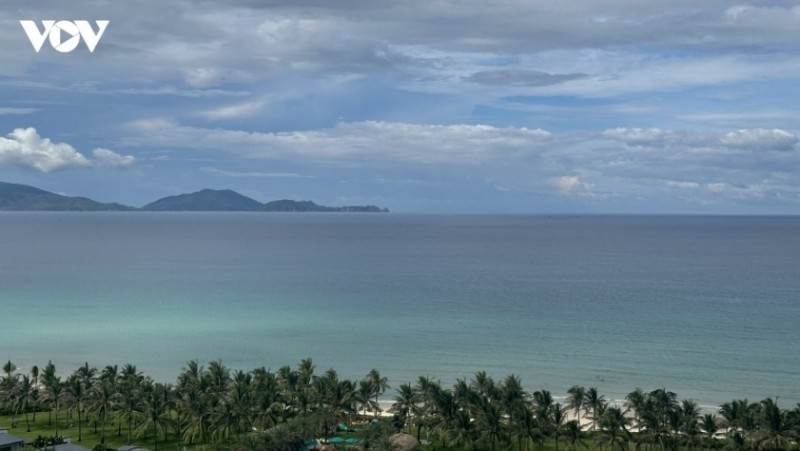 |
| Central Vietnam hit by prolonged, intense heatwave. |
“Due to the prolonged heat combined with low humidity, there is a heightened risk of residential fires and explosions amid surging electricity demand, as well as risks of dehydration for people exposed to high temperatures for extended periods.”
Due to the prolonged heat combined with low humidity, there is a heightened risk of fires and explosions in residential areas driven by increased electricity demand, as well as risks of dehydration for individuals exposed to high temperatures for extended periods.

Most read


Related Stories
 National
Viet Nam News Today (Oct. 17): Vietnam-EU Ties Set For New Heights With Concrete, Practical Outcomes
Viet Nam News Today (Oct. 17): Vietnam-Russia trade at structural turning point; Vietnam-EU ties set for new heights with concrete, practical outcomes; Vietnam-Denmark ties poised for new momentum after 55 years; European businesses remain upbeat about Viet Nam’s economic outlook
October 17, 2026 | 07:00
 National
Viet Nam News Today (Oct. 16): Vietnam, Australia Work to Turn Momentum Into Substantive Cooperation
Viet Nam News Today (Oct. 16): General Secretary and President To Lam to visit Denmark, EU, Belgium; Vietnam, Australia work to turn momentum into substantive cooperation; Liechtenstein Prime Minister Brigitte Haas to pay official visit to Viet Nam; Vietnamese role highlighted at ICIT 2026 in RoK.
October 16, 2026 | 08:57
 National
Viet Nam News Today (Oct. 15): Viet Nam, US Seek to Deepen Economic Ties, Promote High-Tech Investment
Viet Nam News Today (Oct. 15): Viet Nam gives top priority to relations with Laos; PM calls for stronger cooperation with Hamburg in ports, logistics, green energy; Viet Nam, US seek to deepen economic ties, promote high-tech investment; Timor-Leste and Viet Nam to increase parliamentary cooperation.
October 15, 2026 | 08:37
In topics
National
Viet Nam News Today (Oct. 17): Vietnam-EU Ties Set For New Heights With Concrete, Practical Outcomes
Viet Nam News Today (Oct. 17): Vietnam-Russia trade at structural turning point; Vietnam-EU ties set for new heights with concrete, practical outcomes; Vietnam-Denmark ties poised for new momentum after 55 years; European businesses remain upbeat about Viet Nam’s economic outlook
October 17, 2026 | 07:00
National
Viet Nam News Today (Oct. 16): Vietnam, Australia Work to Turn Momentum Into Substantive Cooperation
Viet Nam News Today (Oct. 16): General Secretary and President To Lam to visit Denmark, EU, Belgium; Vietnam, Australia work to turn momentum into substantive cooperation; Liechtenstein Prime Minister Brigitte Haas to pay official visit to Viet Nam; Vietnamese role highlighted at ICIT 2026 in RoK.
October 16, 2026 | 08:57
National
Viet Nam News Today (Oct. 15): Viet Nam, US Seek to Deepen Economic Ties, Promote High-Tech Investment
Viet Nam News Today (Oct. 15): Viet Nam gives top priority to relations with Laos; PM calls for stronger cooperation with Hamburg in ports, logistics, green energy; Viet Nam, US seek to deepen economic ties, promote high-tech investment; Timor-Leste and Viet Nam to increase parliamentary cooperation.
October 15, 2026 | 08:37
 National
Viet Nam News Today (Oct. 14): Vietnam, Cambodia Sign Defense Cooperation Plan for 2027
Viet Nam News Today (Oct. 14): Defense, security cooperation is an important pillar of Vietnam–Laos ties; Vietnam, Cambodia sign defense cooperation plan for 2027; HCM City expands economic cooperation with Eastern Europe; Russia grants Vietnamese citizens visa-free entry for stays of up to 30 days.
October 14, 2026 | 08:43
Recommended
 National
DNA Collection Offers Hope to Families of Fallen Soldiers
Implementing Plan No. 551/KH-CATP-P.QLHC dated 8 October 2026 issued by the Da Nang City Police on collecting DNA samples from relatives of fallen soldiers whose identities remain unknown in the city, on the morning of 15 October, Quang Phu Ward Police, in coordination with Da Nang City Police and relevant units, organized DNA sample collection for relatives of unidentified fallen soldiers at Hall No. 1 of the Quang Phu Ward Police headquarters.
October 17, 2026 | 15:16
 National
An Giang Collects DNA Samples to Identify Fallen Soldiers
As part of the 500-day campaign to search for and recover the remains of fallen soldiers, DNA sample collection from their relatives plays a vital role in identifying those who sacrificed their lives for the Fatherland. From 15 to 17 October 2026, An Giang Provincial Police will continue the second phase of DNA sample collection for 2026, targeting more than 1,000 samples at nine collection sites covering 92 communes, wards and special administrative zones across the province.
October 17, 2026 | 15:10
 National
Viet Nam News Today (Oct. 13): EU-Vietnam Partnership Set for Deeper Cooperation and Tangible Results
Viet Nam News Today (Oct. 13): EU-Vietnam Partnership set for deeper cooperation and tangible results; Vietnam and China step up parliamentary cooperation to deepen bilateral ties; Vietnam, Australia step up digital technology, AI cooperation; Vietnam’s economic transformation opens up major cooperation opportunities with EU.
October 13, 2026 | 08:28
 National
Lao Media Highlight Significance of Prime Minister Le Minh Hung’s Visit to Laos
On October 10, several Lao media outlets published articles praising the results of Vietnamese Prime Minister Le Minh Hung’s official visit to Laos, highlighting its significance in consolidating the great friendship, special solidarity, comprehensive cooperation and strategic cohesion between Viet Nam and Laos.
October 12, 2026 | 11:05
Popular article
National
Viet Nam News Today (Oct. 14): Vietnam, Cambodia Sign Defense Cooperation Plan for 2027
Viet Nam News Today (Oct. 14): Defense, security cooperation is an important pillar of Vietnam–Laos ties; Vietnam, Cambodia sign defense cooperation plan for 2027; HCM City expands economic cooperation with Eastern Europe; Russia grants Vietnamese citizens visa-free entry for stays of up to 30 days.
October 14, 2026 | 08:43
 National
Viet Nam Welcomes EU Decision to Remove It from Tax Non-Cooperative List
On October 10, Spokesperson of the Ministry of Foreign Affairs Pham Thu Hang said that Viet Nam welcomed the European Union’s (EU) decision to remove Viet Nam from its list of non-cooperative jurisdictions for tax purposes, describing it as recognition of the country’s reform efforts in recent years.
October 12, 2026 | 09:51
 National
Viet Nam News Today (Oct. 12): Viet Nam Pledges to Advance Rule of Law at Home, Uphold Law-based Global Order at UN
Viet Nam News Today (Oct. 12): Top Vietnamese legislator's China visit: Messages on parliamentary cooperation; Viet Nam pledges to advance rule of law at home, uphold law-based global order at UN; Viet Nam-Canada strategic partnership leverages strengths to consolidate positions; German-Vietnamese friendship association marks 50 years of nurturing people-to-people ties.
October 12, 2026 | 08:12
 National
Viet Nam News Today (Oct. 11): Viet Nam, Laos Strengthen Cooperation in Combating Transnational Crime
Viet Nam News Today (Oct. 11): PM calls Angkormilk project proof of Vietnamese businesses’ success in Cambodia; Viet Nam, Laos strengthen cooperation in combating transnational crime; Viet Nam welcomes EU removal from tax non-cooperative list; Viet Nam, Timor-Leste seek broader cooperation in rice, coffee and fisheries.
October 11, 2026 | 09:39