High expectations for Vietnam-US economic and trade ties
More than three decades after normalising relations, Vietnam and the US have made substantial progress in line with the aspirations and interests of the peoples of both countries, while making positive contributions to peace, stability and development in the Asia-Pacific region and beyond.
Among these advances, economic and trade cooperation is a key pillar. US businesses attach importance to the Vietnamese market, while a growing number of Vietnamese companies are investing in the US.
In this context, Party General Secretary To Lam’s working visit to the US to attend the opening meeting of the Board of Peace for Gaza from February 18 to 20, 2026, is expected to help create further opportunities to promote bilateral economic and trade cooperation.
According to Pham Quang Vinh, former Deputy Foreign Minister of Vietnam and former Ambassador to the US, the most important element over the three decades of Vietnam-US relations has been the building of trust and the sharing of interests between the two countries.
The same applies to economic and trade ties. Through agreements such as the Vietnam-US Bilateral Trade Agreement in December 2001 and Vietnam’s accession to the World Trade Organization in 2007, the two countries have moved closer, sharing common interests based on mutual understanding and trust.
The past 30 years of normalized relations have also coincided with Vietnam’s process of international integration.
Economic opening, reform, the implementation of Doi Moi(Renewal) process, expansion of the economy, greater public participation and deeper integration with the world have become new drivers of economic and trade development.
These factors have helped expand cooperation and strengthen competitiveness amid a constantly changing international environment, including in trade relations with the US, VOV reported.
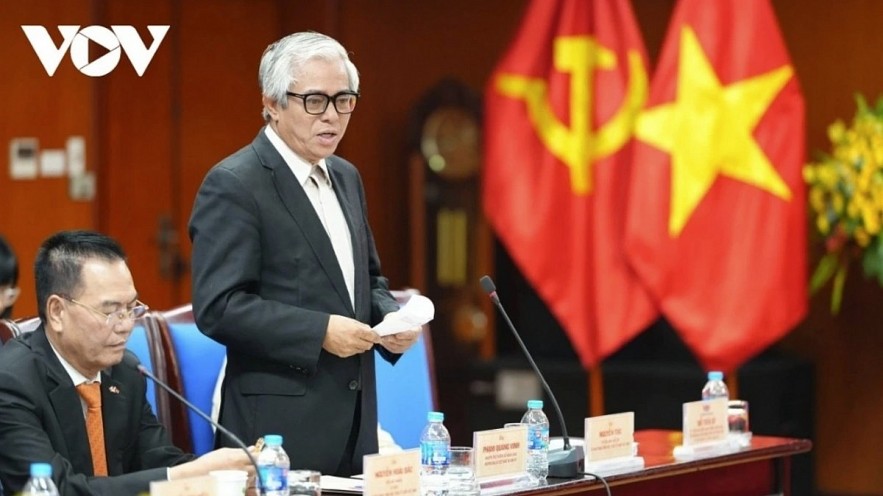 |
| Pham Quang Vinh, former Vietnamese Deputy Foreign Minister and former Ambassador to the US |
Former US Assistant Secretary of State and former Ambassador to Vietnam Daniel Kritenbrink said Vietnam has increasingly assumed an essential role and a central position in global supply chains.
Former US Assistant Secretary of State and former Ambassador to Vietnam Daniel Kritenbrink said that Vietnam’s economic achievements over the past three decades have closely paralleled progress in bilateral relations between the two countries. He noted that Vietnam’s integration into the international system is directly linked to the Doi Moi (Renewal) process and the normalisation of relations with the US, and said that trade between the two countries has made a major contribution to Vietnam’s economic development while helping strengthen its position in global supply chains.
When the two countries began establishing diplomatic relations in 1994-1995, bilateral trade stood at about US$500 million. Today, two-way trade between the two nations has reached roughly US$150 billion.
Ted Osius, Senior Vice President and Regional Managing Director of the US-ASEAN Business Council, and former US Ambassador to Vietnam, said Vietnam is drawing strong interest from U.S. businesses because they see clear opportunities in the country.
As one example, a representative of Intel recently said the company has trained 60,000 Vietnamese workers to basic engineering level. Many other US firms are similarly recognising the potential of Vietnam’s workforce.
“We currently represent around 184 of the largest companies operating in Southeast Asia, most of them from the United States, and their primary focus is Vietnam. They see opportunities where the government moves quickly to remove bottlenecks and introduces business-friendly policies. Beyond the open environment created by the government, another important factor is the workforce. Companies find highly motivated workers in Vietnam, with capabilities that continue to improve.”
Such figures underline Vietnam’s competitiveness, the openness of the US market to Vietnamese goods, and the growing purchasing power of the US market. Efforts by both sides to address tariff barriers have created additional opportunities for businesses in both countries.
The message the US business community seeks to convey through Party General Secretary To Lam’s working visit and his attendance at the opening meeting of the Board of Peace for Gaza is a desire to continue accompanying Vietnam.
According to Ted Osius, US businesses believe the development vision set out by the Vietnamese government is sound, and that growth driven by innovation and science and technology offers an appropriate path for Vietnam and the United States to grow together.
Belgian firms suggested to expand presence in Vietnamese market
Entering 2026 – the first year of implementing the Vietnam – EU Comprehensive Strategic Partnership, the Vietnam Trade Office in Belgium and the EU views this as a pivotal time to inject new momentum into trade ties, said Trade Counselor Tran Ngoc Quan.
Belgian enterprises need to strengthen their on-the-ground presence and engage more actively in major trade fairs in Vietnam to bring their products closer to local businesses and consumers, Tran Ngoc Quan, Trade Counselor and head of the Vietnam Trade Office in Belgium and the EU has said.
Speaking to the Vietnam News Agency (VNA)’s correspondent in Brussels, Quan said that in addition to seeking supply partners in Vietnam and optimizing production costs, Belgian firms should enhance customer care activities in the Southeast Asian country to improve competitiveness.
Several of Belgium’s key export items, notably chocolate and processed potato snacks, have gained popularity among Vietnamese consumers. It also boasts strong advantages in hi-tech agriculture and environmentally friendly products, which match the trend of sustainable consumption and Vietnam's development orientation for the years ahead.
However, he pointed out, high prices remain the biggest barrier. Transportation costs from Europe to Vietnam and other related expenses often make Belgian goods less competitive compared to products from other markets, especially given Vietnam’s income average.
Vietnam is also a highly open and competitive market, offering consumers easy access to goods from various countries, he added.
In contrast, Vietnamese goods enjoy considerable advantages in the Belgian market. With a strong export orientation, many Vietnamese products meet local consumer demand. Fresh agricultural produce, seasonal fruits and industrial goods have received positive feedback from Belgian partners when introduced.
A key factor underpinning this advantage is the EU – Vietnam Free Trade Agreement (EVFTA), now in its sixth year of implementation. Most Vietnamese exports to Belgium and the EU are subject to zero import tariffs, creating an increasingly clear competitive edge in Europe, according to the Trade Counselor.
Nevertheless, the path to the Belgian market and the wider EU remains challenging. Distribution is largely dominated by major retail chains, requiring Vietnamese enterprises to access these systems and comply strictly with quality, technical, environmental and sustainability standards, according to VNA.
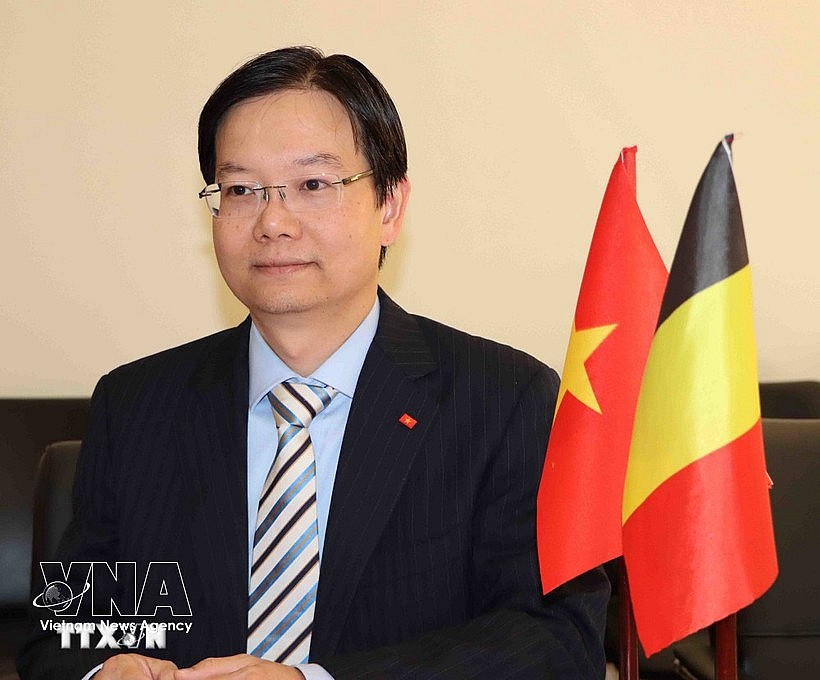 |
| Tran Ngoc Quan, Trade Counselor and head of the Vietnam Trade Office in Belgium and the EU (Photo: VNA) |
Emerging regulations on product life-cycle monitoring, “product passports” and recycling criteria will further raise requirements. Businesses must prepare thoroughly to secure a long-term foothold in Europe, he stated.
Overall, Quan noted that the economic structures of Vietnam and Belgium, as well as the EU, are complementary, providing a favorable basis for expanding cooperation. Strong political will from both sides and the gradual elimination of most tariff lines under the EVFTA offer additional momentum.
However, deeper and more sustainable market penetration hinges on improved access to importers and large distribution networks. As other countries may finalise free trade agreements with the EU in the coming years, Vietnam needs to act proactively by increasing participation in international trade fairs, stepping up trade promotion and organising product and regional festivals in key markets to enhance brand recognition.
Beyond meeting current standards, Vietnamese enterprises should embrace green, clean and efficient production models, with greater attention to recycling and product life-cycle management. Strengthening science and technology cooperation with the EU, a global leader in these fields, would also help improve product quality and increase added value, he suggested.
Entering 2026 – the first year of implementing the Vietnam – EU Comprehensive Strategic Partnership, the Vietnam Trade Office in Belgium and the EU views this as a pivotal time to inject new momentum into trade ties, Quan said.
He further shared that the office plans to build a database of EU food enterprises, coordinate in organising Vietnam Day and ASEAN Day events, enhance business connectivity, promote culture and tourism, and foster cooperation in green sectors such as ports, energy transition and hydrogen. It will continue supporting enterprises in partner search, verification and transaction facilitation while addressing any issues emerging to safeguard legitimate interests of relevant parties.
These efforts are expected to help Vietnam's trade relations with Belgium and the EU to develop more substantively, effectively, and sustainably in the coming time.
Vietnamese in France cherish traditional practices during Tet
Vietnamese Ambassador to France Trinh Duc Hai, together with staff of the embassy, representatives of Vietnamese agencies in the country and a large number of overseas Vietnamese, visited the Truc Lam Zen Monastery and Khuong Viet Pagoda on February 17, the first day of the Lunar New Year, to pray for peace for their families and the homeland.
Hai extended New Year greetings to the resident monks and nuns as well as the Vietnamese community in France, expressing his hope that the expatriates will continue to uphold solidarity, integrate actively into the host society and make practical contributions to the Vietnam – France friendship while maintaining close ties with their homeland.
On the first day of the Year of the Horse, the Truc Lam Zen Monastery in Villebon-sur-Yvette welcomed a large number of visitors. In the tranquil setting, Buddhists and overseas Vietnamese offered incense and prayers for a peaceful and favorable year, family harmony and their children’s progress in study and life, cited VNA.
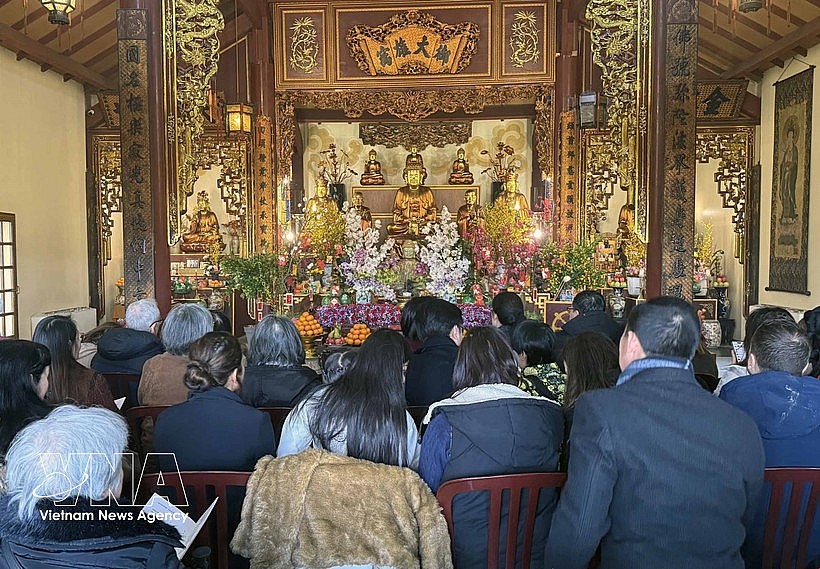 |
| The Vietnamese community in France pray for peace at the Truc Lam Zen Monastery. (Photo: VNA) |
In addition to the New Year’s Eve gathering and early spring tea held on February 16 and the full-moon prayer ceremony scheduled for March 1, the monastery is organising chanting and requiem rituals on February 17–18 and 22.
Meanwhile, Khuong Viet Pagoda – a familiar spiritual and cultural venue for the Vietnamese community in France – also drew many worshippers. On the first day of the year, Most Venerable Thich Tinh Quang presided over a ceremony praying for national peace, prosperity and the well-being of Buddhist followers.
Speaking to VNA correspondents, the abbot said that alongside religious activities, the pagoda has maintained various community programs such as Vietnamese language, flower arrangement and cooking classes, along with the introduction of traditional cuisine, helping preserve the national cultural identity among overseas Vietnamese.
Like their fellows at home, visiting pagodas at the beginning of the year has become a cherished spiritual practice for Vietnamese in France. Despite living far from their homeland, they continue to uphold this tradition as a way to connect with their roots, foster community bonds and express hopes for a peaceful and prosperous new year for both their families and Vietnam.
Vietnamese football in 2026: Goals and ambitions to rise
The year 2026 marks not only a new chapter in time, but also a convergence of ambition, belief and long-nurtured dreams for Vietnamese football.
A pivotal year for Vietnamese football
Amid the vibrant atmosphere of spring, fans have every reason to expect a defining year, one in which Vietnamese football sets clear targets while carrying great hopes.
Building on a solid foundation
As 2026 begins, Vietnamese football has laid out a series of important objectives, reflecting its aspiration to expand its regional stature and strengthen its continental standing. Notably, seven national teams have qualified for Asian finals this year - a figure that highlights both depth and balanced development across the training system.
Beyond the numbers, the outstanding campaign of Vietnam’s U23 team at the 2026 AFC U23 Championship - finishing third overall - stands as a powerful affirmation of both achievement and ambition on the regional stage.
Launching their campaign in the early days of 2026, the men’s futsal team did not fully meet their target in terms of results. However, amid a process of rejuvenation, a quarterfinal exit against defending runners-up Indonesia was considered acceptable.
For the national team, the central mission is to defend the ASEAN Cup title set to take place mid-year. After past successes, pressure is inevitable. Yet it is precisely that pressure which can serve as motivation for head coach Kim Sang Sik and his players to reaffirm their status as regional champions.
Beyond achievements, supporters are also expecting a refreshed image from the 2026 national squad - a blend of youthful energy, experience and important reinforcements from newly naturalized players.
Meanwhile, the women’s national team remains a major source of pride as it looks toward the AFC Women’s Asian Cup finals, aiming to maintain its position among the region’s elite and continue narrowing the gap with continental powerhouses. The women’s team’s success in recent years reflects sound investment and demonstrates the sustainable potential of Vietnamese football when guided by a long-term strategy.
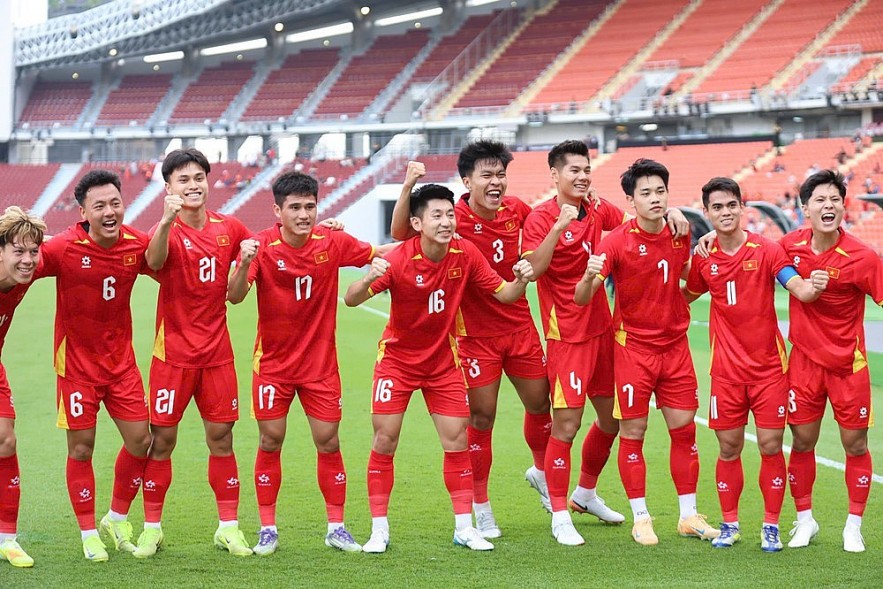 |
| Fans expect 2026 to mark a new ascent for Vietnamese football on regional and continental stages. |
At youth level, regular appearances at Asian finals are no longer viewed as surprises but are gradually becoming the norm. This clearly reflects the efforts of the Vietnam Football Federation in building strong foundations, from youth training and coaching to management and long-term development orientation.
Confidence fueled by a new generation
If goals provide direction, expectations are the flame that sustains fans’ passion. In 2026, the greatest hope for Vietnamese football comes from the strong imprint left by the U23 generation of 2025 - a group that delivered positive emotions through a modern, confident and ambitious style of play.
What U23 Vietnam demonstrated went beyond results. More importantly, it was their fighting spirit, cohesion and ability to adapt under pressure. That performance is seen as a precious psychological boost, reinforcing belief that Vietnamese football is moving in the right direction. As young players mature, they are not only the future but also the present of the national team.
Supporters expect 2026 to witness a seamless blend between the experience of established pillars and the dynamism of the emerging generation. A team no longer dependent on a few individuals, but operating as a collective with depth, resilience and an unyielding desire to win.
For Vietnamese football, 2026 is not merely a year of tournaments. It is a year of belief, anticipation and hope. From today’s clearly defined objectives, fans hope the national game will reap a fulfilling spring, so that each time the ball rolls, emotions rise once more in the hearts of millions.
 | Vietnam News Today (Feb. 14): Party chief receives US Assistant Secretary of State Vietnam News Today (Feb. 14): Party chief receives US Assistant Secretary of State; NA Chairman presents Tet gifts to policy beneficiary, disadvantaged families in Can ... |
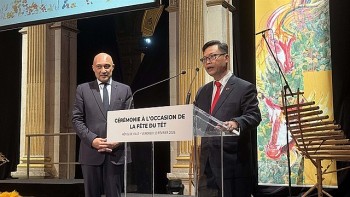 | Vietnam News Today (Feb. 16): Vietnamese Tet Celebrated at City Hall in Paris Vietnam News Today (Feb. 16): Vietnamese, Chinese products gain popularity: Trade Counselor; Vietnam–Thailand relations at their strongest as strategic vision deepens; Vietnamese Tet celebrated at ... |