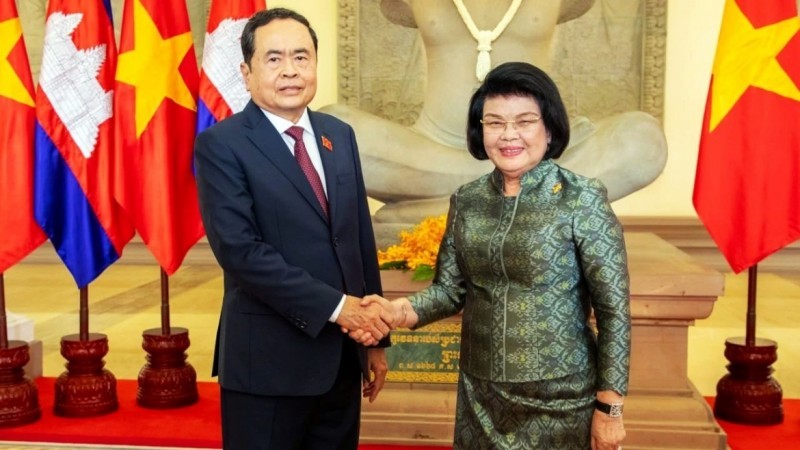
Party and State leaders pay tribute to heroic martyrs, President Ho Chi Minh
Over the past 79 years, the Party, the State, and the people of Vietnam have always paid attention to and cared for those who have contributed to the revolution and the families of martyrs, thereby spreading the traditional values and good morals of the nation, expressing the gratitude of the entire political system with all their hearts and the highest responsibility, contributing to improving the material and spiritual lives of policy beneficiaries, and creating great spiritual motivation for the cause of national construction and protection.
A delegation of the Party Central Committee, the State President, the National Assembly, and the Government on July 26 morning offered incense and paid respects to fallen soldiers at the Monument to Heroic Martyrs on Bac Son street in Hanoi and laid wreaths in tribute to President Ho Chi Minh at the late leader’s mausoleum on the occasion of the 79th anniversary of War Invalids and Martyrs Day (July 27, 1947 - 2026).
Joining the delegation were members of the Politburo: Party General Secretary and State President To Lam; Prime Minister Le Minh Hung; National Assembly Chairman Tran Thanh Man; and Permanent Member of the Party Central Committee's Secretariat Tran Cam Tu.
Also present at the ceremony were former Party General Secretary Nong Duc Manh; former State President Luong Cuong; former Prime Minister Pham Minh Chinh; and former Chairwoman of the National Assembly Nguyen Thi Kim Ngan, among others.
The wreath of the delegation bore the inscription “Forever grateful to heroic martyrs.”
Then, a delegation of the Central Committee of the Vietnam Fatherland Front, led by Politburo member, Secretary of the Party Central Committee, and President of the Central Committee of the Vietnam Fatherland Front Bui Thi Minh Hoai also offered incense and paid tribute to the heroic martyrs.
With profound respect and boundless gratitude, the delegates bowed in remembrance of the heroic martyrs – the outstanding sons and daughters of the nation who sacrificed their lives for the homeland and country. Throughout the revolutionary journey of the Party and the nation, with the aspiration and belief in the truth that “Nothing is more precious than independence and freedom,” and the spirit of “Fighting to the death for the Fatherland,” generations of outstanding sons and daughters of Vietnam have bravely volunteered to go to the battlefield, fought valiantly, and sacrificed themselves to fulfill their duties for the cause of national construction and protection, and for peace and happiness of the people.
Over the past 79 years, the Party, the State, and the people of Vietnam have always paid attention to and cared for those who have contributed to the revolution and the families of martyrs, thereby spreading the traditional values and good morals of the nation, expressing the gratitude of the entire political system with all their hearts and the highest responsibility, contributing to improving the material and spiritual lives of policy beneficiaries, and creating great spiritual motivation for the cause of national construction and protection, VNA reported.
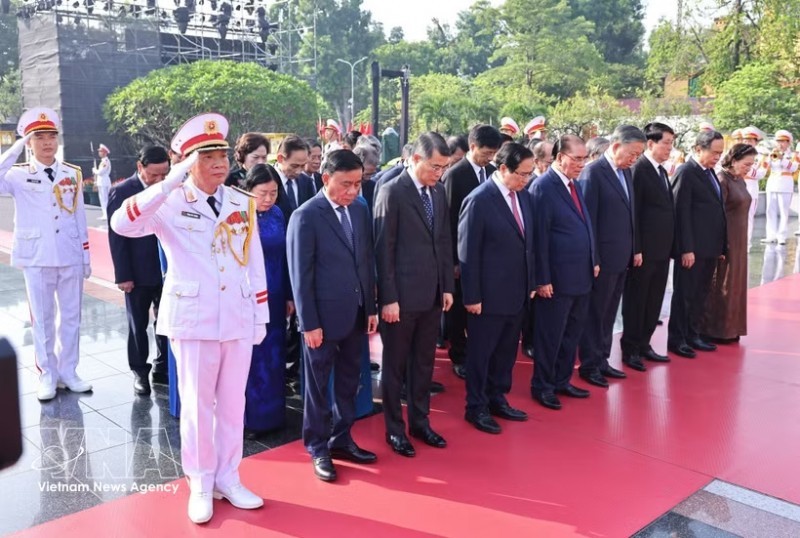 |
| Incumbent and former leaders of the Party and the State pay tribute to fallen soldiers at the Monument to Heroic Martyrs on Bac Son street in Hanoi. (Photo: VNA) |
Under the leadership of the Party and the State, the entire political system, especially the Vietnam People's Army, scientists, and the whole society are striving in the journey of searching for, collecting, and identifying the remains of fallen soldiers, with the intensified “500-day campaign to intensify the search, collection, and identification of the remains of fallen soldiers.” This is a special “marching” in peacetime, demonstrating the determination and responsibility of the entire political system in the work of searching for, collecting, and identifying the remains of fallen soldiers whose information is incomplete.
The 500-day campaign is a journey of gratitude from the Vietnamese people to those who sacrificed for the Fatherland; honouring the contributions and sacrifices of heroic martyrs, Vietnamese Heroic Mothers, wounded soldiers, sick soldiers, relatives of fallen soldiers, veterans, and officers, soldiers, and competent forces who are working day and night to carry out the sacred task of searching for, collecting, and identifying the remains of fallen soldiers.
Immediately afterwards, delegations from the Party Central Committee, the State President, the National Assembly, the Government, and the Central Committee of the Vietnam Fatherland Front laid wreaths and paid tribute to President Ho Chi Minh at the late leader’s mausoleum. The wreaths bore the inscription “Forever grateful to great President Ho Chi Minh.”
Before the sacred spirit of President Ho Chi Minh, the delegations expressed their boundless gratitude and respectfully commemorated his immense contributions to the revolutionary cause of the Party and the nation. The President dedicated his entire life to the people and the country, leading the Party and the people to glorious victories.
Earlier that morning, delegations from the Central Military Commission - Ministry of National Defence; the Central Public Security Party Committee - Ministry of Public Security; the Party Committee, People's Council, People's Committee, and Vietnam Fatherland Front Committee of Hanoi also laid wreaths in tribute to heroes martyrs and President Ho Chi Minh.
Ho Chi Minh City offers free healthcare in revolutionary base areas
The Viet Nam Fatherland Front Committee of Ho Chi Minh City, in coordination with Military Hospital 7A, launched a program to provide free medical check‑ups for people in former revolutionary base areas.
The program is among the city’s activities to mark the 79th anniversary of Wounded and Fallen Soldiers’ Day (July 27, 1947–2026).
Speaking at the ceremony, Nguyen Phuoc Loc, member of the Party Central Committee, Deputy Secretary of the Ho Chi Minh City Party Committee, and Chairman of the Viet Nam Fatherland Front Committee of Ho Chi Minh City, stressed that Wounded and Fallen Soldiers’ Day on July 27 is an annual occasion to express deep gratitude to martyrs, wounded and sick soldiers, and revolutionary contributors — those who bravely fought for the independence and freedom of the Fatherland and for the happiness of the people.
He recalled that during the difficult wartime, revolutionary base areas served as a “steel shield” that sheltered and nurtured revolutionary soldiers. The people in these areas endured immense loss and hardship, willingly sharing food and clothing and protecting revolutionary forces until final victory.
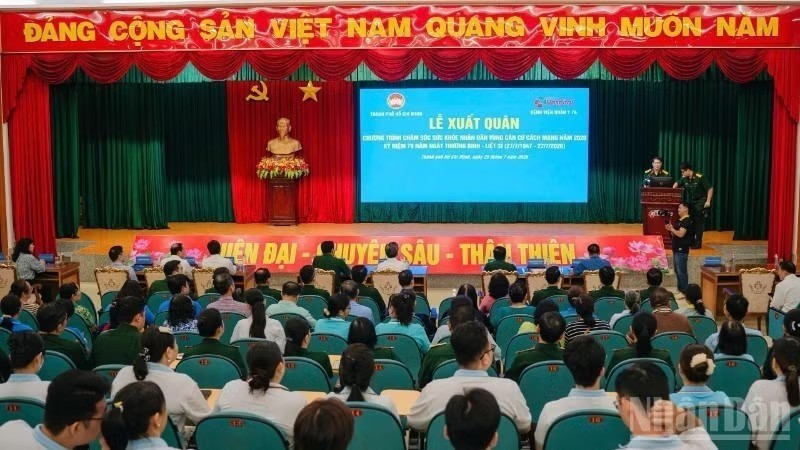 |
| At the launch ceremony. |
Returning to revolutionary base areas today, caring for people’s lives — especially their health — as well as for policy beneficiary families and contributors to the revolution, is not only a regular duty but also a command from the heart of every Vietnamese citizen, NDO reported.
“Each doctor, nurse and healthcare worker brings not only professional knowledge and skills, but also the deep appreciation and gratitude of the city’s Party organization, authorities and people to the residents of the base areas,” he emphazised.
According to the organizers, the program will be implemented in 10 former revolutionary base localities and safe‑zone communes in Ho Chi Minh City.
Each locality is expected to provide medical check‑ups, health consultations and free medicine for between 500 and 1,000 people, with priority given to policy beneficiary families, revolutionary contributors, older people, people with disabilities, poor and near‑poor households, and those with chronic illnesses.
Night-time experiences breathe new life into urban heritage
As evening descends on Ho Chi Minh City, museums, heritage sites and cultural venues across the southern metropolis are transforming into vibrant hubs of the night-time economy, unlocking the value of cultural heritage while supporting the growth of the city's cultural industries and tourism.
Museums reinvent visitors' experiences
On weekend evenings, the century-old Ho Chi Minh City Museum of Fine Arts offers visitors an experience that goes well beyond conventional exhibitions. Guests stroll through galleries showcasing fine arts, learn about the history of the French colonial-era building and then gather in the courtyard, where live violin performances transform the museum into an atmospheric cultural venue. The blend of architecture, visual arts and music presents a fresh interpretation of the traditional museum experience.
The Ho Chi Minh City Museum has adopted a similar approach by extending its opening hours from 19:00 to 21:00. Visitors can explore the museum's collections while taking part in tea sessions that introduce the cultural significance of tea in Vietnamese life. The programme encourages guests to engage with heritage through storytelling and sensory experiences rather than simply viewing historical artefacts.
These initiatives reflect a broader transformation across the city, where museums are evolving from static exhibition spaces into lively centres for culture, education and community interaction. Evening operations are not simply about accommodating more visitors; they are creating distinctive cultural products tailored to contemporary urban lifestyles and the growing demand for interactive experiences, VOV reported.
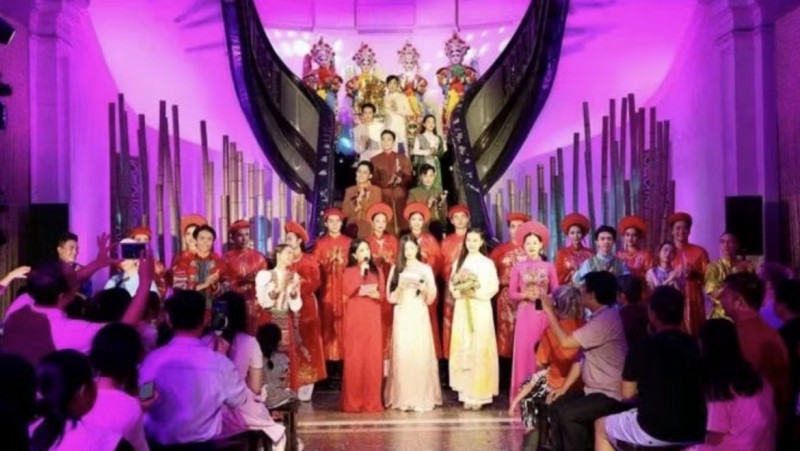 |
| Traditional art performances take place every weekend evening at the Ho Chi Minh City Museum. (Photo courtesy of the Ho Chi Minh City Museum) |
Nguyen Minh Nhut, deputy director of the Ho Chi Minh City Department of Culture and Sports, told Sai Gon Giai Phong Newspaper that the city aims to establish museums as popular weekend evening destinations. Beyond their traditional educational role, museums are expected to become cultural spaces where residents and visitors alike can enjoy artistic performances, heritage education and community activities.
Doan Thi Trang, director of the Ho Chi Minh City Museum, said the evening opening programme is currently being piloted to gauge public response before expanding to include signature products unique to the museum. The encouraging number of repeat visitors and advance registrations for future events show that audiences are increasingly attracted by experiential programmes that complement traditional exhibitions.
Rather than adopting a standardised model, the city's authorities encourage each museum to develop programmes suited to its own collections, architecture and target audiences. The strategy mirrors international practice, in which museums are increasingly recognized as creative and educational hubs that foster cultural engagement rather than functioning solely as repositories of historical artefacts.
The transformation has gained additional momentum since several of the city's leading museums began operating under the financial autonomy mechanism in May 2026. As institutions become more responsible for generating revenue, developing innovative programmes, expanding services and attracting wider audiences has become essential to ensuring financial sustainability while reinforcing Ho Chi Minh City's cultural industry ecosystem.
Technology reimagines heritage
Beyond museum walls, technology is also reshaping how the public experiences the city's heritage.
Under Plan No. 296 on protecting cultural heritage during 2026–2030, issued by the Ho Chi Minh City People's Committee, the city is integrating conservation with the development of cultural industries, cultural tourism and the creative economy. The strategy aims to ensure that historical assets remain relevant by becoming part of contemporary urban life.
That vision is already materialising through large-scale digital performances. During celebrations marking the 50th anniversary of Sai Gon-Gia Dinh officially being named after President Ho Chi Minh, a spectacular 3D mapping show transformed the façade of the Ho Chi Minh City People's Committee headquarters into a visual chronicle of the city's half-century of development.
Tran Viet Tan, chairman of VINAMA Media JSC, which participated in the programme, said technology should complement rather than replace heritage. Through carefully researched combinations of historical narratives, architectural features, light, sound and digital imagery, projection mapping enables audiences to experience the city's history in a more vivid and emotionally engaging way.
According to Tan, the greatest value of such performances lies in sparking curiosity, particularly among young audiences, inspiring them to explore the stories behind the projections long after the show concludes.
He believed Ho Chi Minh City has strong potential to develop technology-based night-time cultural products. However, sustaining attractions such as 3D mapping will require long-term planning, continuously refreshed content and close collaboration among government agencies, cultural and tourism authorities, and creative enterprises. Above all, each programme must tell an authentic local story, as cultural identity remains the defining factor that distinguishes one destination from another.
From museum galleries to landmark buildings and public spaces, technology is opening new opportunities for residents and visitors to engage with heritage in dynamic and accessible ways. Combined with performing arts, heritage education and tourism experiences, these initiatives are helping extend visitors' stays, stimulate the city's night-time economy and showcase Ho Chi Minh City's rich historical and cultural legacy to broader audiences.
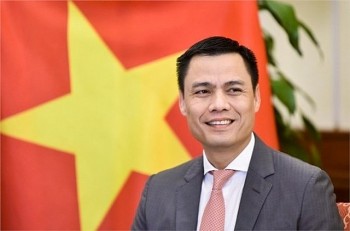 Vietnam News Today (July 22): Vietnam Reaffirms Commitment to Human Rights at AMM-59 Vietnam News Today (July 22): Vietnam Reaffirms Commitment to Human Rights at AMM-59 |
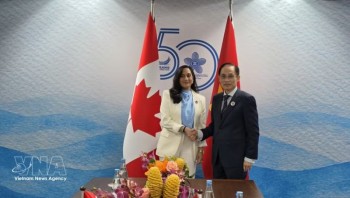 Vietnam News Today (July 23): Vietnam Promotes Ties With Canada, New Zealand at AMM-59 Vietnam News Today (July 23): Vietnam Promotes Ties With Canada, New Zealand at AMM-59 |