
Vietnam News Today (Jun. 15): PM Le Minh Hung Heads to Russia for Landmark ASEAN-Russia Summit

| Vietnam News Today (Jun. 15) notable headlines Top leader To Lam leads Vietnam’s foreign affairs and integration steering committee PM Le Minh Hung heads to Russia for landmark ASEAN-Russia summit Vietnam, Tunisia target coffee, olive oil as trade ties deepen Vietnam hopes to enhance nuclear energy cooperation with Bulgaria: ambassador EU standards push Vietnam’s rice industry up the value chain Hue International Music Week 2026 opens Memorial service honors fallen soldiers, civilians of 1968 Tet Offensive Switzerland identifies Vietnam as priority partner in Southeast Asia Vietnamese flavors captivate Filipino diners |
Top leader To Lam leads Vietnam’s foreign affairs and integration steering committee
The Politburo has decided to establish a Central Steering Committee for Foreign Affairs and International Integration with 37 members, chaired by General Secretary and State President To Lam.
Under Decision No. 198 issued by the Politburo and recently signed by General Secretary and State President To Lam, Prime Minister Le Minh Hung serves as Permanent Deputy Head of the Committee. The Deputy Heads include National Assembly Chairman Tran Thanh Man and Standing Member of the Party Central Committee’s Secretariat Tran Cam Tu. Minister of Foreign Affairs Le Hoai Trung serves as Standing Member of the Steering Committee.
The 37-member committee includes key leaders not only from the Ministry of Foreign Affairs, the Ministry of National Defence, and the Ministry of Public Security, but also senior officials from ministries such as Science and Technology; Home Affairs; Finance; Industry and Trade; Education; Culture, Sports and Tourism; Agriculture and Environment; and Health, as well as leaders of key localities - Hai Phong, Da Nang, Can Tho, Hue, and Dong Nai.
This composition reflects the spirit of the Politburo’s Resolution 06, which emphasises that foreign affairs is the responsibility of the entire Party, people, and armed forces, and is no longer the sole mandate of the diplomatic sector, according to VOV.
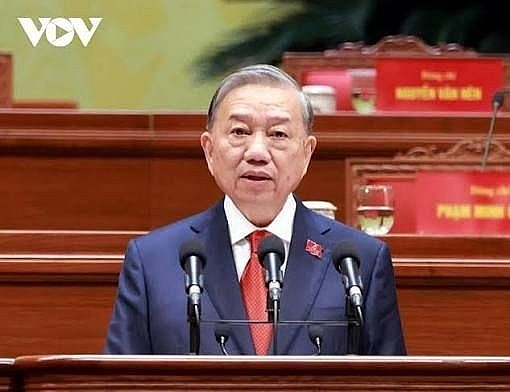 |
| Party General Secretary and State President To Lam leads Vietnam’s 37-member Central Steering Committee for Foreign Affairs and International Integration. |
The Committee also includes three inter-sectoral working groups: the Economic and Science–Technology Sub-Committee, headed by Permanent Deputy Prime Minister Pham Gia Tuc; the Political, Defence, and Security Sub-Committee, led by Deputy Prime Minister and Minister of National Defence General Phan Van Giang; and the Cultural, Social, and Education Sub-Committee, headed by Deputy Prime Minister Pham Thi Thanh Tra.
This structure clearly reflects a new approach in which foreign affairs not only serves national security but also supports economic development, science and technology, culture, and human development.
The establishment of the Central Steering Committee for Foreign Affairs and International Integration demonstrates the need to strengthen unified leadership and coordination in foreign affairs amid Vietnam’s deepening and comprehensive international integration.
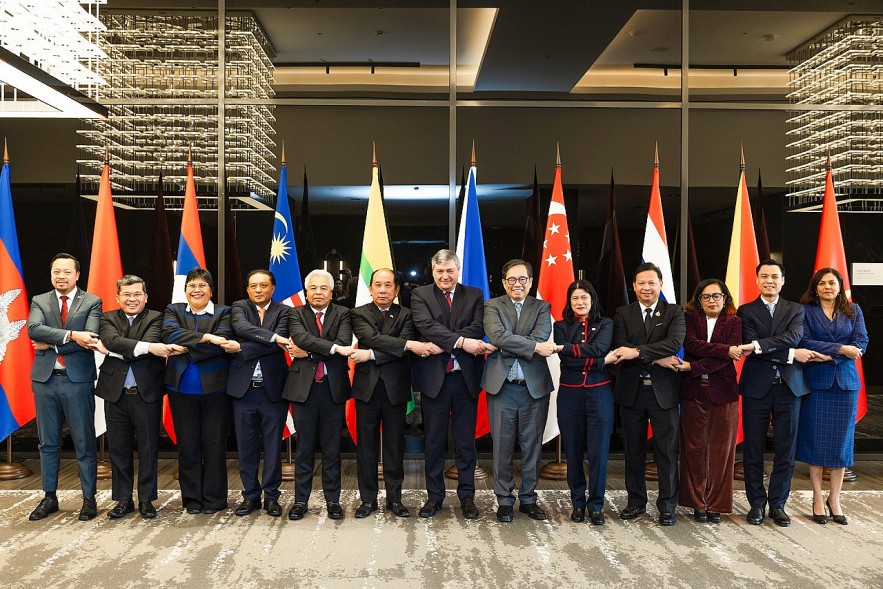 |
| Senior officials from ASEAN member states and Russia attend the ASEAN-Russia Senior Officials' Meeting (SOM). Photo: Ministry of Foreign Affairs. |
PM Le Minh Hung heads to Russia for landmark ASEAN-Russia summit
At the invitation of Russian President Vladimir Putin, PM Le Minh Hung will lead a high-level delegation to the ASEAN-Russia Summit commemorating the 35th anniversary of relations betweenASEAN and Russia, to be held in Kazan, Russia, on June 17-18.
The visit carries particular significance as it will be the Prime Minister's first trip to Russia since taking office, underscoring Vietnam's commitment to strengthening ties with a longstanding friend and Comprehensive Strategic Partner.
Coming on the heels of the 48th ASEAN Summit and Vietnam's successful hosting of the third ASEAN Future Forum, the Prime Minister's participation reflects the country's consistent foreign policy of independence, self-reliance, peace, friendship, cooperation and development, as well as its commitment to multilateralism and diversified international relations.
The trip also sends a clear message about Vietnam's strong support for the ASEAN-Russia Strategic Partnership and its enduring friendship, strategic trust and effective cooperation with Russia over many decades.
Deputy Foreign Minister Dang Hoang Giang, Vietnam's ASEAN Senior Officials' Meeting (SOM) Leader, said the overarching objective of the visit is to reinforce Vietnam's role as a bridge-builder, promote consensus and contribute practical initiatives that generate fresh momentum for ASEAN-Russia relations.
The mission is especially meaningful given Vietnam's role in helping build consensus within ASEAN on convening the summit and its upcoming responsibility as ASEAN's coordinator for relations with Russia during the 2027-2030 period.
"This is not simply participation in a summit, but an important step in preparing Vietnam to contribute more deeply to shaping ASEAN-Russia cooperation in the years ahead," Giang said.
Vietnam will work with other member states to promote a practical, balanced and results-oriented approach to ASEAN-Russia cooperation. Priority areas include unlocking untapped potential in trade, science and technology, digital transformation, non-traditional security, education and training, tourism, people-to-people exchanges and, in particular, energy cooperation.
The country is also expected to advocate highly feasible initiatives aligned with ASEAN's needs, Russia's strengths and the demands of the current international environment.
As the first ASEAN member state to sign a free trade agreement with the Eurasian Economic Union (EAEU) in 2015, Vietnam hopes to help expand cooperation between ASEAN and the broader Eurasian region. Hanoi plans to share practical experience in promoting trade, investment, logistics, supply-chain connectivity and business linkages, cited VNN.
Vietnam will also join discussions on regional and global developments affecting peace, stability, energy security, supply chains and economic development.
With a commitment to dialogue, constructive engagement and respect for international law, Vietnam aims to help strengthen mutual understanding, narrow differences and build trust between ASEAN and Russia as well as among regional partners.
On the sidelines of the summit, Prime Minister Le Minh Hung is expected to meet President Putin and hold talks with the head of the Republic of Tatarstan.
The meeting with the Russian leader will provide an opportunity to convey the priorities of Vietnam's new government and reaffirm its commitment to further strengthening bilateral ties. The two sides are also expected to discuss major strategic directions, key cooperation priorities and measures to address obstacles in implementing high-level agreements.
A milestone summit in a changing world
The anniversary summit takes place against a backdrop of profound global and regional transformation. Deputy Foreign Minister Dang Hoang Giang noted that the international community is facing what Party General Secretary and State President To Lam recently described at the Shangri-La Dialogue as "three foundational crises" - a crisis of the international order, a crisis of development models and a crisis of strategic trust.
Held nearly five years after the previous ASEAN-Russia summit, which took place virtually in October 2021, the gathering is widely viewed as more than a commemorative event. It is expected to serve as a strategic platform for shaping the next phase of cooperation between the two sides.
Russia has long regarded ASEAN as a key partner and consistently supports ASEAN's central role in the evolving regional architecture. ASEAN, in turn, values Russia's role and influence in regional and global affairs.
The summit is expected to reaffirm the highest-level political commitment to the ASEAN-Russia Strategic Partnership and demonstrate the importance both sides attach to dialogue and cooperation as effective means of fostering peace, security and stability.
Leaders will conduct a comprehensive review of the partnership, assess achievements and shortcomings, identify barriers to cooperation and explore new directions, priority sectors and breakthrough measures to deepen engagement.
Energy security, one of Russia's traditional strengths and a growing priority for ASEAN economies, is expected to feature prominently in discussions. Leaders are also expected to explore opportunities for stronger connectivity and integration between Southeast Asia and the wider Eurasian region.
In addition, ASEAN and Russian leaders will exchange views on major regional and international issues of mutual concern, with the aim of enhancing understanding, strengthening strategic trust and addressing shared challenges based on international law.
The summit is expected to adopt a series of key documents that will guide ASEAN-Russia cooperation in the coming years and better respond to the evolving development needs of both sides.
Three decades of growing ties
Russia's relationship with ASEAN began in July 1991 when a Russian deputy prime minister attended the opening session of the 24th ASEAN Foreign Ministers' Meeting in Kuala Lumpur as a guest of the Malaysian government.
Following those initial contacts, Russia became a full Dialogue Partner of ASEAN at the 29th ASEAN Foreign Ministers' Meeting in Jakarta in July 1996, establishing a formal framework for cooperation.
A major milestone came with the first ASEAN-Russia Summit in Kuala Lumpur on December 13, 2005. At the meeting, both sides signed the Joint Declaration on Progressive and Comprehensive Partnership and adopted the Comprehensive Program of Action for 2005-2015, laying the foundation for cooperation across political-security, economic and development fields.
Another turning point arrived at the third ASEAN-Russia Summit in Singapore in November 2018, when the relationship was elevated to a Strategic Partnership. Leaders also adopted a declaration on security and information and communications technology cooperation and witnessed the signing of a memorandum of understanding between ASEAN and the Eurasian Economic Commission, broadening economic links between Southeast Asia and the Eurasian region.
Most recently, the 22nd ASEAN-Russia Senior Officials' Meeting, held in Kazan in April, confirmed that cooperation continues to advance across multiple areas. Officials reported that implementation of the ASEAN-Russia Plan of Action for 2021-2025, extended through 2026, had reached 82%, reflecting substantial progress.
Economic cooperation has continued to expand through trade and investment initiatives between ASEAN and Russia as well as between ASEAN and the Eurasian Economic Union. Russia remains an important partner in energy and food security, while cultural, educational, academic and people-to-people exchanges have also deepened through youth and young diplomats' summits and other initiatives.
Both sides agreed that ASEAN and Russia should further strengthen their partnership and expand cooperation into emerging areas with significant potential, including clean energy, digital transformation, artificial intelligence and smart cities.
Vietnam, Tunisia target coffee, olive oil as trade ties deepen
The Vietnam Trade Office in Algeria and Tunisia recently joined the Tunisian Union of Industry, Trade and Handicrafts (UTICA) to host a hybrid business-matching conference, part of its working trip to Tunis from June 7 to 12.
Addressing 30 Vietnamese and Tunisian companies, Commissioner of the UTICA National Executive Office Abdessalem Loued called the annual matchmaking event an effective platform to drive economic and trade ties.
Though geographically distant, the two countries share strategic locations in their respective regions, skilled human resources, and a strong commitment to expanding international trade, which form the bedrock for a lasting and mutually beneficial partnership, he said.
Vietnam has become one of Asia’s most dynamic economies, backed by a robust industrial base and a domestic market of more than 100 million people. Tunisia brings its own advantages such as a strategic geographical position, extensive free trade agreements, and high-value-added industries that make it a gateway to Europe, Africa and the Mediterranean region.
According to him, cooperation opportunities are broad and diverse, spanning food processing, electronic components, apparel, information technology, renewable energy, logistics services and the digital economy. The complementarity of the two economies can optimise resources and generate strong momentum for shared growth.
Loued singled out olive oil, one of Tunisia’s flagship products, as a prime candidate for export to Vietnam. Tunisia is among the world’s top global producers and exporters, with more than 100 million olive trees and generations of expertise. Its premium oils have earned multiple international awards.
Tunisia imports roughly 30,000 tonnes of raw coffee beans a year, mostly robusta, alongside 30,000 tonnes of rice and 360,000 tonnes of sugar. Once restricted to state-run tenders, imports of these staples have been opened to licensed private companies since 2024 under Law 120.
Bilateral trade hit 180 million USD in 2025, including Tunisia’s purchase of 10,000 tonnes of Vietnamese robusta green coffee worth over 50 million USD. In the first five months of this year, Vietnam shipped 8,500 tonnes of raw coffee to the Tunisian market.
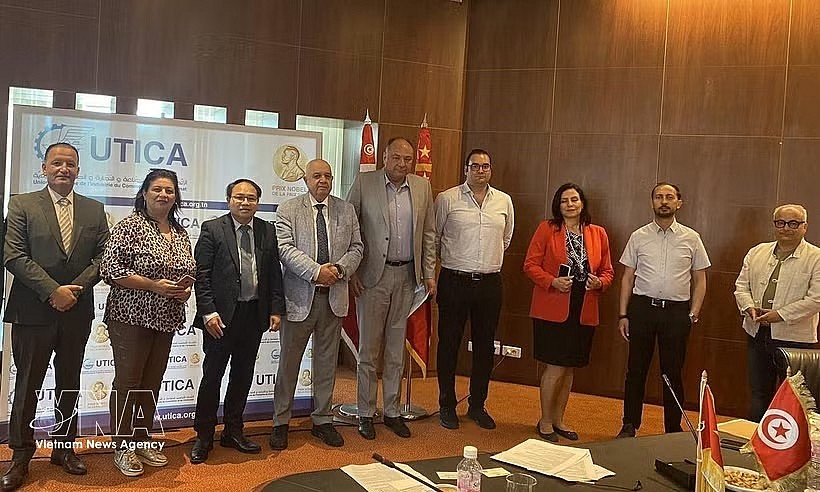 |
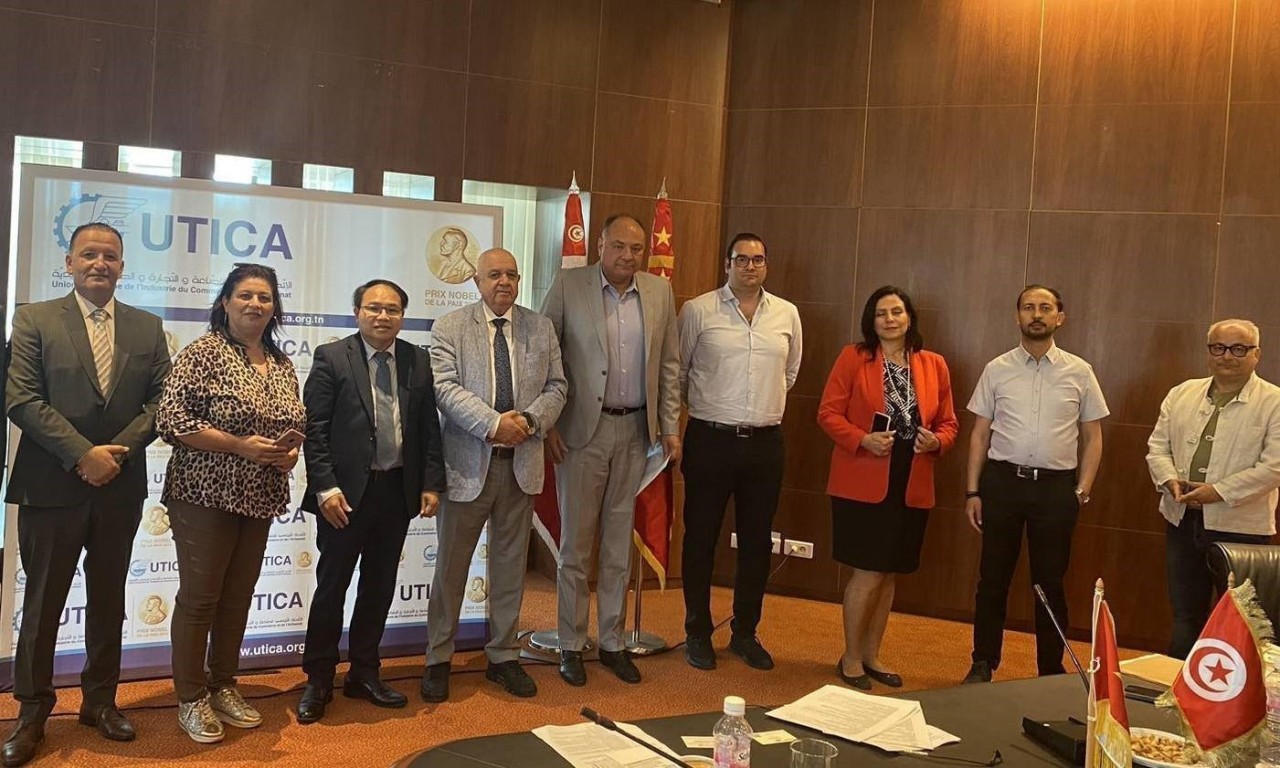
| Participants in the conference (Photo: VNA) |
Vietnamese Trade Counsellor Hoang Duc Nhuan outlined Vietnam’s economic development, export – import policies and the bilateral relationship. Vietnam and Tunisia signed a trade agreement in 1994 granting each other the Most-Favoured-Nation (MFN) status and have held three Inter-Governmental Committee sessions, most recently in Tunis in April 2018.
Vietnam exports footwear, mobile phones, coffee, pepper, cashew nuts, desiccated coconut, seafood, electronics, yarn, electrical cables, transformers, apparel, fabrics, plastics and carboxylic acids to Tunisia. Imports from Tunisia include seafood, medical equipment, animal-feed ingredients, dates, figs, cotton, plastic raw materials, leather and textiles.
Nhuan also introduced a slate of international trade fairs in Vietnam, including the Vietnam International Sourcing Expo in September, Vietnam Food Expo in November, and Vietnam Expo in December, and invited Tunisian agencies and firms to join.
Participants urged both governments to ease market access through tariff cuts, a bilateral business council and wider use of export credit insurance. They also requested details on potential export products, trade policies, visa rules, air links and support mechanisms, with organizers giving point-by-point answers.
On the occasion, the Vietnam Trade Office displayed product catalogues and samples and offered coffee tastings. During the matchmaking session, several Tunisian firms found out potential partners for raw coffee, spices, rice, seafood, paper products and plastic raw materials from Vietnam, reported VNA.
The two sides agreed to expand trade promotion, exchange business delegations, raise awareness of each market’s strengths, facilitate matchmaking, support attendance at major trade fairs, and cooperate in dispute settlement and business advisory services.
While in Tunis, Nhuan met with officials from the Department for Cooperation with Arab and ASEAN Countries under the Tunisian Ministry of Trade and Export Development, the Asia Department of the Ministry of Foreign Affairs, Migration and Tunisians Abroad, UTICA and the Tunisian Confederation of Citizen Enterprises (CONECT). He also attended the IFTA AFRICA 2026 food trade exhibition.
Vietnam hopes to enhance nuclear energy cooperation with Bulgaria: ambassador
Vietnam wishes to strengthen nuclear energy cooperation with Bulgaria, particularly in human resources training, scientific research, and the sharing of operational and management expertise, said Vietnamese Ambassador to Bulgaria Nguyen Thi Minh Nguyet.
She made the remark while addressing an annual international conference on Bulgarian nuclear energy and national, regional, and global energy security, held in Varna city from June 10 to 12.
Presenting a paper titled "Vietnam's nuclear energy development: A strategic vision for energy security and international cooperation", Nguyet noted alongside economic growth, industrialisation, and modernization, Vietnam's electricity demand is projected to increase sharply over the coming decades. Consequently, the country is developing a diversified, balanced, and sustainable energy mix, in which nuclear energy is identified as an important solution to guarantee national energy security and support its commitment to net-zero emissions by 2050.
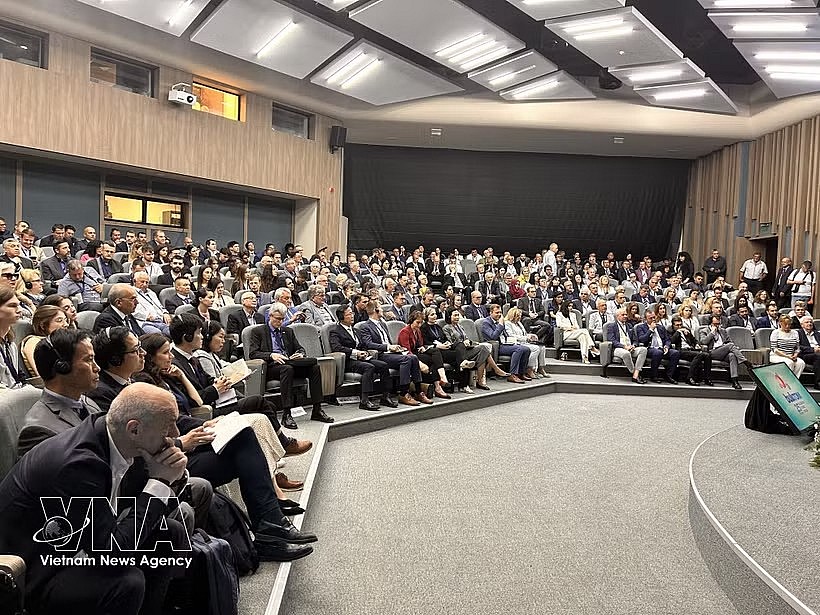 |
| The international conference takes place in Varna city, Bulgaria, from June 10 to 12. (Photo: VNA) |
She further stated Vietnam is implementing its nuclear power program in a cautious and responsible manner, adhering strictly to international standards for nuclear safety, security, and non-proliferation.
Vietnam prioritises researching and selecting advanced and proven technologies while focusing on perfecting institutional frameworks, developing human resources, and enhancing state management capabilities in this field, she added.
Highly valuing Bulgaria's extensive experience in operating the Kozloduy nuclear power plant and training specialised personnel, the diplomat proposed boosting bilateral cooperation in specialist training, scientific research, and the sharing of management, operational, and nuclear safety expertise, VNA reported.
Nguyet also expressed her hope to work with the Bulgarian side to organize a Vietnam – Bulgaria nuclear energy cooperation forum later this year to advance concrete projects.
The conference, held by the Bulgarian Nuclear Regulatory Agency (BULATOM), brought together policymakers, experts, scientists, businesses, and representatives from various international organisations in the nuclear energy sector.
The event took place against the backdrop of many countries adjusting their energy strategies to address challenges regarding energy security, climate change, and growing electricity demand.
As part of her working visit, Ambassador Nguyet held talks with leaders of the University of Economics – Varna and the Odessos Shiprepair Yard to discuss potential cooperation in education, training, and high-quality human resources development.
EU standards push Vietnam’s rice industry up the value chain
Long regarded as one of the most attractive destinations for Vietnamese rice exports, the European Union (EU) is now playing a broader role in transforming the country’s rice industry through higher standards for quality, traceability and sustainability.
Through stringent requirements on traceability, food safety and sustainability, the EU is increasingly reshaping how rice is grown, processed and marketed in Vietnam. Industry experts say these standards are not creating new barriers but are instead encouraging the industry to move toward higher quality, greater transparency and stronger competitiveness.
According to Le Thanh Tung, vice chairman and secretary general of the Vietnam Rice Industry Association, the EU market has become an important catalyst for upgrading Vietnam’s rice value chain and enhancing the international standing of Vietnamese rice.
EU - A driver of transformation rather than a trade barrier
The EU is one of the world’s most demanding agricultural import markets, particularly for rice. At the same time, it offers significant value-added opportunities, especially for premium fragrant rice and high-quality specialty products.
Vietnam currently benefits from tariff preferences under the EU-Vietnam Free Trade Agreement (EVFTA), including preferential access for recognized fragrant rice varieties.
To qualify for these benefits, however, exporters must provide clear evidence of the rice varieties used throughout the production process. For premium products such as ST25 rice, every stage, from seed selection and cultivation to processing and export, must meet strict traceability requirements.
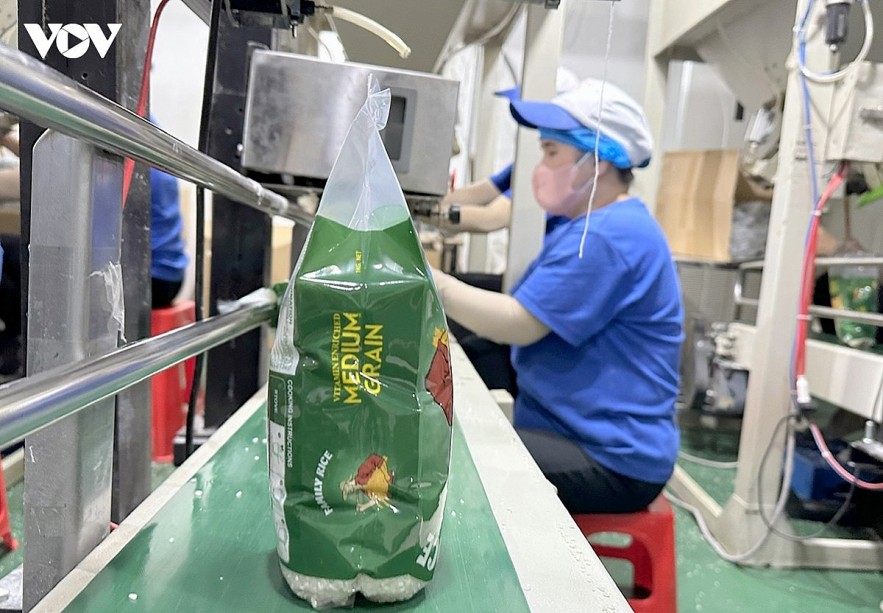 |
| Packaging rice for export in Southern Vietnam. |
These requirements should not be viewed as additional restrictions. Instead, they serve as mechanisms that protect the authenticity, reputation and quality of Vietnamese rice in international markets, Tung told Industry and Trade newspaper in an interview.
Updating fragrant rice varieties to reflect market reality
The EU’s recent adjustments to the list of fragrant rice varieties eligible for preferential treatment have been widely viewed as a technical update aligned with changes in Vietnam’s rice industry.
New rice varieties with improved quality and productivity are gradually replacing older ones, while consumer demand continues to evolve. Periodic reviews help ensure that preferential lists accurately reflect current production realities.
Importantly, the process is based on consultations between Vietnam and the EU. Vietnam can proactively propose new rice varieties with export potential for inclusion on the list, creating additional opportunities rather than limiting market access.
This mechanism allows Vietnam’s rice sector to remain flexible and competitive as global demand shifts toward higher-quality products, Tung said.
Administrative reform expected to benefit exporters
Beginning July 1, 2026, certification and re-certification procedures for fragrant rice exports under both the EU-Vietnam Free Trade Agreement and the UK-Vietnam Free Trade Agreement (UKVFTA) will be delegated to provincial authorities.
Tung described the move as a positive administrative reform that could reduce processing times and ease pressure on central agencies while maintaining existing quality-control standards.
In practice, verification of fragrant rice varieties is conducted throughout the entire production cycle. Monitoring begins with seed sources and continues through cultivation, pre-harvest inspections and export procedures.
As a result, the reform primarily changes the administrative level responsible for implementation rather than altering technical requirements.
However, Tung noted that the effectiveness of decentralization will depend largely on the capacity of local authorities. Provinces with well-prepared personnel and efficient procedures are expected to deliver clear benefits for businesses, although temporary delays may arise during the initial transition period.
 | Vietnam News Today (Jun. 10): Party and State Leader To Lam Receives ASEAN Future Forum Delegates Vietnam News Today (Jun. 10): Party and State leader To Lam receives ASEAN Future Forum delegates; Defense cooperation a key pillar of Vietnam-Laos special relationship; ... |
 | Vietnam News Today (Jun. 11): Vietnam's Growing Influence Highlighted at ASEAN Future Forum Vietnam News Today (Jun. 11): Vietnam regards Japan as one of its most important partners; Vietnam, Cambodia seek deeper parliamentary cooperation; Vietnam's growing influence highlighted ... |
Related Stories
 Economy
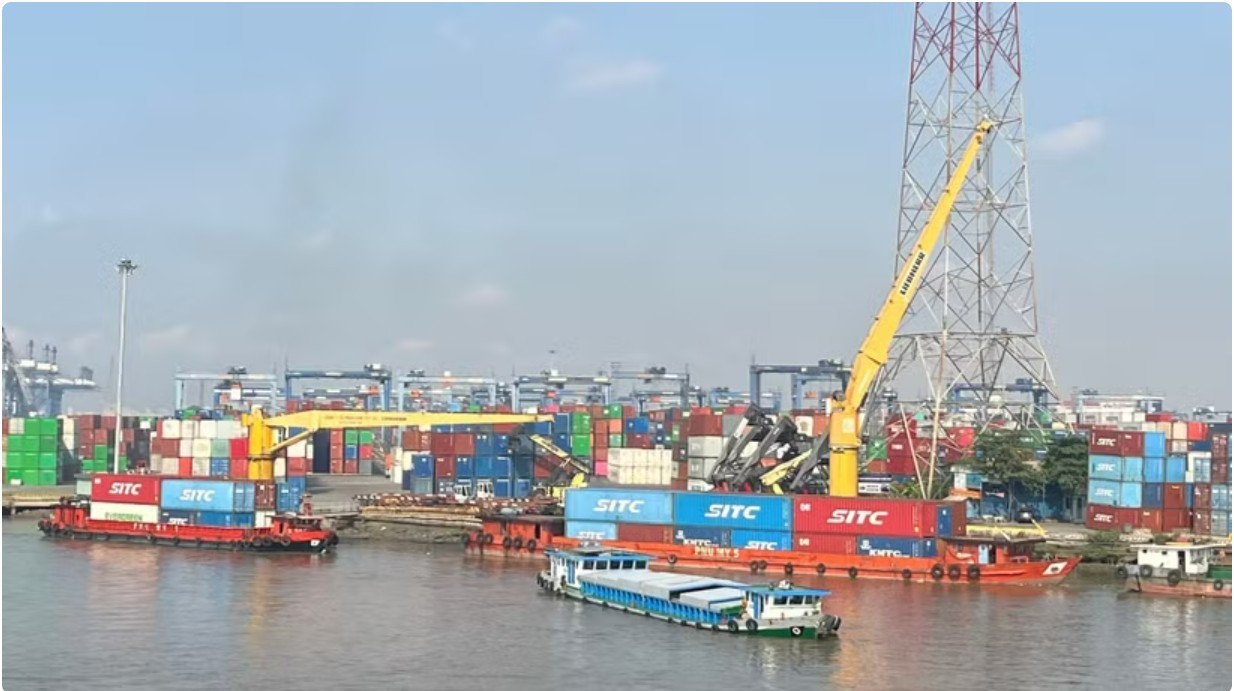
Promoting Vietnam-Tunisia Trade Cooperation
 Economy
Import And Export Turnover In The First Five Months Of 2026: Highlights And Breakthroughs
Recommended
 National
500-Day Campaign: Hope of Reunion Through DNA Evidence
 National
Ho Chi Minh City Marks 50 Years with 3D Mapping Light Show
 National
Full Remarks by General Secretary, President To Lam at 50th Anniversary of Sai Gon-Gia Dinh Named After President Ho Chi Minh
 National
New Advances in DNA Technology for Identifying Fallen Soldiers
 National
Vietnam News Today (July 5): Vietnam Supports Global Efforts for Energy Efficiency at IEA Conference
 National
Vietnam News Today (July 4): International Tourist Arrivals to Vietnam Rise Nearly 15% in First Half of 2026
 National
Foreign Affairs Should Better Serve National Development: Top Leader
 National