
Vietnam News Today (Jun. 12): Government Chief Greatly Values JICA's New ODA Proposals for Vietnam
 | Vietnam News Today (Jun. 10): Party and State Leader To Lam Receives ASEAN Future Forum Delegates |
| Vietnam News Today (Jun. 11): Vietnam's Growing Influence Highlighted at ASEAN Future Forum |
| Vietnam News Today (Jun. 12) notable headlines Government chief greatly values JICA's new ODA proposals for Vietnam Vietnam proposes three Asian cooperation orientations Vietnam and India join forces to restore My Son Sanctuary’s E-F towers Steady start and major breakthrough for Vietnam's private economy Phong Nha named among top nature-connected wellness destinations Da Nang businesses eye growth in booming global Halal market Top leader highlights strategic role of foreign affairs in new development era Vietnam, US seek to deepen economic, trade, energy cooperation Vietnam, EU review progress of economic governance program |
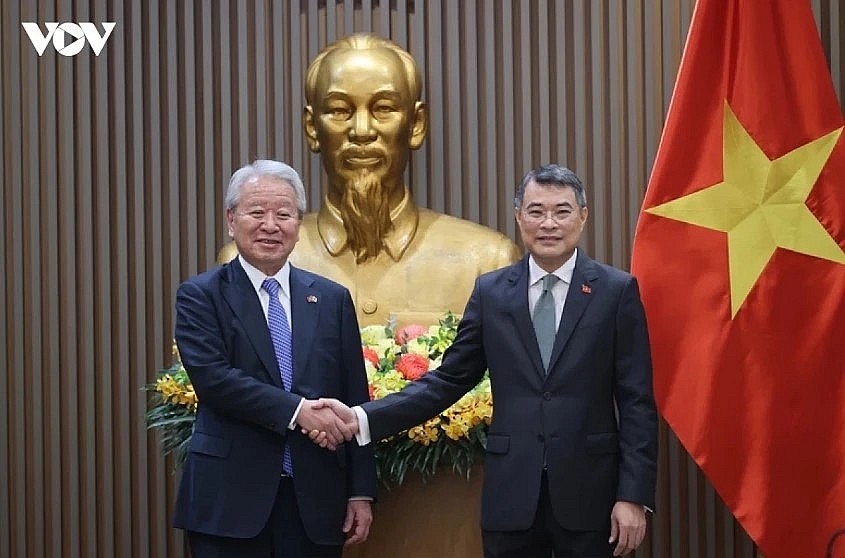 |
| Prime Minister Le Minh Hung welcomes JICA President Tanaka Akihiko |
Government chief greatly values JICA's new ODA proposals for Vietnam
Prime Minister Le Minh Hung has highly valued JICA's new directions for ODA cooperation with Vietnam, while calling for support in strategic areas including semiconductors, artificial intelligence (AI), quantum technology, digital transformation and green transformation.
At a meeting with President of the Japan International Cooperation Agency (JICA) Tanaka Akihiko in Hanoi on June 11, PM Hung said the proposed areas broadly align with Vietnam's development priorities as well as the cooperation orientations agreed by both PMs.
On that basis, he suggested that JICA hold detailed discussions with the Ministry of Finance and relevant Vietnamese agencies to identify feasible programs and projects for implementation, while reviewing procedures to facilitate the early signing of an agreement to facilitate Japanese grant aid projects.
The Vietnamese Government chief also outlined several directions for future ODA cooperation, including support for Vietnam's industrialisation and modernisation, with priority given to science and technology development, technological innovation, productivity growth and improvements in competitiveness, according to VOV.
He suggested that JICA provide Vietnam with a new generation of ODA loans on more favorable terms and with more flexible procedures in such areas as semiconductors, artificial intelligence (AI), quantum technology, digital transformation, green transformation, space technology, energy, infrastructure, disaster prevention and supply chains.
The host leader also called for accelerated research and the early implementation of a budget-support loan for artificial intelligence and digital transformation, as well as leadership and management training programs.
He further proposed that JICA work with the Ministry of Finance and Vietnamese ministries, sectors and localities to develop a cooperation portfolio for the 2026-2030 period.
Vietnam proposes three Asian cooperation orientations
Deputy Prime Minister Le Tien Chau delivered a speech at the 31st Future of Asia Forum in Tokyo on June 11, highlighting Vietnam’s vision for regional cooperation and sustainable development amid a rapidly changing global landscape.
Chau flagged Vietnam’s recent hosting of the third ASEAN Future Forum, pressing for deeper dialogue to build trust and solidarity so that nations can jointly pursue a better future for all.
Drawing on Asia’s development journey, he distilled three lessons: resilience as the bedrock of sustainable development, cooperation as the engine of a stable and open future, and reform and innovation as essential catalysts for economies adapting to a fast-changing era.
Asia has everything it takes to turn challenges into opportunities, Chau said, pointing to three strategic advantages: its position as the world’s manufacturing and supply chain hub with a record of pioneering supply chain cooperation; powerful domestic growth drivers - a young population, a rapidly expanding middle class and accelerating urbanisation; and the potential to lead the twin shift to digital transformation and green transition.
Against this backdrop, Chau mapped out three cooperation priorities in the years ahead.
First, regional economies should deepen intra-regional integration mechanisms by exploring the early adoption of common supply chain standards covering environmental, social and governance (ESG) criteria, data security, and rules of origin in strategic sectors like semiconductors, batteries, pharmaceuticals and agriculture.
Second, they should fine-tune institutional framework, infrastructure and quality workforce to support long-term development goals. Priorities include establishing regional governance frameworks for critical sectors such as digital economy, cybersecurity and finance; pooling resources for cross-border transport, energy and data connectivity projects; and expanding cooperation on talent development.
Third, Vietnam called for tighter linkages among innovation ecosystems and broader access to technology know-how, urging investment in shared research infrastructure, common standards and regulations, and stronger intellectual property cooperation.
Vietnam’s own development experience has reinforced its understanding of the importance of peace, stability, independence, self-reliance, and international partnership, he said, adding that Vietnam remains steadfast in pursuing a foreign policy of independence, self-reliance, resilience, peace, friendship, cooperation and development, diversification and multilateralisation of external relations and being a responsible member of the global community.
Chau said that in its new development phase, Vietnam remains steadfast in its pursuit of double-digit economic growth and is striving to successfully achieve its two centennial goals. To realize these ambitions, the country is focusing on taking several key measures.
Accordingly, Vietnam will maintain macroeconomic stability and ensure major economic balances while mobilising and maximising all resources to support its double-digit growth goal. The country has also identified a new growth model driven by science and technology, digital transformation, and knowledge economy. It will continue to improve its legal framework to facilitate and promote development, including significantly improving the investment and business environment, reforming national governance towards a leaner, more effective and efficient system, and accelerating the transition to data-driven governance.
In his remarks, the Deputy PM also noted that Japan continues to play an important role in regional and global cooperation architecture. Meanwhile, Vietnam–Japan relations are developing strongly, substantively and effectively across all areas. In particular, during a recent visit to Vietnam by Japanese Prime Minister Takaichi Sanae, the two sides agreed to establish new pillars of cooperation in economic security, energy security, and food security.
Vietnam stands ready to be a reliable, proactive and responsible partner in the journey to build a resilient and prosperous Asia where every country has its rightful place, every citizen has opportunities for development, and no one is left behind, Chau concluded.
Following his address, the Deputy PM joined a discussion session and answered questions regarding Vietnam’s growth prospects, institutional and legal reforms, administrative streamlining, and human resource development.
Earlier the same day morning, Deputy PM Le Tien Chau had meetings with Lao PM Sonexay Siphandone and Cambodian Deputy PM Sun Chanthol.
At the meeting with Sonexay, Chau congratulated the Lao PM on his re-election for the 2026–2031 term and, in particular, on the success of his recent official visit to Vietnam and participation in the ASEAN Future Forum 2026.
The Vietnamese Deputy PM welcomed the active and effective implementation of high-level agreements between the two nations and the outcomes of the 48th meeting of the Vietnam–Laos Intergovernmental Committee in December 2025. He suggested the two sides further strengthen comprehensive cooperation, particularly improving the quality of education and training collaboration, expediting the signing and implementation of the Laos–Vietnam Friendship University project, and promoting projects related to high-quality human resource development. Chau also urged the Lao side to continue creating favorable conditions for the Vietnamese community to live and work stably in the country.
For his part, Sonexay agreed with the proposals and suggested that the two sides coordinate closely in organising activities marking the 65th founding anniversary of Vietnam – Laos relations. He noted that education and justice are also among Laos’s current priorities and called for stronger cooperation to deliver tangible results, cited VNA.
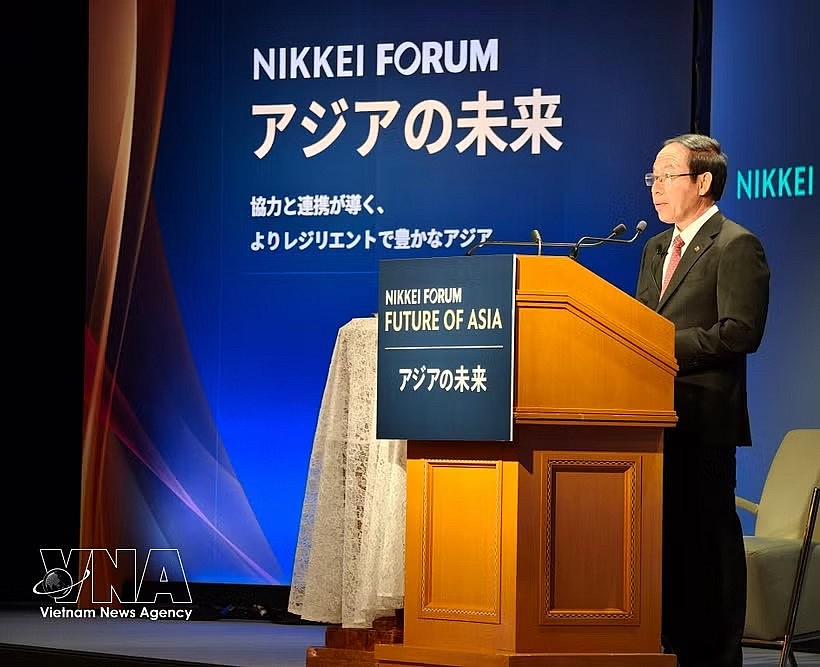 |
| Vietnamese Deputy Prime Minister Le Tien Chau delivers a speech at the 31st Future of Asia Conference in Tokyo on June 11 (Photo: VNA) |
The two officials agreed to direct relevant ministries and sectors to accelerate major transport and energy projects, including the Hanoi–Vientiane Expressway, the Vientiane–Vung Ang railway, an oil pipeline system, and a 500kV power transmission line.
Sonexay affirmed that the Lao Party and Government will continue to create favorable conditions for the Vietnamese community to live and work stably in Laos, and for Vietnamese businesses to operate and expand their investment smoothly, contributing to Laos’s socio-economic development and further strengthening the special Vietnam–Laos relationship.
At a meeting with Cambodian Deputy PM Sun Chanthol, Chau highly valued the significance of Cambodian PM Hun Manet’s recent official visit to Vietnam and his attendance at the third ASEAN Future Forum, which helped strengthen political trust and deepen the traditional friendship between Vietnam and Cambodia.
Chau affirmed Vietnam’s consistent policy of attaching importance and giving high priority to the “good neighbourliness, traditional friendship, comprehensive cooperation and long-term sustainability.” He expressed confidence that under the sound leadership of the Cambodian People's Party (CPP), the decisive governance of the Cambodian Government, and the unity of its people, Cambodia will continue to achieve strong development across all fields.
He called on the two sides to effectively implement outcomes of recent high-level visits, including organising activities to commemorate the 60th anniversary of diplomatic relations between Vietnam and Cambodia (1967–2027), and accelerating the signing of cooperation agreements in education and justice. He also proposed that the Cambodian Government continue creating favorable conditions for Vietnamese citizens to live, study and work in the country.
For his part, Sun Chanthol said Cambodia is stepping up efforts to attract foreign investment and encouraged Vietnamese enterprises to expand their investment in the country. He also proposed strengthening infrastructure connectivity and promoting the linkage between the Ho Chi Minh City-Moc Bai Expressway and the Bavet-Phnom Penh Expressway.
Earlier, Chau received Nobuhisa Iida, Chairman and CEO of Nikkei Group.
At the reception, Iida said Vietnam and Japan have significant potential to expand cooperation with other countries in the region. Given Vietnam’s strong development prospects, particularly its abundant young workforce, he expressed confidence in the country’s continued economic growth and affirmed Nikkei’s desire to accompany Vietnam in its socio-economic development process.
Chau stressed that Vietnam always regards Japan as a trusted partner and an important companion who is always willing to share experience, development directions, and valuable lessons.
He expressed hope that the Japanese Government, localities, organizations and businesses will continue supporting and creating favorable conditions for the Vietnamese community in Japan.
Vietnam and India join forces to restore My Son Sanctuary’s E-F towers
Vietnamese and Indian experts are working together to restore the historic E-F tower complex at My Son Sanctuary, a UNESCO World Heritage site rich in Cham heritage.
At a meeting with experts from the Archaeological Survey of India (ASI) on June 10, Vice Chairwoman of the Da Nang People's Committee Nguyen Thi Anh Thi reaffirmed the city's commitment to supporting the delegation and creating the best possible conditions for them to complete their mission.
Speaking at the reception for the ASI delegation, Thi said the conservation project for the E-F temple group at My Son Sanctuary is far more than a technical restoration effort. It stands as a vivid symbol of the strategic and enduring partnership between Vietnam and India in the field of cultural heritage preservation.
"This project serves as a bridge connecting two great Asian civilizations - Indian civilization and Vietnam's Cham culture - reflected in every ancient brick restored through the hands of experts and workers from both countries," she said.
The conservation and restoration project for the E-F group at My Son Sanctuary, a UNESCO World Heritage site located in My Son Village, Thu Bon Commune, Da Nang, is being implemented under a memorandum signed by the governments of Vietnam and India on October 28, 2014, in New Delhi, along with a supplementary protocol signed on August 1, 2024. The project is scheduled to run from 2025 to 2029.
The Government of India is funding the project with an investment of nearly USD 4.4 million. Vietnam's counterpart contribution, covering wages for 100 workers over five years, is valued at around USD 1.7 million, reported VNN.
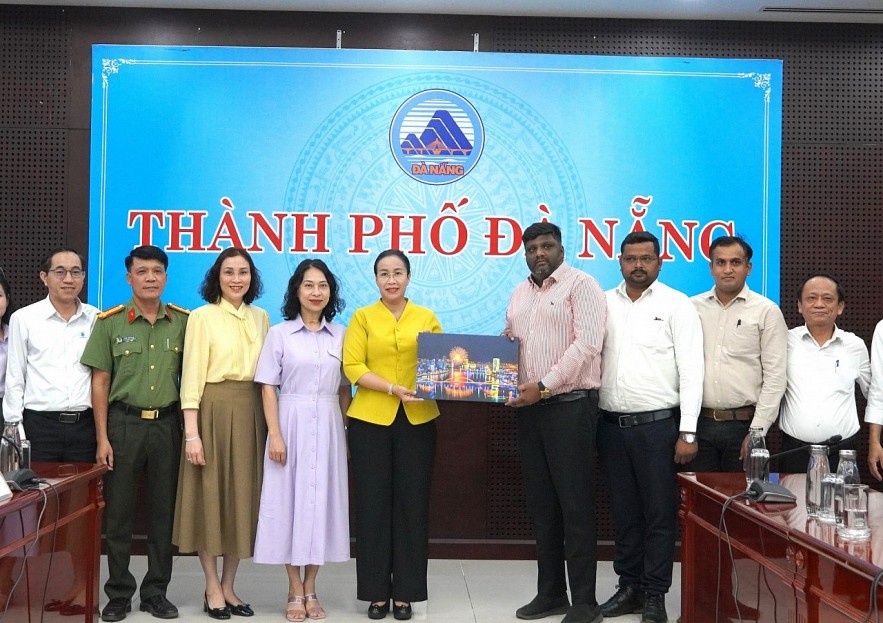 |
| Da Nang has pledged continued support and favorable conditions for Indian experts carrying out the restoration project. Photo: Da Nang City Portal |
Located in the northeastern section of the My Son temple complex, the E-F group consists of ancient brick temple structures dating from the seventh to the eleventh centuries. The site showcases distinctive Cham artistic styles, including Hoa Lai and Tra Kieu, and preserves some of the most significant religious, artistic and architectural values of Cham civilization.
The complex is also one of the earliest centers of Shiva worship in Champa. However, decades of war damage and the effects of time have left many structures in poor condition. Numerous monuments have collapsed, become deformed or suffered from subsidence, making urgent restoration necessary.
According to experts, ASI specialists and the My Son World Cultural Heritage Management Board completed 20 percent of the project's workload in 2025. The completed work includes the restoration of the F2 gateway tower, the E2 gateway tower, the E3 long house, perimeter walls, stream erosion control works and surface water management systems.
Parts of the western section of the E-F complex are expected to open to visitors in 2026. Tourists will also be able to observe ongoing conservation and restoration activities within the site.
Under the current plan, from May 2026 to March 2027, experts will focus on restoring the F1 temple, E5 temple, E6 temple, perimeter walls, drainage channels and the site's broader water management system.
Responding to the delegation's updates and proposals, Thi said the city would continue to work closely with the ASI team and provide all necessary support to ensure the project's success.
She also expressed hope that cooperation with ASI could expand beyond heritage conservation to include academic exchanges, scientific research and training programs for future heritage professionals.
Steady start and major breakthrough for Vietnam's private economy
One year after Resolution 68 on private economic sector development began to be implemented, its progress can be summed up as “a steady start and a major breakthrough”. Its revolutionary nature lies in redefining the private sector from a “supporting component” to an “important driving force”.
That assessment was made by Senior Professor Tao Yitao, former Deputy Secretary of the Party Committee of Shenzhen University and Director of the China Center for Special Economic Zone Research, in a recent media interview on Vietnam's achievements after one year of carrying out Resolution No. 68 on private economic sector development.
Professor Tao said the first achievement was institutional reform and the rebuilding of confidence. The resolution supports private enterprises through state-backed credit, elevating them from recipients of “policy preferences” to agents of “endogenous growth”.
She explained, “‘Confidence is more important than gold.’ Gold is existing capital, while confidence is growth capital. Having gold does not necessarily mean having confidence, but confidence can turn lead into gold. This change in top-level design has significantly strengthened the confidence of domestic and foreign investors in the stability of Vietnam's economic system.”
She added that market access is being further liberalised and factors of production are moving more freely. The principle that “everything not prohibited is permitted in market access” is beginning to take effect in sectors traditionally characterised by monopoly, including energy and finance. Cracks are appearing in “invisible barriers”, while “competitive neutrality” is gradually becoming the norm. A trend of capital, technology and talent flowing into the private sector is emerging.
At the same time, the business environment has improved. The simplification of administrative procedures has reduced start-up costs for private enterprises, while the digital economy and cross-border e-commerce have shown clear innovative momentum. In addition, mechanisms for protecting property rights continue to be strengthened. Administrative review procedures and the application of legal measures in resolving enterprise-related property-rights disputes have become more effective, helping reinforce business confidence.
Finally, the financial environment has greatly improved. Policy banks have shifted lending towards small and micro enterprises, while the expansion of the Growth Enterprise Market (GEM) and private capital markets has helped ease capital shortages resulting from an ownership-priority model.
One year of implementing Resolution 68 could be described as an effort to “exchange time for space” within the system. The deeper significance lies in demonstrating that all economic reforms ultimately come down to political reform. If power does not operate under the rule of law and resources are not opened to the market, the effectiveness of the resolution will ultimately be diminished by shortcomings in implementation, Professor Tao argued.
In her view, Vietnam's next step is not to issue more resolutions but to ensure fewer exceptions, apply the universality of law and grant the private sector equal institutional status from the outset. Accordingly, all economic actors should be treated fairly and given equal opportunities for development from the moment they enter the market.
Looking ahead, the Director of the China Center for Special Economic Zone Research proposed several recommendations to help Vietnam continue implementing the resolution on private sector development effectively, cited VOV.
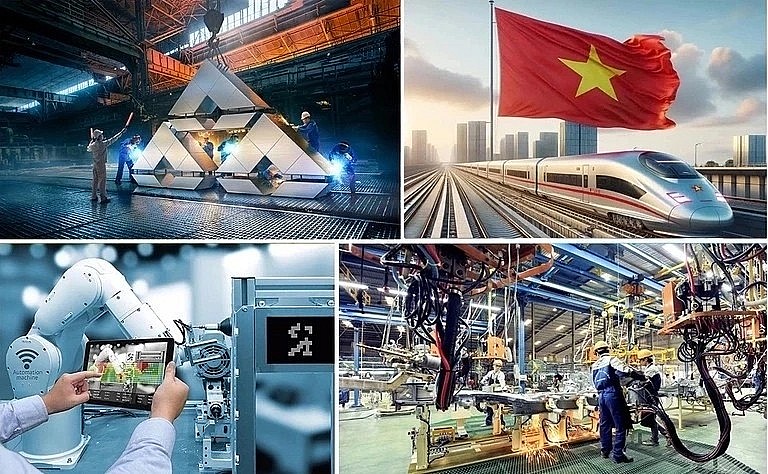 |
| Photo: VOV |
First, Vietnam should move from “policy support” to “rule-of-law guarantees” in order to strengthen the foundations of property rights. Policies can deliver timely results, while the rule of law provides stability. China's experience shows that only when protections for private enterprises are elevated to the constitutional and legal level can entrepreneurs truly gain a sense of security.
“Stable property leads to a stable mindset.” Real development, she argued, does not lie in “creating space”, but in strengthening property-rights protection through the rule of law and reducing opportunities for rent-seeking through transparency. This would allow private enterprises to move from a positive cycle “based on policy” to a positive cycle “based on institutions”.
Second, building a “clean and close” relationship between the State and businesses is of particular importance. This requires removing institutional barriers in order to create a more transparent and enabling business environment.
She therefore proposed establishing a negative list for market access, eliminating discrimination based on ownership, and opening all sectors outside that list to private enterprises. Implementing a “list of powers” and a “list of responsibilities” would help control administrative power and reduce unnecessary intervention in market and business activities. Only on that basis can stable and highly credible institutional commitments to economic actors be established.
Third, Vietnam should advance supply-side reform in the financial sector and improve capital channels. The essence of discrimination in finance, she said, lies in institutional returns. A financial assessment system focused on creditworthiness rather than ownership should be established, while the development of small and medium-sized banks and inclusive financial institutions should be encouraged. Vietnam should also explore supply-chain finance and credit-lending models, expand direct financing channels for private enterprises, and reduce excessive dependence on indirect bank financing and institution-related transaction costs.
Professor Tao stressed that Vietnam is currently at a critical juncture in its effort to realize a “new era of national rise”. In the long run, the development of the private sector depends not only on supportive policies but also on a stable, transparent institutional environment that guarantees fair competition.
Public power, she emphasized, should operate within the framework of law, while resources are to be allocated primarily through market mechanisms. These are important conditions for improving the effectiveness of the private sector and boosting the development of a socialist-oriented market economy.
Phong Nha named among top nature-connected wellness destinations
Phong Nha in the central province of Quang Tri has been recognized by online travel platform Agoda as one of outstanding resort destinations connected to nature in Asia in 2026, highlighting its growing appeal among travellers seeking relaxation, outdoor experiences and a closer connection with nature.
According to the provincial Department of Culture, Sports and Tourism, Agoda recently unveiled Asia's Hidden Nature Retreats for 2026, featuring places that offer visitors opportunities to unwind, restore mental well-being and recharge amid tranquil natural surroundings.
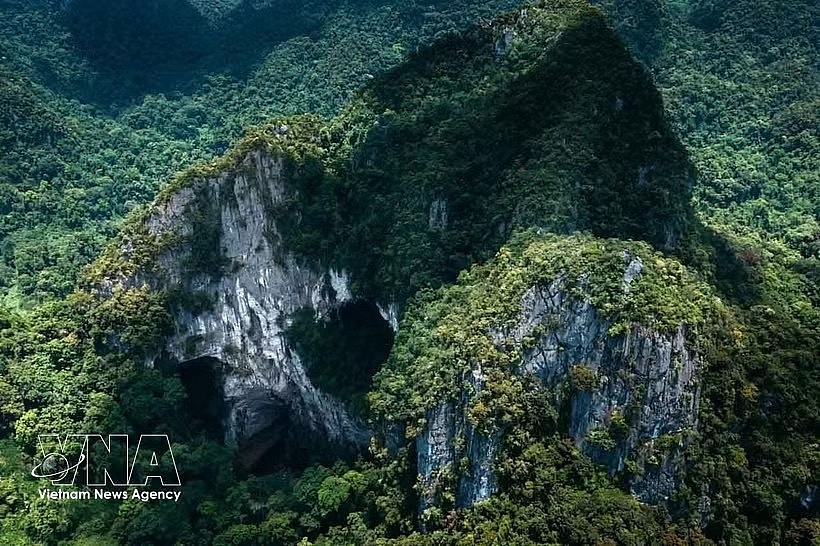 |
| Phong Nha is best known for its dramatic limestone karsts, vast primary forests and spectacular cave systems within the UNESCO-recognized Phong Nha–Ke Bang National Park. (Photo: VNA) |
Phong Nha was selected alongside several renowned destinations across the region, including Labuan Bajo in Indonesia, Naoshima in Japan, Chiang Dao in Thailand, Udaipur in India and Cameron Highlands in Malaysia.
According to Agoda, wellness and nature-based travel is gaining increasing popularity among travellers. Destinations offering tranquil landscapes, a clean environment, and experiences that promote physical and mental well-being are becoming top choices for many visitors.
Andrew Smith, Senior Vice President of Supply at Agoda, said destinations rich in natural resources are attracting growing interest by offering distinctive experiences that cater to rising demand for ecotourism and wellness travel.
Phong Nha is best known for its dramatic limestone karsts, vast primary forests and spectacular cave systems within the UNESCO-recognized Phong Nha–Ke Bang National Park. The area offers a wide range of outdoor and eco-tourism activities, including cave exploration, jungle trekking and nature-based activities, VNA reported.
Agoda highlighted that "Phong Nha is gaining recognition for its stunning limestone karsts and extensive cave systems, including the world-renowned Son Doong Cave." "Phong Nha's natural beauty and opportunities for eco-tourism make it an ideal spot for nature lovers and thrill-seekers alike."
 | Vietnam News Today (Jun. 7): ASEAN Future Forum 2026 affirms Vietnam’s standing; Half a century of Vietnam-Thailand ties: Working together for ASEAN’s future; Vietnam, Canada ... |
 | Vietnam News Today (Jun. 8): Regional Leaders Gather in Hanoi to Shape ASEAN’s Next Chapter Vietnam News Today (Jun. 8): Vietnam, Laos aim for US$10 billion in bilateral trade by 2030; Vietnam, Thailand political parties seek closer ties; Regional leaders ... |

Most read
Related Stories
 Economy
Promoting Role of Private Economic Sector
In topics
 National
Vietnam News Today (July 1): Vietnam and UAE Sign Defense Industry Cooperation Memorandum
 National
Vietnam News Today (Jun. 30): Government Chief Pushes for Breakthroughs in Vietnam-Australia Relations
 National
Vietnam News Today (Jun. 29): Vietnam Joins World's Top 30 Most Competitive Economies
 National
Vietnam News Today (Jun. 28): Vietnam, Cambodia Advance Together Towards the Future
Recommended
 National
Foreign Affairs Should Better Serve National Development: Top Leader
 National
Leveraging Foreign Investment to Strengthen Domestic Capacity, Enhance Self-reliance: Top Leader
 National
Ha Noi Unveils 100-Year Master Plan
 National
Hue Uses Ground-Penetrating Radar to Locate Suspected Mass Graves
Popular article
 National
Da Nang: Determined to Eliminate Drug Crime
 National
Vietnam Launches Nationwide Campaign to Build Drug-Free Communes, Wards, and Special Zones
National
Vietnam News Today (Jun. 29): Vietnam Joins World's Top 30 Most Competitive Economies
National