| Vietnam News Today (Mar. 22) notable headlines Vietnam and Indonesia to deepen strategic cooperation across key sectors PM’s official visit to bolster Vietnam-Russia Comprehensive Strategic Partnership PM holds dialogue with Japanese businesses to deepen economic ties Vietnam reaffirms Russia as key strategic partner, says ambassador Vietnam ranks 46th in World Happiness Report 2025 Vietnamese destinations attracting Korean visitors amid “micro-trip” trend Russian Ambassador highlights priority areas to deepen Vietnam–Russia cooperation Structured, favorable conditions sought for Vietnam–Italy business cooperation: Deputy PM FDI disbursement in Jan–Feb reaches five-year high |
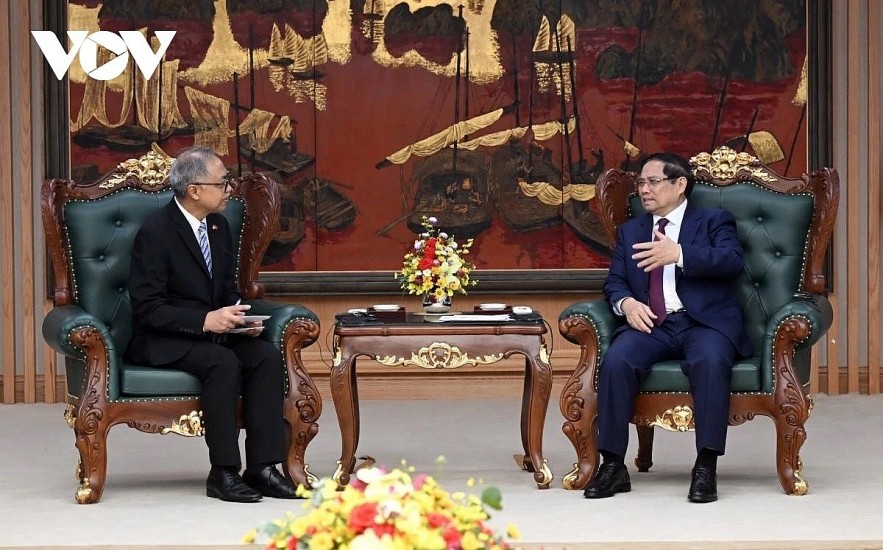 |
| Vietnamese Prime Minister Pham Minh Chinh (R) receives Indonesian Ambassador Adam Mulawarman Tugio in Hanoi on March 20. |
Vietnam and Indonesia to deepen strategic cooperation across key sectors
Vietnam and Indonesia are seeking to deepen cooperation across trade, energy and regional issues, as Prime Minister Pham Minh Chinh met Indonesian Ambassador Adam Mulawarman Tugio in Hanoi on March 20.
At the meeting, the Prime Minister called for stronger and more substantive implementation of existing agreements, including outcomes of high-level exchanges in 2025, with a focus on expanding market access, strengthening supply chains and enhancing economic connectivity between the two countries.
He proposed accelerating cooperation in key areas such as trade, the halal industry, fisheries and efforts to combat illegal, unreported and unregulated (IUU) fishing, while promoting collaboration in education, tourism and people-to-people exchanges.
Looking ahead, the PM emphasized the importance of strengthening connectivity between the two economies through green and digital transformation, including shared data systems and closer coordination in ensuring energy security, particularly within the ASEAN power grid to prevent supply disruptions.
On regional and international issues, he underscored the need to maintain peace, stability, safety and freedom of navigation and overflight in the East Sea, calling for disputes to be resolved peacefully in accordance with international law, including the 1982 United Nations Convention on the Law of the Sea (UNCLOS). He also urged full implementation of the Declaration on the Conduct of Parties in the East Sea (DOC) and progress toward an effective and substantive Code of Conduct (COC).
Reaffirming the broader strategic context, the Prime Minister noted that Indonesia remains one of Vietnam’s most important partners in the region. The bilateral relationship, built on foundations laid by presidents Ho Chi Minh and Sukarno, has continued to grow, especially following its upgrade to a Comprehensive Strategic Partnership and the 70th anniversary of diplomatic ties in 2025, cited VOV.
Economic cooperation is a key pillar, with two-way trade reaching US$17.2 billion in 2025. Vietnamese companies including VinFast, FPT Corporation, TH Group and Mobile World Group have expanded their presence in Indonesia, while more businesses are exploring opportunities in the market.
During the meeting, the Prime Minister also extended greetings from Party General Secretary To Lam to Indonesian President Prabowo Subianto on the occasion of the upcoming Idul Fitri holiday, highlighting the importance of strengthening ties based on solidarity for strength, cooperation for mutual benefit and dialogue to build trust.
For his part, Ambassador Tugio welcomed Vietnam’s proposals and expressed his country’s interest in further expanding trade, with a target of reaching US$18 billion in the near term.
He also highlighted potential cooperation in green energy transition, including wind and solar power, battery production and electric vehicles, as well as opportunities for Vietnamese firms to invest in Indonesia’s mining and processing sectors such as nickel, copper and aluminum.
The ambassador affirmed his commitment to promoting bilateral cooperation, contributing to the shared interests of both countries and to peace, stability and development in the region and beyond.
PM’s official visit to bolster Vietnam-Russia Comprehensive Strategic Partnership
Prime Minister Pham Minh Chinh's official visit to Russia from March 22 - 25 will contribute to advancing the Vietnam–Russia Comprehensive Strategic Partnership in a more substantive, effective and sustainable manner, for the benefit of both countries' people and for peace, cooperation and development in the region and the world, Deputy Minister of Foreign Affairs Le Thi Thu Hang told the media.
Hang said that the trip, to be made at the invitation of Russian Prime Minister Mikhail Mishustin who paid an official visit to Vietnam in January 2025, carries important significance, describing it as a practical step in implementing Vietnam’s foreign policy of independence, self-reliance, peace, cooperation and development, as well as diversification and multilateralization, as endorsed by the 14th National Party Congress.
The visit will reaffirm the enduring traditional friendship and trusted cooperation between the two countries, while also providing an opportunity to strengthen the bilateral ties both in breadth and depth with a forward-looking vision. It will help create favorable external conditions and mobilise resources for Vietnam’s development in a new era.
During the visit, PM Chinh is expected to hold meetings with high-ranking Russian leaders, visit economic, scientific and educational establishments, and review the implementation of existing cooperation agreements. The two sides are also set to address bottlenecks and identify new drivers for collaboration across traditional areas.
They will discuss major orientations for future cooperation, including launching specific projects aligned with Vietnam’s development priorities, such as new energy, infrastructure and transport connectivity, high technology, biomedicine, healthcare, and high-quality human resource training - the areas in which Russia has considerable strengths and experience, said Hang.
The PM will meet the Vietnamese community in Russia to listen to their aspirations and reaffirm the Party and State’s consistent policy of supporting and protecting overseas Vietnamese’s legitimate rights and interests and promoting the great national unity bloc and national strength.
Regarding measures to further elevate the bilateral ties, the official noted that the Vietnam-Russia relations have continued to develop steadily on the solid foundation of traditional friendship and comprehensive strategic partnership. Political trust has been reinforced through frequent high-level exchanges and effective cooperation mechanisms, according to VNA.
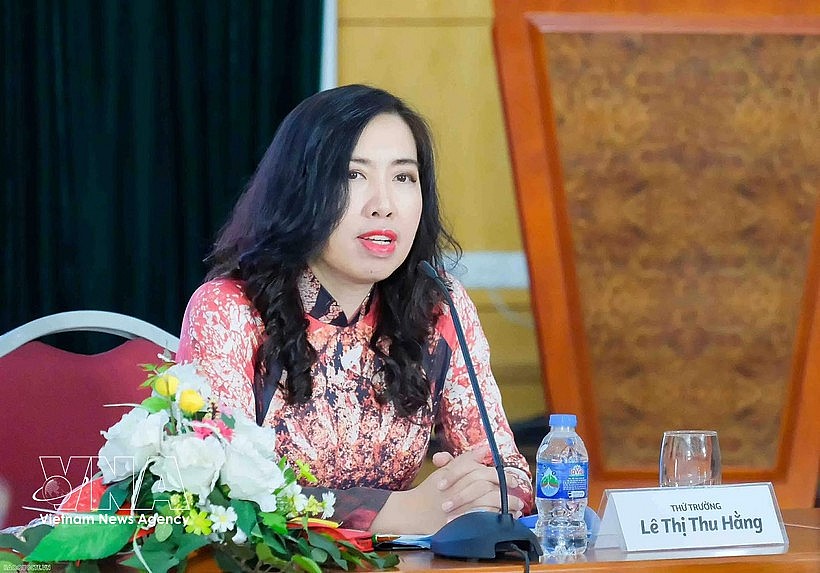 |
| Deputy Minister of Foreign Affairs Le Thi Thu Hang (Photo: VNA) |
Traditional areas of cooperation, including defense-security, trade, energy, science-technology, and education-training, have been strengthened, while new areas such as innovation, digital transformation, green transition, and advanced technologies are being expanded.
Looking ahead, Hang suggested both sides promote coordinated and comprehensive engagement across the three pillars of Party diplomacy, State diplomacy, and people-to-people exchanges. In addition to strengthening existing areas, greater emphasis should be placed on cultural and educational cooperation, tourism, and youth exchanges.
On education and training, she noted that generations of Vietnamese students trained in Russia have made significant contributions to national development, and that both countries should further expand ties in fields where Russia excels, such as digital technology, quantum technology, biomedicine, and fundamental sciences.
In terms of people-to-people ties, she highlighted the importance of enhancing cultural, artistic and sporting exchanges, as well as organising regular cultural events in both countries. She referred to the Vietnamese Cultural Festival held at Red Square in 2025 to mark the 75th anniversary of diplomatic relations, and noted that 2026 will see a wide range of science and education activities in both countries.
Tourism cooperation has shown strong recovery and should be further facilitated through improved legal frameworks to ease travel between the two nations, Hang added.
The deputy minister also underscored the important role of the Vietnamese community in Russia, numbering around 80,000 people, describing them as a vital bridge in the bilateral relations. She noted that most community members are well-integrated, hardworking, and actively contributing to both societies, with many achieving success as entrepreneurs and professionals.
Vietnam will continue to protect the legitimate rights and interests of its citizens abroad while encouraging their contributions to national development, and at the same time will work with Russia to ensure favorable conditions for the community to live, work and study, she affirmed.
PM holds dialogue with Japanese businesses to deepen economic ties
Prime Minister Pham Minh Chinh called on Japanese businesses to continue placing their trust in Vietnam while chairing a dialogue with Japanese enterprises in Hanoi on March 21.
PM Chinh emphasised that the dialogue reflected the Vietnamese Government’s high regard for cooperation with Japan and for the success of Japanese enterprises in Vietnam, which contribute to prosperity in both countries.
He reaffirmed that the Vietnam–Japan Comprehensive Strategic Partnership for Peace and Prosperity in Asia and the World has continued to develop strongly, with economic, trade, and investment cooperation remaining a key pillar. Japan remained one of Vietnam’s leading economic partners, ranking first in cooperation in official development assistance (ODA) and labour, third in investment, and fourth in trade and tourism.
On behalf of the Government, PM Chinh showed his high appreciation and sincere gratitude for the practical and effective contributions made by Japanese enterprises to Vietnam’s development and the friendship between the two countries, reported VNA.
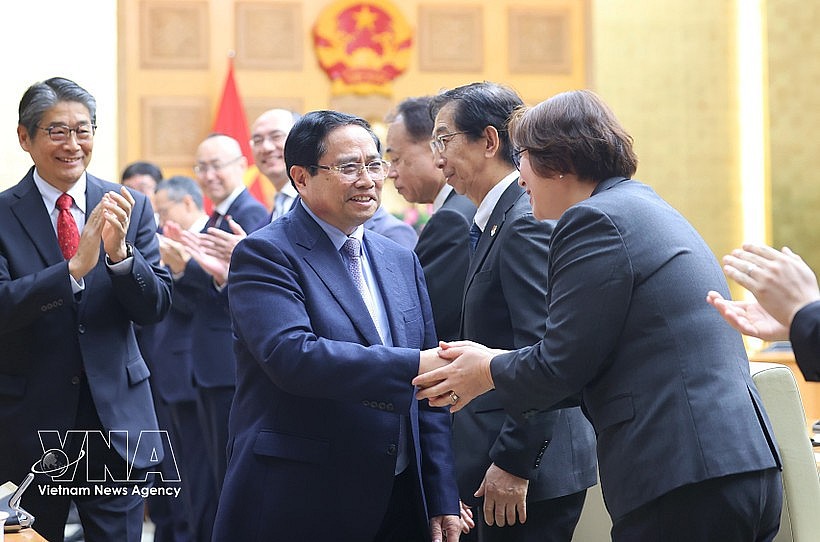 |
| Prime Minister Pham Minh Chinh meets with leaders of Japanese businesses. (Photo: VNA) |
He expressed his hope that Japanese enterprises, with their experiences, resources and strong reputation, will support Vietnam in accessing shifting investment flows and sustainable green finance, including initiatives such as the Asia Zero Emission Community (AZEC), as well as funding for science, technology and innovation, and ODA for key infrastructure projects such as the construction of Hanoi’s Metro Line No. 2.
Vietnam prioritizes attracting investment projects that emphasise quality, efficiency, advanced technology and environmental protection, particularly in sectors such as the green, digital, circular and knowledge-based economy; science and technology, innovation, electronic components and electric vehicles; semiconductor manufacturing, new energy such as hydrogen, and renewable energy.
The PM called on both sides to further strengthen cooperation in order to consolidate supply chains, develop supporting industries, and build a highly skilled workforce, thereby ensuring stable production activities for mutual benefit in a diversified, transparent and sustainable manner.
He urged the Japanese Government and business community to continue paying attention to and accelerating the implementation of key cooperation projects, particularly in high technology, and address longstanding bottlenecks, including the restructuring of the Nghi Son Refinery and the diversification of crude oil supply sources in the current context.
Japanese investors were also encouraged to further support and create favourable conditions for Vietnamese enterprises to integrate more deeply and substantively into global supply chains.
The Vietnamese Government, he said, remains committed to ensuring political stability, social order and safety; safeguarding investors’ legitimate rights and interests; maintaining a transparent and favourable policy environment; and promoting a spirit of shared vision, shared action, and shared benefits.
Stressing the importance of the “harmonizing interests, sharing risks” spirit, PM Chinh encouraged Japanese firms to continue contributing to the shared prosperity of both nations as well as to the Vietnam–Japan Comprehensive Strategic Partnership for Peace and Prosperity in Asia and the World.
At the dialogue, Japanese Ambassador to Vietnam Ito Naoki and Japanese enterprises highly appreciated the outcomes of two similar dialogues held in 2025, noting that they had helped address bottlenecks in a timely manner.
The diplomat affirmed that the Japanese Government supports Vietnam’s reform efforts, while businesses hold strong expectations for further progress and are keen to expand cooperation, contributing to shaping the country’s new growth model.
Wakabayashi Koichi, President of the Japan Business Association in Vietnam, highlighted growing interest among Japanese firms in the Vietnamese market, pointing to the country’s robust economic growth and improved administrative efficiency. Despite increasing global uncertainties, including tensions in the Middle East and energy price volatility, he assessed that Vietnam’s stable investment environment and reform momentum will stand out as competitive advantages.
Japanese enterprises increasingly view Vietnam not only as a manufacturing base but also as a partner in higher value-added sectors, he added.
Vietnam reaffirms Russia as key strategic partner, says ambassador
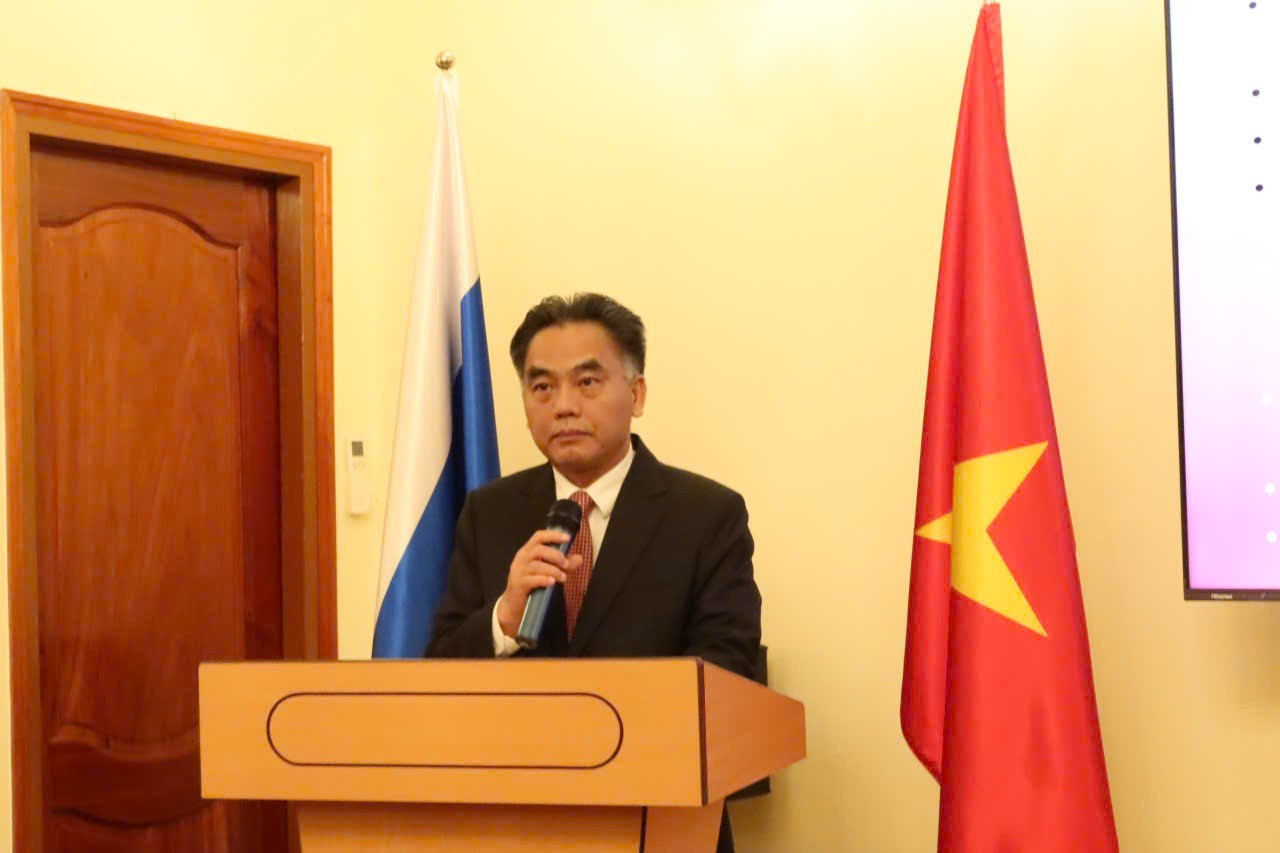
Vietnam considers Russia a top strategic partner, with Prime Minister Pham Minh Chinh’s upcoming visit expected to deepen traditional cooperation and open new avenues for long-term cooperation, Vietnamese Ambassador to Russia Dang Minh Khoi has said.
Prime Minister Chinh’s March 22-25 visit to Russia marks a significant diplomatic engagement shortly after Vietnam’s recent major political milestones, including the success of the 14th National Congress of the Communist Party of Vietnam and the elections of deputies to the 16th National Assembly and local People’s Councils, according to Ambassador Khoi.
The visit underscores Vietnam’s consistent foreign policy of independence, self-reliance, diversification and multilateralization, while reaffirming Russia as one of its most important strategic partners, said the diplomat.
The trip is expected to build on high-level agreements reached during Party General Secretary To Lam’s previous visit, further strengthening bilateral ties and unlocking new drivers for cooperation, VOV reported.
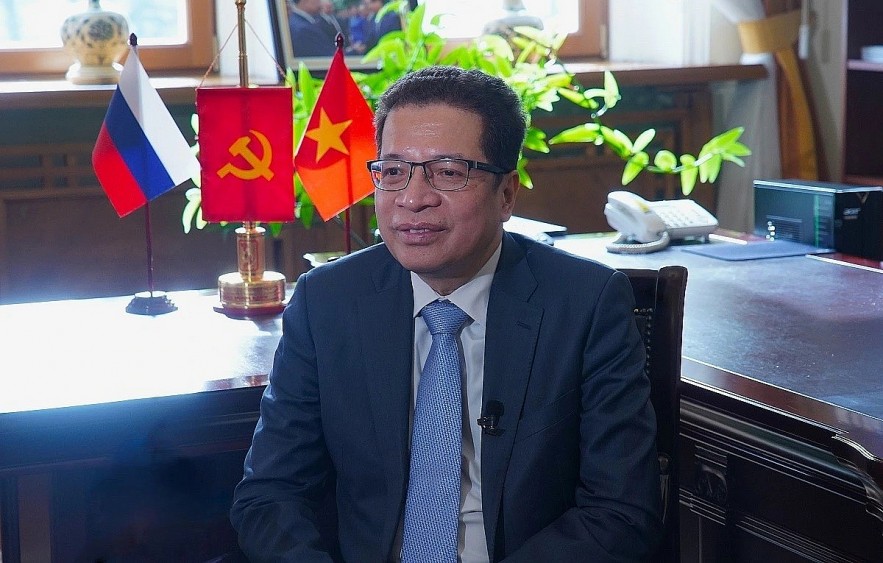 |
| Vietnamese Ambassador to Russia Dang Minh Khoi. |
Traditional pillars such as defense and security cooperation are anticipated to be reinforced, while energy, particularly oil and gas, could be elevated to a more strategic level, contributing to Vietnam’s long-term energy security.
At the same time, both sides are looking to expand cooperation into emerging sectors. Science and technology, education and training, and people-to-people exchanges are seen as key areas with strong potential to create new momentum in bilateral relations.
High-tech fields such as artificial intelligence, quantum technology and semiconductor manufacturing are also set to feature prominently during the visit, as Vietnam seeks to enhance its technological capacity and integrate more deeply into global value chains.
Nuclear energy cooperation is another notable area. With Russia’s strengths in nuclear research and plant construction, potential collaboration in projects such as the Ninh Thuan 1 nuclear power plant could help Vietnam develop its civilian nuclear sector and build a skilled workforce for the future.
Beyond economic and technological cooperation, cultural and educational exchanges continue to play a vital role in strengthening long-term ties. Despite geographical distance, Ambassador Khoi said, the two countries share common values in cultural traditions and national identity, providing a solid foundation for deeper engagement.
From a diplomatic perspective, the ambassador said, the visit sends a clear message that Vietnam is committed to maintaining strong relations with traditional partners while actively contributing to regional and global peace and stability.
As global dynamics continue to evolve, the visit highlights Vietnam’s balanced and consistent foreign policy approach - prioritizing national interests while expanding international cooperation and reinforcing its position on the global stage.
Vietnam ranks 46th in World Happiness Report 2025
Vietnam was ranked 46th in the World Happiness Report 2025, its highest position since the ranking was first introduced in 2012.
The Southeast Asian country climbed eight places from 2024, 19 from 2023, and 50 compared to its 96th position in 2016.
Vietnam remains the second happiest country in Southeast Asia after Singapore, which fell two places to 36th this year. The two countries are also the only Southeast Asian nations in the global top 50.
Globally, Vietnam's upward trend contrasts with many developed Western countries, where happiness levels have generally declined over the past 15 to 20 years. In contrast, several developing nations, including Vietnam, have recorded notable gains, reflecting improvements in economic growth, living standards and social stability, as well as growing positive public perceptions.
With a score of 6.428 out of 10, Vietnam is among 21 countries that have seen significant improvements in happiness compared with the 2006-2010 period, VGP reported.
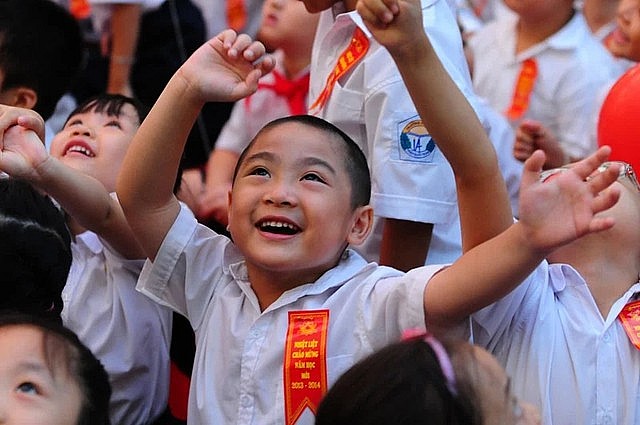 |
| Happy children on their first day of accademic year - Illustration photo |
Looking ahead, the 14th National Party Congress set a target for Vietnam to rank among the world's top 40 countries in the happiness rankings by 2030.
This ambition is underpinned by national strategies that prioritise quality of life, including adjustments to the national master plan for 2021–2030 with a vision to 2050. Key directions include strengthening social security, expanding healthcare and education, and raising the Human Development Index (HDI) to around 0.8 alongside higher per capita income.
Environmental protection has been identified as an urgent priority, with plans aimed at maintaining a green, clean, and culturally rich living environment, improving disaster forecasting and climate monitoring, and enhancing risk management to safeguard people's lives.
The Resolution of the 14th National Party Congress outlined the development orientation of the country for the 2026-2030 period, underlining the need to continue renewing mindset and action, promoting development to ensure stability, and using stability as a foundation for further development and improving people's living standards and happiness.
 | Vietnam News Today (Mar. 17): Vietnam, Switzerland Push to Accelerate Vietnam – EFTA FTA Talks Vietnam News Today (Mar. 17): Vietnam and China launch first “3+3” ministerial strategic dialogue; Vietnam, Switzerland push to accelerate Vietnam – EFTA FTA talks; EU ... |
 | Vietnam News Today (Mar. 18): Vietnam, China Agree to Strengthen Cooperation, Better Manage Differences Vietnam News Today (Mar. 18): PM calls for stronger Vietnam–US cooperation in education, human resource development; PM urges Qatar to step up energy cooperation with ... |