| Vietnam News Today (May 4) notable headlines Vietnam–India ties poised for new strategic breakthrough: Scholar FDI inflows and disbursement in January-April reach five-year high Vietnam trade deficit reaches US$7.11bln as imports surge in early 2026 Vietnam OCOP products build domestic strength, move into global markets Vietnamese students in Singapore promote homeland’s culture through music Trang An Festival honors heritage and spirituality in Ninh Binh Cu Lao Cham poised to become Da Nang’s green paradise Tourists surge during Hung Kings’ Commemoration Day, April 30–May 1 holidays Japanese media highlight Vietnam’s strategic role during PM Takaichi Sanae’s visit |
 |
| Prof. Anmol Mukhia from South Asian University (Photo: VNA) |
Vietnam–India ties poised for new strategic breakthrough: Scholar
With Vietnam–India ties resting on a solid foundation, the upcoming state visit by General Secretary of the Communist Party of Vietnam Central Committee and State President To Lam will play a pivotal role in shaping the next phase of relations toward deeper, more substantive and long-term strategic cooperation.
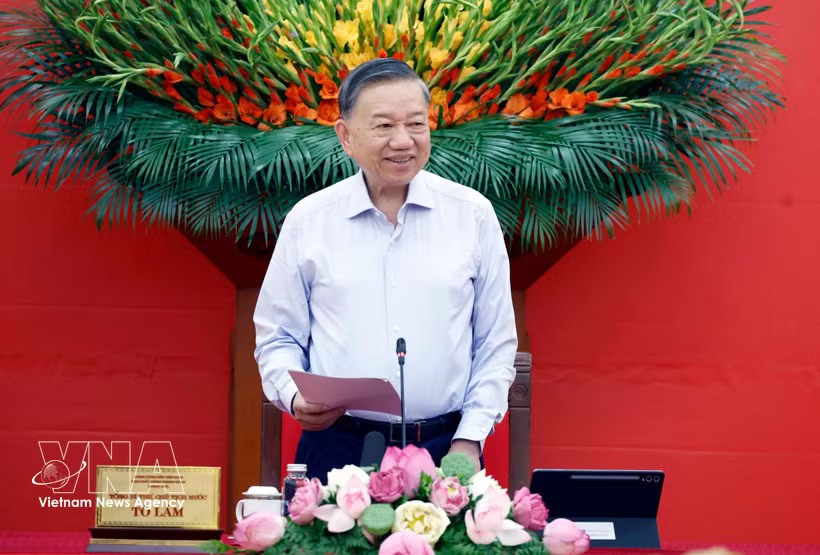
The May 5-7 state visit to India by General Secretary of the Communist Party of Vietnam (CPV) Central Committee and State President To Lam carries significance as the two nations mark the 10th anniversary of their Comprehensive Strategic Partnership, said Prof. Anmol Mukhia from South Asian University.
Talking to the Vietnam News Agency’s reporters based in New Delhi, Mukhia said Vietnam–India relations have evolved over the past decade from traditional friendship into an increasingly extensive strategic cohesion, with bilateral ties now extending into multilateral frameworks and reflecting a shared approach centered on openness and inclusivity in foreign policy.
Since their Comprehensive Strategic Partnership began in 2016, cooperation has broadened well beyond its initial focus on information technology and cybersecurity to encompass national defence, nuclear safety, and critically, infrastructure connectivity and communications, with a 2020 virtual summit anchoring cooperation on three pillars of peace, prosperity and humans.
Regarding peace, both countries have worked to reinforce regional security and stability, including through United Nations peacekeeping missions, cited VNA.
On prosperity, Vietnam and India are pursuing long-term development goals — Vietnam targeting 2045 and India 2047 — with an emphasis on digital transformation and economic expansion. The “humans” pillar is reflected in policies aimed at sustainable social development aligned with the UN Sustainable Development Goals.
More recently, bilateral cooperation has moved into maritime and maritime security domains, including search and rescue and an increased presence in strategic waters, a shift Mukhia called “noteworthy and proactive".
Against an increasingly complex Indo-Pacific backdrop, he stressed that Vietnam–India ties are vital to maintaining regional balance and stability, with both nations sharing a vision of an open and inclusive region and Asia’s centrality. The region accounts for roughly 40% of the world’s population and serves as a critical maritime trade artery.
India has advanced initiatives such as SAGAR (Security and Growth for All in the Region), later widened into a broader strategic framework. Simultaneously, India’s Act East policy identifies Vietnam as a key partner in Southeast Asia.
Mukhia cautioned that the lack of direct infrastructure connectivity, particularly road and rail links, remains a limitation. Regional connectivity projects like the East–West Economic Corridor and routes through Myanmar, if completed, could mark a “strategic turning point” that boosts regional trade and integration.
On challenges, he noted that while ties are moving in a positive direction, bilateral trade turnover, now at about 16.5 billion USD, still falls short of potential. Both sides should target 25-30 billion USD by deepening cooperation in technology, pharmaceuticals, electronics and environment.
Geopolitical headwinds are also slowing regional connectivity projects. Strengthening dialogue and coordination with regional partners will be key to tackling these bottlenecks, he said.
Mukhia underscored that high-level exchanges are critically important, describing the strong political trust between the two countries as a solid foundation, with such visits serving as the “backbone” to advance relations, enhance policy dialogue, consolidate cooperation and accelerate the realisation of agreements.
The upcoming visit by the top Vietnamese Party and State leader carries substantial practical significance. It is expected to reinforce political trust, enable both sides to review and deepen strategic cooperation, and promote top-level policy dialogue, thereby fast-tracking existing agreements and opening new avenues in technology, infrastructure connectivity, digital economy and maritime security, he said.
Notably, he stressed the need to broaden cooperation at the local level and increase people-to-people exchanges, which would boost cultural ties, foster community connections, and unlock untapped potential in less-explored regions such as northeast India, an important gateway under India’s Act East policy, creating substantive and long-term shifts in bilateral ties.
At this stage, with Vietnam–India ties resting on a solid foundation, the upcoming high-level visit will play a pivotal role in shaping the next phase of relations toward deeper, more substantive and long-term strategic cooperation, he concluded.
FDI inflows and disbursement in January-April reach five-year high
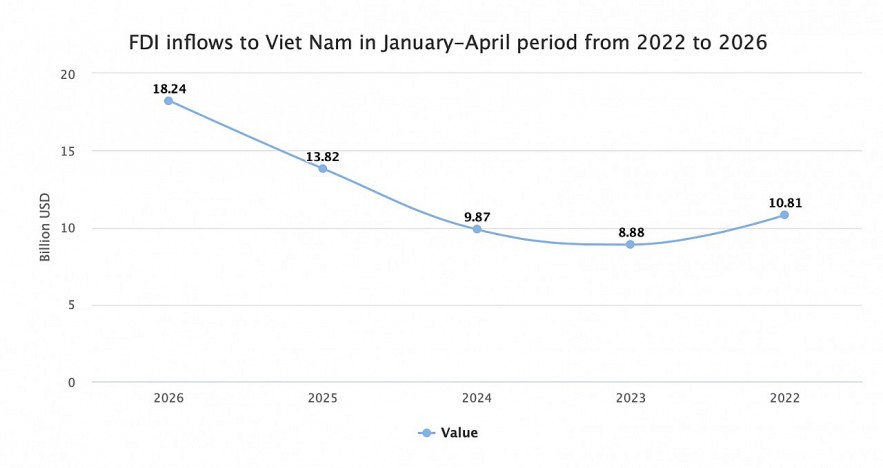
Both FDI inflows and disbursement volume reached five-year high in the first four months this year, according to the National Statistics Office.
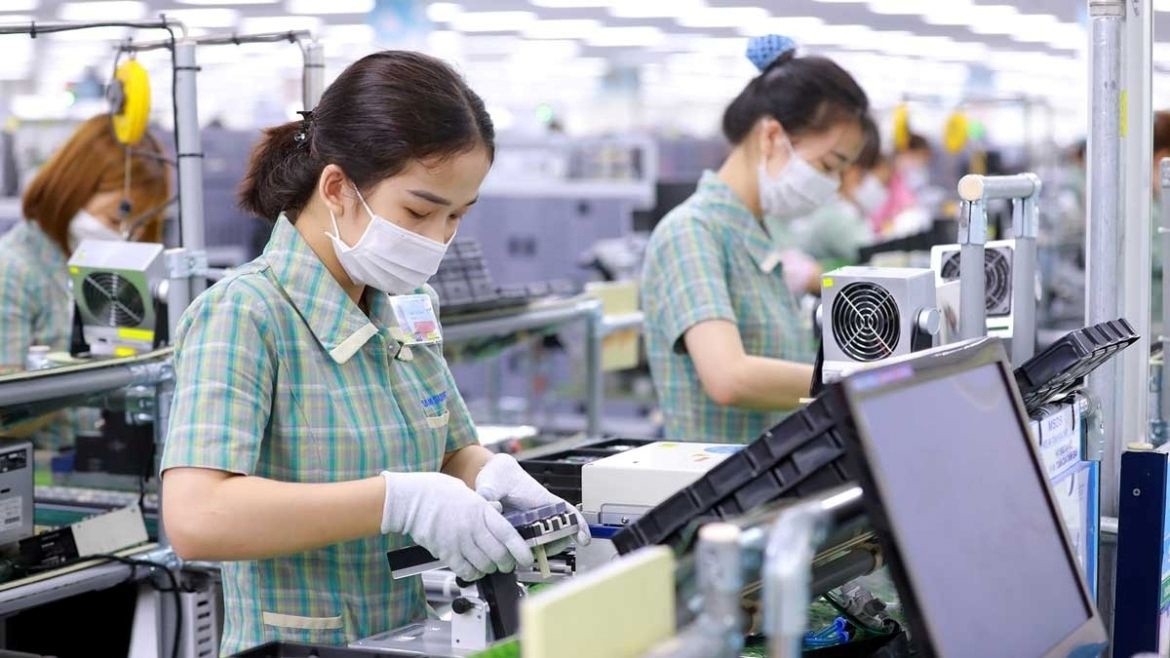
Foreign direct investment inflows into Vietnam reached US$18.24 billion while disbursed volume was estimated at US$7.4 billion in January-April period, the National Statistics Office reported Sunday.
In the first four months this year, Vietnam licenced 1,249 projects with total registered capital of US$12.15 billion.
Processing and manufacturing continued to take the lead by attracting US$8.12 billion, accounting for 66.8 percent of the total FDI inflows, followed by production and distribution of electricity, gas, and air conditioners, with US$2.31 billion, according to VGP.
 |
| Photo: VGP |
Singapore was the top foreign investor in the reviewed period as it poured US$6.05 billion in Vietnam. South Korea and China came second and third with US$4.08 billion, and US$524.1 million, respectively.
Foreign trade soars
Vietnam's trade with the rest of the world was estimated to reach US$344.17 billion in the first four months this year, according to the National Statistics Office.
This is the remarkable increase compared to US$277.21 billion of the same period last year, said the statistics agency.
In April alone, the trade volume was estimated at US$94.32 billion, an increase of eight percent from March and 26.7 percent against the same period last year.
The U.S. remained the largest importer of Vietnamese goods with US$53.9 billion while China sustained its position as the top goods supplier to Vietnam with US$69 billion.
Vietnam's imports from tradional markets significantly increased in the January-April period, with South Korea and ASEAN reporting growth rates of 57.8 percent and 44.3 percent, respectively.
Vietnam trade deficit reaches US$7.11bln as imports surge in early 2026
Vietnam recorded a trade deficit of US$7.11 billion in the first four months of 2026 as imports rose sharply, outpacing strong export growth and reflecting rising demand for production inputs as well as continued reliance on the foreign invested sector.
According to the National Statistics Office under the Ministry of Finance, export turnover in April was estimated at US$45.52 billion, down 2% compared with the previous month. The domestic sector accounted for US$8.88 billion, declining 1.2%, while the foreign invested sector generated US$36.64 billion (including from crude oil), down 2.1%.
Compared with the same period last year, however, exports in April increased 21%, driven largely by the foreign invested sector which rose 29.2%, while exports from the domestic sector fell 4.2%.
For the first four months, total export turnover brought back an estimated US$168.53 billion, up 19.7% year on year. The domestic sector contributed US$33.65 billion, rising 0.4% and accounting for 20% of total exports, while the foreign invested sector generated US$134.88 billion, up 25.8% and making up 80%.
During this period, 24 export items recorded turnover exceeding US$1 billion, representing 89.1% of total exports, including seven items with export value above US$5 billion.
Manufactured goods continued to dominate the country’s export structure, accounting for US$151.5 billion or 89.9%. Agricultural and forestry products earned US$12.68 billion, equivalent to 7.5%, while fisheries accounted for US$3.55 billion or 2.1%. Fuel and mineral exports remained modest at US$0.8 billion, making up just 0.5%.
On the import side, Vietnam recorded strong growth driven by demand for machinery, equipment and raw materials. Import turnover in April was estimated at US$48.8 billion, up 3.6% from the previous month. The domestic sector hit US$13.8 billion, increasing 2.6%, while the foreign invested sector totaled US$35 billion, up 4%. Compared with a year earlier, imports in April surged 32.5%, with the domestic sector rising 22.7% and the foreign invested sector increasing 36.8%.
In the first four months of 2026, total import turnover hit US$175.64 billion, up 28.7% year on year. The domestic sector imported US$49.27 billion, rising 20.4%, while the foreign invested sector made up US$126.37 billion, up 32.3%. There were 30 imported items with turnover exceeding US$1 billion, accounting for 87.4% of total imports, including two items surpassing US$5 billion, VOV reported.
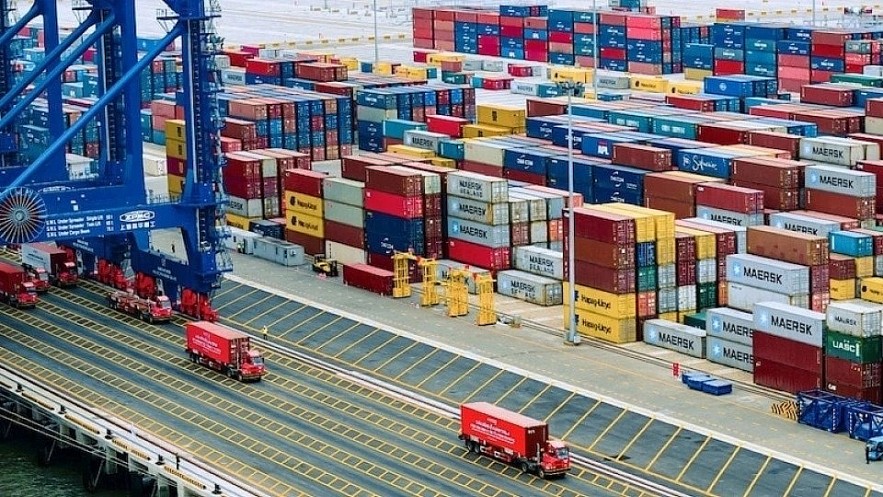 |
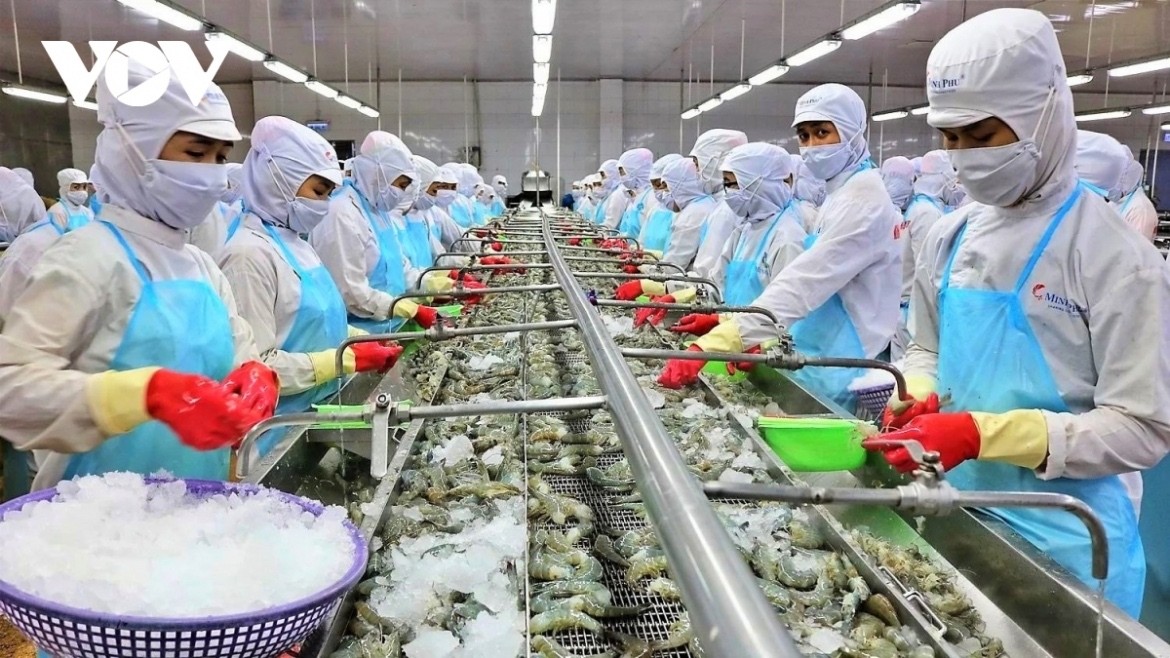
| Vietnam posts a US$7.11 billion trade deficit in the first four months of 2026 as imports surged 28.7%, reflecting strong demand for production inputs and FDI-led exports. (Illustrative image) |
Production related goods continued to dominate import structure, representing US$165.37 billion or 94.2% of total imports. Within this category, machinery, equipment and spare parts made up 54.8%, while raw materials and fuels accounted for 39.4%. Consumer goods represented a relatively small share at US$10.27 billion, or 5.8%.
Vietnam’s trade balance recorded a deficit of US$3.28 billion in April alone. For the first four months of 2026, the country posted a trade deficit of US$7.11 billion, reversing a surplus of US$4.3 billion in the same period last year. The domestic sector recorded a deficit of US$15.61 billion, while the foreign invested sector maintained a surplus of US$8.5 billion, highlighting a structural imbalance in trade performance.
The United States remained Vietnam’s largest export destination with turnover estimated at US$53.9 billion, while China continued to be the largest source of imports at US$69 billion. Vietnam posted a trade surplus of US$46.9 billion with the United States, up 24.4% year on year, and a surplus of US$14.2 billion with the European Union, rising 6.7%. The country also recorded a modest surplus of US$0.5 billion with Japan, though this declined 28%. Meanwhile, trade deficits widened with China to US$46.4 billion, up 33.4%, with the Republic of Korea to US$15 billion, up 57.8%, and with ASEAN to US$7.6 billion, up 44.3%.
The latest figures underscore strong demand for production inputs as Vietnam’s manufacturing sector expands, while also reflecting the continued dominance of the foreign invested sector in driving export growth.
Vietnam OCOP products build domestic strength, move into global markets
After more than seven years of implementation, Vietnam’s One Commune One Product (OCOP) program has not only reshaped the rural goods market at home but is also gradually bringing local specialties to international markets.
However, to secure a sustainable position globally, OCOP products still face challenges in scale, quality, and branding.
From rural initiative to domestic market driver
Launched nationwide in 2018, the OCOP program aims to boost rural economic development by enhancing the value and branding of local specialty products across Vietnam.
Over the past years, OCOP has developed a relatively comprehensive product ecosystem. According to the Ministry of Agriculture and Environment (MoAE), Vietnam currently has more than 20,000 OCOP products rated three stars or higher, spanning categories such as food, beverages, herbal products, and handicrafts. Among them, 126 products have achieved the highest five-star national rating (as of May 2025).
Beyond quantity, product quality has improved significantly. Many OCOP products now feature upgraded production processes, packaging, and branding, gradually meeting domestic market demands while moving toward export readiness.
The program has been recognised as a key driver of rural economic growth, contributing to value chain development, job creation, and increased incomes for local communities. It is also increasingly linked with rural tourism, helping promote regional culture and specialties.
The MoAE is currently refining OCOP criteria for the 2026–2035 phase, aiming to standardise evaluation processes and elevate product quality, laying the groundwork for sustainable development and broader market expansion.
Gradual integration into global value chains
From a domestic focus, many OCOP products have now reached dozens of international markets, gradually establishing their presence globally.
As of July 2025, more than 60% of Vietnam’s five-star OCOP products have been exported to demanding markets such as the United States, Europe, and Japan. This reflects the program’s growing potential within global value chains.
Key export categories include coffee, cashew nuts, pepper, tea, processed foods, and handicrafts, all leveraging Vietnam’s raw material advantages and local identity. These products increasingly meet international standards for quality, traceability, and food safety, VOV reported.
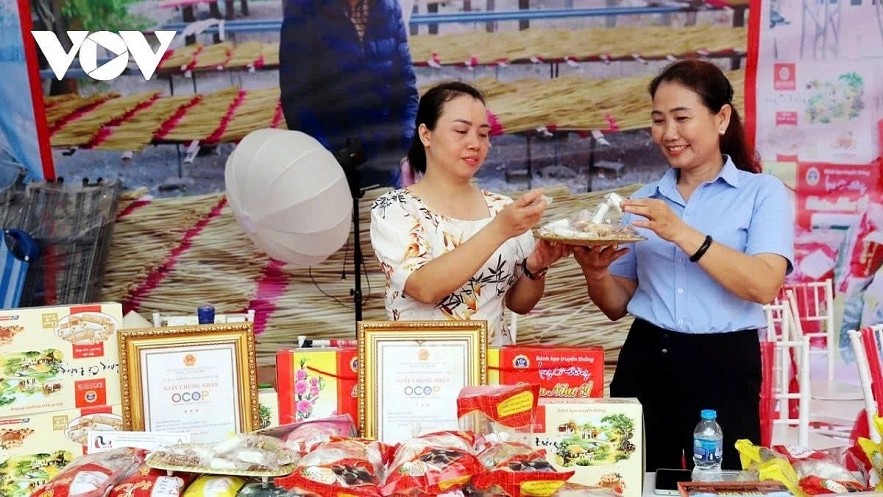 |
| Vietnam's OCOP products gain strong footing at home, winning consumer trust for high quality, affordable prices and diverse brands. |
Trade promotion activities have also intensified through events such as Vietnam OCOPEX, where domestic businesses and cooperatives connect directly with international partners. Meanwhile, e-commerce platforms and overseas Vietnamese distribution networks are helping OCOP products reach global consumers.
Amid global consumer trends favouring natural, local, and sustainable products, OCOP holds a strong competitive edge. The program is no longer confined to domestic development but is becoming part of global supply chains.
Challenges and growth potential
Despite initial achievements, expanding internationally remains challenging. Most OCOP producers are small enterprises, cooperatives, or household businesses with limited scale and uneven competitiveness.
Strict requirements in developed markets, including technical standards, packaging, and branding, continue to pose significant barriers. A lack of structured marketing strategies and stable distribution channels also makes it difficult for products to maintain a long-term presence abroad.
According to Nguyen Ba Hai, deputy director of the Trade and Investment Promotion Support Center, the main bottlenecks lie in market mindset and weak linkages. Fragmented production limits the ability to fulfill large and consistent orders, while inconsistencies in quality and labeling, along with language barriers, hinder storytelling for international consumers.
From a policy perspective, Dao Duc Huan, head of OCOP and Rural Tourism Management Division, emphasised that export is a long-term process. Technical barriers such as FDA certification, EU export codes, and Japanese standards require significant investment and persistence, with some businesses taking years to qualify.
Experts suggested that to strengthen OCOP’s global position, Vietnam must continue improving product quality to meet international standards, invest in packaging design and branding, and enhance linkages between enterprises and cooperatives to scale production.
They also recommended that OCOP stakeholders adopt a long-term export strategy, starting with a strong domestic foundation, standardised production processes, and consistent investment in quality and branding. Leveraging government support programs, participating in trade fairs, expanding cross-border e-commerce, and accelerating digital transformation will be key.
In the context of deep global economic integration, integrating OCOP products more deeply into global value chains is an inevitable direction. This not only enhances the value of local products but also promotes sustainable development in Vietnam’s rural areas.
Vietnamese students in Singapore promote homeland’s culture through music
Vietnamese students in Singapore marked the 51st anniversary of the Liberation of the South and National Reunification with a cultural program that celebrated national identity while strengthening bonds within the overseas Vietnamese community.
The Vietnamese Youth Alliance in Singapore (VNYA) on May 2 organized VNYA Concert 2026, under the theme “NHIP – The Rhythm of VietNam”, creating an emotional cultural space for Vietnamese students, workers and international friends in the city-state.
The event drew more than 250 participants, including Vietnamese students, workers and foreign guests living and studying in Singapore. The attendance of the Vietnamese Ambassador to Singapore and representatives of student organisations added to the warm and meaningful atmosphere, cited VNA.
 |
| Vietnamese students perform at the event. (Photo: VNA) |
More than a music performance, “NHIP – The Rhythm of VietNam” was designed as an emotional journey in which familiar melodies blended with the rhythm of life among young Vietnamese living abroad. From energetic contemporary songs to performances rich in traditional colours, each act portrayed a Vietnam that was both close to the heart and deeply distinctive.
Speaking to the Vietnam News Agency, Tran Phuc An Nhi, a member of the organising committee, said “nhip”, or rhythm, represented not only music but also the pulse and breath of Vietnamese youth in Singapore.
Through the program, organizers hoped students would find connection, shared understanding and pride in their cultural identity despite being far from home, Nhi said.
A highlight of the concert was the appearance of guest artists Vu Thanh Van and Trang, known as “Nhac cua Trang”, whose lively performances energised the audience. Student performers from Vietnam and other countries also won enthusiastic applause, creating a vibrant picture of cultural exchange.
Beyond its artistic value, the concert also carried a humanitarian message. All proceeds from ticket sales and donations will support disadvantaged children at the Thi Nghe orphanage and disability care center in Ho Chi Minh City, while also contributing to upcoming student volunteer activities.
 | Vietnam News Today (Apr. 29): Mongolia Always Values Ties With Vietnam Vietnam News Today (Apr. 29): Mongolia always values ties with Vietnam; Japanese PM’s Vietnam visit to elevate bilateral ties to new height; Vietnam calls for ... |
 | Vietnam News Today (Apr. 30): UN Official Praises Vietnam’s Preparations for 11th NPT Review Conference Vietnam News Today (Apr. 30): Japan sees Vietnam as central to its FOIP strategy, says Ambassador Ito Naoki; UN official praises Vietnam’s preparations for 11th ... |