Vietnam, Italy aspire to further promote strategic partnership
Vietnamese Ambassador to Italy Nguyen Phuong Anh has recently presented her credentials to Italian President Sergio Mattarella, with both sides expressing their desire to further strengthen the Vietnam-Italy strategic partnership across all areas.
At a meeting following the credential presentation ceremony, Ambassador Nguyen Phuong Anh conveyed greetings and best wishes from leaders of the Party, State, Government and National Assembly of Vietnam to President Sergio Mattarella. She said she was honored to take up her post and stressed that Vietnam attaches importance to and highly values its strong bilateral ties with Italy, including political trust and wide-ranging cooperation.
She expressed her wish to further promote bilateral relations, particularly in areas of shared interest such as trade, investment, high technology and cross cultural exchanges.
President Sergio Mattarella congratulated Ambassador Nguyen Phuong Anh on her appointment and voiced confidence that during her tenure she will make positive contributions to bringing bilateral relations to a higher level. He spoke highly of Vietnam’s socio-economic achievements and affirmed that Vietnam is one of Italy’s leading partners in Southeast Asia, according to VOV.
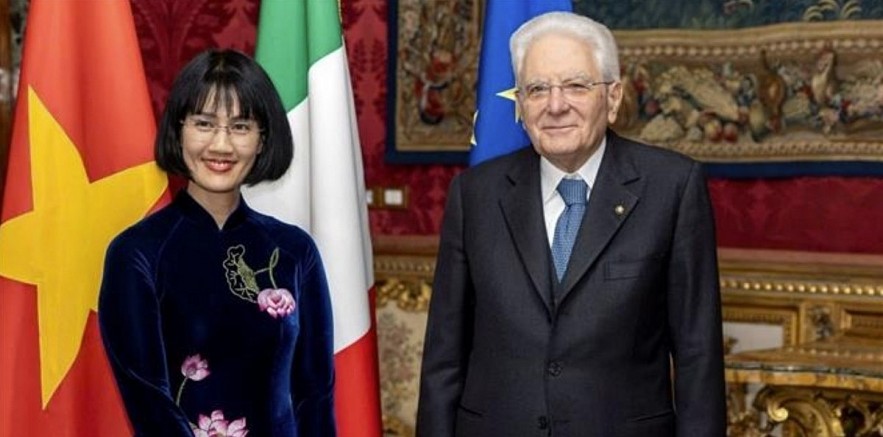 |
| Vietnamese Ambassador to Italy Nguyen Phuong Anh presents her credentials to Italian President Sergio Mattarella (Photo courtesy of the Vietnamese Embassy in Italy) |
President Mattarella noted with satisfaction the very positive development of Vietnam-Italy relations and close coordination between the two countries on international issues.
He said Italy wishes to further enhance the strategic partnership with Vietnam and that both sides should step up cooperation in shared areas. He also expressed his impression of the country and people of Vietnam and said he still retains fond memories of his previous official visit to the country.
The ceremony was held in line with Italy’s state protocol at the Presidential Palace, with the attendance of Deputy Foreign Minister Edmondo Cirielli and senior officials from the Office of the President of Italy.
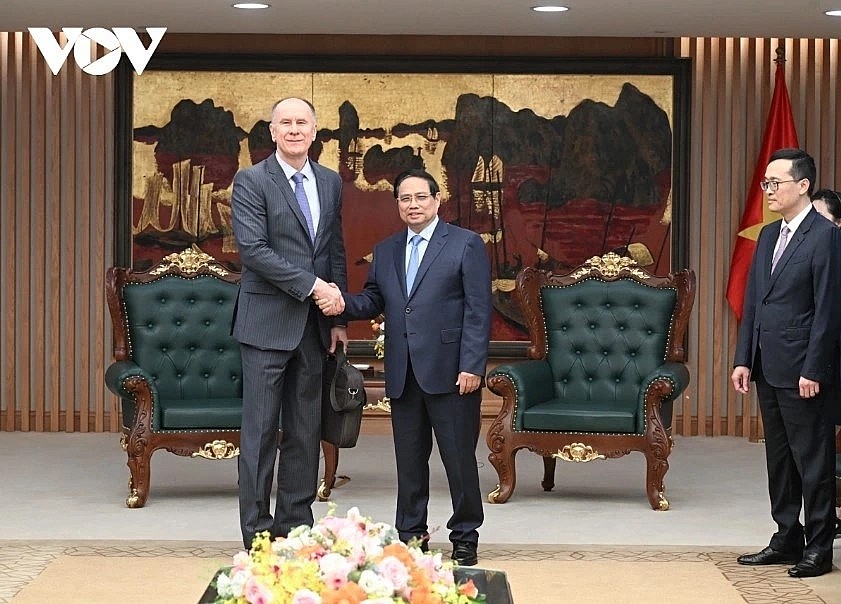
Russian scholar sees Vietnam strengthening national security strategy
Prime Minister Pham Minh Chinh’s recent visit to Russia, during which several cooperation agreements were reached, particularly in the energy sector, has been viewed by Russian experts as a strategic move that could reshape bilateral cooperation.
Professor, Doctor of Economics Georgy Davidovich Toloraya, Chief Research Fellow at the Center for World Politics and Strategic Analysis under the Russian Academy of Sciences, highlighted the significance of the agreement with Russia’s Rosatom to build Vietnam’s first nuclear power plant, especially amid ongoing conflict in the Middle East and the global energy crisis.
According to Toloraya, the agreement could serve as a catalyst for strengthening bilateral cooperation, with energy diplomacy likely to become a key pillar of Vietnam–Russia relations.
Toloraya emphasized that the revival of the nuclear power project carries strategic significance, reflecting Vietnam’s determination to strengthen national security and sovereignty.
He said Russian Prime Minister Mikhail Mishustin has described the project as a “new symbol of friendship,” while President Vladimir Putin highlighted the importance of further deepening the comprehensive strategic partnership between the two countries.
Beyond energy cooperation, Toloraya said Russia could also become an important logistics hub for Vietnam’s exports to Europe, particularly agricultural products and furniture. Transport routes through the ports of St. Petersburg and Vladivostok, along with plans to expand railway services via Russia and Kazakhstan, could help ease shipping delays and rising insurance costs currently facing Vietnamese exporters, reported VNA.
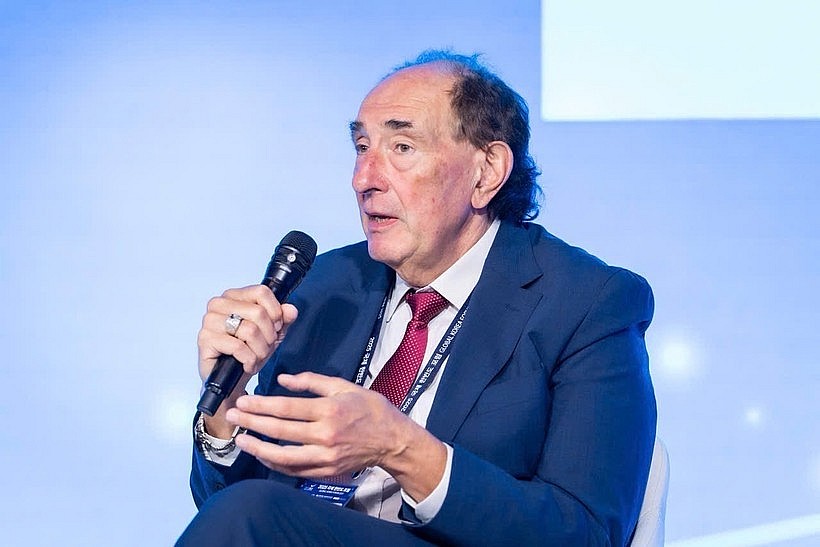 |
| Professor, Doctor of Economics Georgy Davidovich Toloraya, Chief Research Fellow at the Center for World Politics and Strategic Analysis under the Russian Academy of Sciences (Photo: VNA published) |
The two countries also reached agreements in fields such as artificial intelligence, cybersecurity and the digitalisation of public services. Toloraya said the expanded cooperation reflects Vietnam’s geopolitical vision in building alternative supply chains in energy, logistics and technology to reduce risks associated with unstable traditional supply networks.
Looking ahead, he suggested that the two sides could develop a nuclear industry cluster covering supply chains, plant operations and workforce training, with the goal of putting the nuclear power plant into operation by the end of 2031. Russia could also play a role in developing LNG centers and gas infrastructure in southern Vietnam, enhancing regional energy connectivity.
Toloraya also emphasized the importance of establishing alternative financial channels to ensure uninterrupted cooperation amid global uncertainties. He added that the two countries could move toward a technology alliance integrating Russian cybersecurity and AI solutions into Vietnam’s energy infrastructure management.
In urban development, potential cooperation in planning and transport infrastructure could include Russian participation in designing and constructing metro systems in Hanoi and Ho Chi Minh City. Meanwhile, digital economy collaboration may expand through projects involving digital identification, cloud computing and cybersecurity.
According to Toloraya, the visit and the agreements signed mark a shift from traditional trade relations toward deeper integration aimed at reducing external risks, which he described as a sound strategic approach by Vietnam’s leadership.
Ho Chi Minh City among 15 centers likely to become more significant: GFCI
Ho Chi Minh City has recorded a notable improvement in global financial center rankings amid intensifying competition among financial hubs worldwide.
According to the Global Financial Centers Index 2026 (GFCI 39) recently released, Ho Chi Minh City ranked 84th among 120 global financial centers, climbing 11 places from the previous edition, despite gaining only one additional rating point. This marks one of the strongest improvements among mid-tier financial centers.
Within ASEAN, Ho Chi Minh City currently ranks third, behind Singapore (fourth globally) and Kuala Lumpur (42nd), while surpassing Jakarta and Bangkok. The result highlights the city’s increasingly visible role in the regional financial network.
Globally, New York and London maintained their positions as the top two financial centers. Notably, the Asia-Pacific occupies six places in the global top 10, reflecting the continued shift of financial gravity toward the region, while also underscoring intensifying competition, cited VNA.
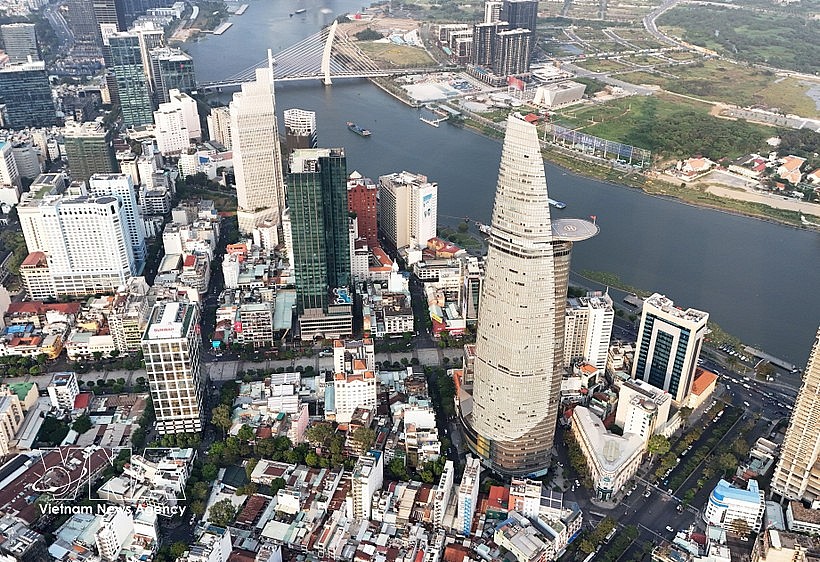 |
| Bitexco Financial Tower in Ho Chi Minh City (Photo: VNA) |
The city was also placed in the list of "The 15 Centers Likely To Become More Significant", receiving 21 mentions in the past 24 months from industry experts.
Ho Chi Minh City also improved its position in the FinTech ranking, moving seven places up from 90th in GFCI 38 to 83rd in the latest assessment.
Associate Professor Dr Nguyen Huu Huan, Vice Chairman of the Executive Board of the Vietnam International Financial Center in Ho Chi Minh City (VIFC-HCMC), described the 11-place improvement in the GFCI ranking as a positive signal.
According to him, the change reflects not only a shift in ranking but also broader progress in institutional frameworks, market depth and rising expectations from the international financial community.
While many global financial centers have largely maintained stable positions, the rise of VIFC-HCMC suggests that the strategy to develop an international financial center is moving in the right direction.
More importantly, Ho Chi Minh City has been recognised among centers with strong future potential, which carries strategic significance because the GFCI measures not only current performance but also market expectations.
Huan said VIFC-HCMC is beginning to be revalued on the global financial map, shifting from a frontier market toward a potential destination for international capital flows, Huan said.
Alongside Ho Chi Minh City’s progress, Da Nang is also emerging as a new candidate. In GFCI 39, the city was listed among “associate centers” — a group of 17 locations being monitored but not yet included in the main rankings due to insufficient data.
Da Nang is currently among the locations closest to reaching the required 150 assessments, alongside Fukuoka and Incheon. If international financial community interest continues to grow, the city could soon enter the official rankings, potentially forming a new financial development axis alongside Ho Chi Minh City.
GFCI 39 was compiled using 147 instrumental factors. These quantitative measures are provided by third parties including the World Bank, the OECD, and the UN. The instrumental factors were combined with 34,468 assessments of financial centers provided by 5,218 respondents to the GFCI online questionnaire.
Vietnam home to 36 national parks
Bat Xat National Park in the northern province of Lao Cai has officially been upgraded from a nature reserve to a national park, bringing the total number of national parks in Vietnam to 36.
The upgrade decision, issued by the Lao Cai Provincial People's Committee, makes the new park the second national park in Lao Cai, alongside Hoang Lien National Park.
Covering approximately 18,510 hectares, the park is located across Muong Hum, Den Sang, and Y Ty communes. It is divided into a strictly protected core zone of about 14,690 hectares, an ecological restoration area of around 3,440 hectares, and an administrative and service zone spanning 380 hectares. Its buffer zone includes 32 villages in the three communes.
Bat Xat National Park plays an important role in conserving intact forest ecosystems, protecting biodiversity and genetic resources, and supporting environmental education and scientific research. It also contributes to water resource regulation, eco-tourism development, and the provision of forest environmental services, thereby improving local livelihoods while supporting socio-economic growth and ensuring national defense and security in the border area.
Geographically, the park marks the starting point of the Hoang Lien Son Range, stretching from Y Ty Commune toward the summit of Fansipan, the highest peak in Vietnam. Its diverse terrain and elevation create ideal conditions for rich biodiversity.
The park is home to 976 species of vascular plants, including 137 rare and endangered species listed in Vietnam's Red Data Book and the IUCN Red List (2021). Notably, 67 species are endemic to northern Vietnam, while 38 are unique to the country, reported VGP.
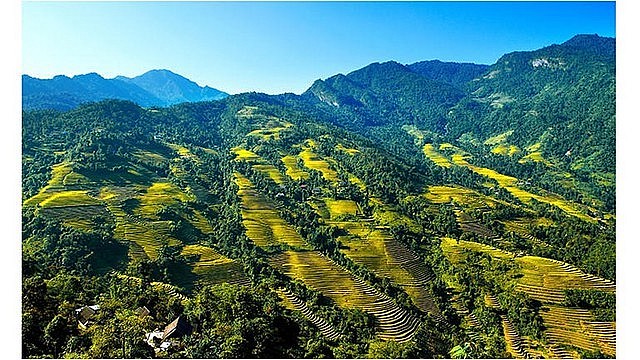 |
| An overview of Bat Xat National Park in the northern province of Lao Cai. |
In addition, 173 animal species have been recorded, including 42 mammals, 73 birds, 20 reptiles, and 38 amphibians. Among these are many rare and endangered species, including 18 mammals, 11 birds, six reptiles, and 17 amphibians recognized in both national and international conservation listings.
The upgrade of Bat Xat Nature Reserve is included in the national forestry planning for the 2021–2030 period, with a vision to 2050, under Decision No. 895/2024/QD-TTg issued by the Prime Minister. Seven new sites are expected to be upgraded, namely Muong Nhe, Bat Xat, Xuan Lien, An Toan, Bac Huong Hoa, Dak Rong, and Ea So, bringing the total number of national parks across the country to 41.
The recognition paves the way for conserving biodiversity and promoting sustainable development in national parks especially in terms of strengthening management capacity, enhancing climate resilience, and balancing conservation with local livelihoods, while addressing persistent challenges such as illegal logging, wildlife trafficking, and development pressures.
 | Vietnam News Today (Mar. 23): Prime Minister Pham Minh Chinh Leaves for Official Visit to Russia Vietnam News Today (Mar. 23): Prime Minister Pham Minh Chinh leaves for official visit to Russia; Cambodian solidarity front delegation visits Ninh Binh to boost ... |
 | Vietnam News Today (Mar. 24): Vietnam Seeks Stronger LNG Cooperation with Russia During PM’s Visit Vietnam News Today (Mar. 24): Vietnam seeks stronger LNG cooperation with Russia during PM’s visit; France, Vietnam step up cooperation across multiple sectors; Prime Minister ... |