
Vietnam News Today (May 6): Top Vietnamese Leader’s Sri Lanka Visit to Elevate Bilateral Ties

| Vietnam News Today (May 6) notable headlines Vietnam’s top leader To Lam arrives in New Delhi for state visit to India Top Vietnamese leader’s Sri Lanka visit to elevate bilateral ties: Minister PM’s attendance at ASEAN Summit reaffirms Vietnam’s commitment to community-building process: official Vietnam maintains FDI inflows as investment quality improves Vietnam Navy deepens integration while advancing modernization Vietnam works with ASEAN to navigate global turbulence: ambassador Vietnamese border guards rescue two foreign fishing vessels in distress at sea Vietnam – A strategic link in Pan-Asia Power Grid Initiative: ADB Vietnam, US explore stronger energy collaboration |
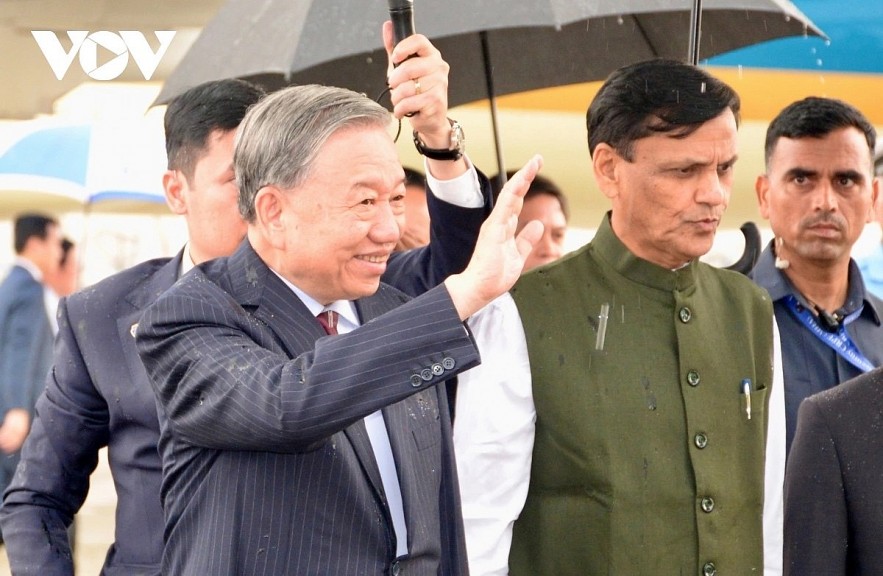 |
| General Secretary of the Communist Party of Vietnam and President To Lam arrives at Palam Air Force Station in New Delhi on May 5, beginning a state visit to India at the invitation of Prime Minister Narendra Modi. |
Vietnam’s top leader To Lam arrives in New Delhi for state visit to India
General Secretary of the Communist Party of Vietnam and President To Lam arrived in New Delhi on May 5, beginning a state visit to India at the invitation of Prime Minister Narendra Modi.
The aircraft carrying the top leader and his entourage landed at Palam Air Force Station, where they were welcomed by India’s Minister of State for Home Affairs Nityanand Rai, along with Indian Ambassador to Vietnam Tshering Wangchuk Sherpa, Vietnamese Ambassador to India Nguyen Thanh Hai, Consul General in Mumbai Le Quang Bien, and staff of the Vietnamese Embassy in India.
The visit takes place as bilateral relations continue to grow steadily and coincides with the 10th anniversary of the Vietnam–India Comprehensive Strategic Partnership. India is the third country in the world to establish this level of ties with Vietnam, after China and Russia.
Political trust between the two countries has been strengthened through regular high-level exchanges and interactions across multiple channels, including party, state, government, parliamentary and people-to-people engagements, cited VOV.
The visit is expected to further deepen ties between Vietnam and India, a key member of the BRICS group of emerging economies, while opening up new areas of cooperation.
Potential sectors for expanded collaboration include innovation, critical and emerging technologies, renewable energy and health care.
Top Vietnamese leader’s Sri Lanka visit to elevate bilateral ties: Minister
Sri Lankan Minister of Foreign Affairs, Foreign Employment and Tourism Vijitha Herath affirmed that Sri Lanka attaches great importance to its longstanding relationship with Vietnam, which was built on historical foundations, cultural similarities, mutual trust, and shared values.
The upcoming state visit to Sri Lanka by General Secretary of the Communist Party of Vietnam Central Committee and State President To Lam is expected to mark a significant milestone in the bilateral ties, deepening longstanding political trust and elevating the bilateral relations to a higher level, Sri Lankan Minister of Foreign Affairs, Foreign Employment and Tourism Vijitha Herath has said.
In an interview with the Vietnam News Agency (VNA)’s correspondent in South Asia ahead of the visit, the minister described the trip as a reflection of the two countries’ long-standing friendship and shared commitment to deepening cooperation amid a rapidly changing global context.
He affirmed that Sri Lanka attaches great importance to its longstanding relationship with Vietnam, which was built on historical foundations, cultural similarities, mutual trust, and shared values.
The minister noted that the bilateral ties date back to Sri Lanka’s recognition of Vietnam in 1970, during a difficult period in Vietnam’s history, making Sri Lanka one of the first countries to establish diplomatic relations with the Southeast Asian nation.
Despite certain challenges, Sri Lanka had consistently supported Vietnam and maintained a principled stance against colonialism and external interference. This early solidarity laid the solid foundation for the close relations today, he said.
The minister highlighted deep cultural links, particularly shared Buddhist heritage, as well as long-standing people-to-people understanding.
High-level exchanges have played a central role in sustaining the bilateral relations, with recent milestones including the 55th anniversary of diplomatic relations and the state visit to Vietnam by Sri Lankan President Anura Kumara Dissanayake last year, which further strengthened cooperation across sectors, according to VNA.
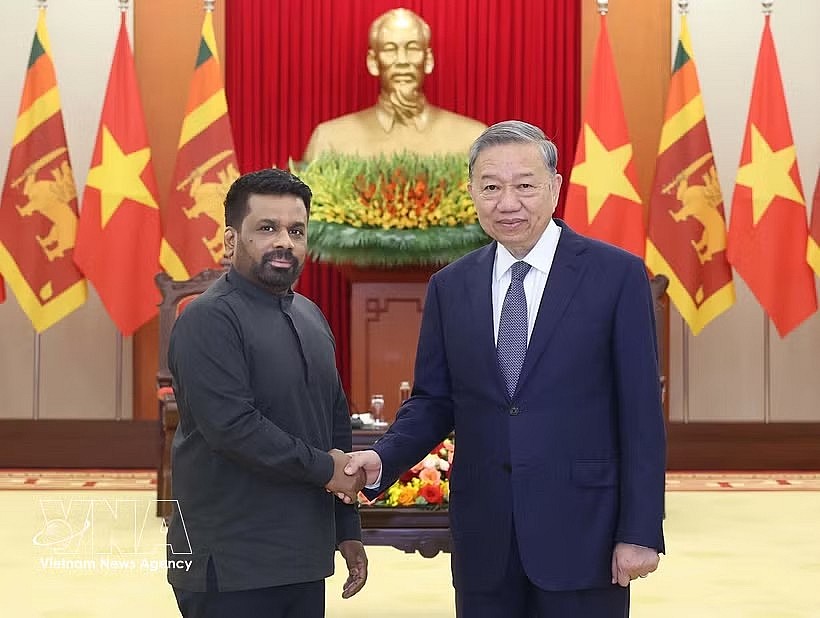 |
| Party General Secretary To Lam (R) receives Sri Lankan President Anura Kumara Dissanayaka during the latter's state visit to Vietnam and attendance at the United Nations Day of Vesak on May 4, 2025. (Photo: VNA) |
Regarding economic cooperation, Herath said the two sides have made progress but still hold significant untapped potential to expand two-way trade. Existing agreements on customs cooperation, double taxation avoidance, and investment promotion between the two nations have created a strong institutional framework for trade and investment, and long-term economic partnership. Sri Lanka has so far invested 40.9 million USD in Vietnam, mainly in the garment-textile industry, generating more than 15,000 jobs.
Despite growing cooperation in politics, defence, education, and culture, the minister acknowledged external challenges linked to global and regional volatility. However, he said the two sides have effectively managed these through structured dialogue mechanisms, including regular political consultations between the two foreign ministries.
In the coming period, the two countries remain committed to maintaining this positive momentum, he said, adding that the upcoming fifth round of political consultations, to be hosted by Sri Lanka, reflects the shared determination to further deepen and diversify this enduring partnership.
Institutional mechanisms such as the Sri Lanka – Vietnam Parliamentary Friendship Group and the Sri Lanka – Vietnam Joint Commission have also played an important role in sustaining close parliamentary ties and people-to-people exchanges between the two countries, he said.
The official described the top Vietnamese leader’s state visit as “particularly significant,” noting that it is the first such visit by a Party General Secretary and State President of Vietnam to Sri Lanka since diplomatic relations were established.
He said the timing is important as the two countries seek to strengthen their long-term partnership amid evolving regional and global changes. The trip stands as a symbol of stable and increasing development of the bilateral relations, while also underscoring the importance the two sides attach to maintaining close high-level political engagement.
The trip is expected to consolidate recent positive momentum, especially following the state visit of Sri Lankan President Anura Kumara Dissanayake last year, he said, adding that it will also provide an opportunity to expand cooperation in the fields of trade and investment, science and technology, education, tourism, cultural and religious exchanges, and emerging areas such as green initiatives, energy cooperation, and digital transformation.
A key expected outcome is progress toward establishing direct air connectivity, which will significantly boost tourism, trade, and investment flows, he said.
The minister also expressed hope for discussions on raising bilateral trade to an ambitious target of 1 billion USD. He noted Sri Lanka’s interest in advancing cooperation with ASEAN mechanisms, including its early accession as a sectoral dialogue partner of ASEAN and its membership in the Regional Comprehensive Economic Partnership (RCEP).
He noted that the visit would not only deepen existing political trust but also elevate the bilateral partnership toward a more strategic, comprehensive, and future-oriented level.
Against this backdrop, the Vietnamese leader’s visit is hoped to consolidate the longstanding foundation of political trust between Vietnam and Sri Lanka and lift their multifaceted partnership to a higher and more strategic level, the minister stated.
Outlining Sri Lanka’s priorities, Herath said the country seeks a pragmatic, forward-looking partnership with Vietnam based on mutual benefit.
Economic cooperation remains central, with an emphasis on trade expansion, investment, and supply chain integration. Sri Lanka is also interested in emerging sectors such as electric vehicle manufacturing, welcoming Vietnamese companies to explore opportunities in joint ventures, local sourcing, and battery-related industries, supported by Sri Lanka’s rare earth potential.
Green growth and renewable energy are key priorities, with the two nations committed to net-zero emissions by 2050, he said, adding that Sri Lanka hopes to learn from Vietnam’s rapid progress in solar and wind energy, as well as energy storage, while encouraging joint investment in clean energy projects.
The minister also highlighted Sri Lanka’s ambition to position itself as a regional hub for investment and connectivity, particularly through projects such as Colombo Port City, which could offer opportunities for Vietnamese investors in real estate, finance, and services, while serving as a gateway to South Asia.
Sri Lanka also seeks stronger cooperation in digital transformation, education, innovation, agriculture, tourism, and logistics, and drawing lessons from Vietnam’s experience in agricultural modernization and regional connectivity to expand access to ASEAN and East Asian markets.
Beyond economic ties, Herath stressed the importance of cultural exchanges, people-to-people connection, and multilateral coordination, anchored in shared Buddhist heritage and common values.
PM’s attendance at ASEAN Summit reaffirms Vietnam’s commitment to community-building process: official
Prime Minister Le Minh Hung’s attendance at the 48th ASEAN Summit and related summits from May 7 to 8 in Cebu, the Philippines, conveys a clear message of Vietnam’s commitment to the ASEAN Community-building process through a proactive and responsible spirit, and through substantive contributions to the bloc’s common work, according to Deputy Foreign Minister Dang Hoang Giang.
Talking to the press, Giang affirmed that PM Hung’s participation carries special significance as it marks his first overseas trip and his first attendance at an ASEAN Summit in his new capacity. His presence underscores Vietnam’s consistent foreign policy of independence, self-reliance, self-strengthening, peace, friendship, cooperation and development, as well as diversification and multilateralisation of external relations, in line with the spirit of the 14th National Party Congress. It also reaffirms ASEAN as a top strategic priority in Vietnam’s foreign policy.
Vietnam’s overarching objective is to work closely with other ASEAN member states to maintain peace and stability, uphold ASEAN’s unity and centrality, and strengthen the bloc’s capacity to respond to emerging challenges, thereby creating favourable conditions for sustainable development across the region and each member state, and boosting Vietnam’s bilateral relations with other members.
On that basis, Vietnam will focus on several key priorities, he noted, elaborating that it will closely coordinate with ASEAN countries to effectively implement the 2026 Chairmanship priorities and the ASEAN Community Vision 2045, with a view to building a resilient, dynamic, innovative, and people-centered ASEAN Community.
At the same time, it will work with ASEAN to promote a peaceful, secure, and stable environment, uphold international law and multilateralism, enhance intra-bloc connectivity, and expand and deepen relations with partners to reinforce ASEAN’s central role in the regional architecture.
Vietnam also intends to actively contribute to key agenda items, particularly urgent issues related to energy security, food security, and citizen protection. The country has proactively prepared practical proposals to enhance ASEAN’s response to increasingly complex external challenges, stated Giang.
According to the deputy minister, on the sidelines of the summit, PM Hung will hold bilateral meetings with other ASEAN leaders to reinforce friendship, enhance political trust, and promote substantive and fruitful cooperation. These will also be his first in-person engagements with regional leaders in his new role.
Regarding the importance of the 48th ASEAN Summit, the official noted that the meeting, themed “Navigating Our Future, Together”, marks the first annual summit in the Philippines’ ASEAN Chairmanship Year 2026. It also carries particular significance as ASEAN officially enters a new development phase following a decade of community-building from 2015 to 2025.
The year 2026 represents the inaugural phase of implementing the ASEAN Community Vision 2045 and its strategic plans across political-security, economic, socio-cultural, and connectivity pillars. These frameworks are expected to serve as a vital compass for building a united and resilient ASEAN that continues to uphold its central role in fostering regional cooperation and addressing shared challenges, reported VNA.
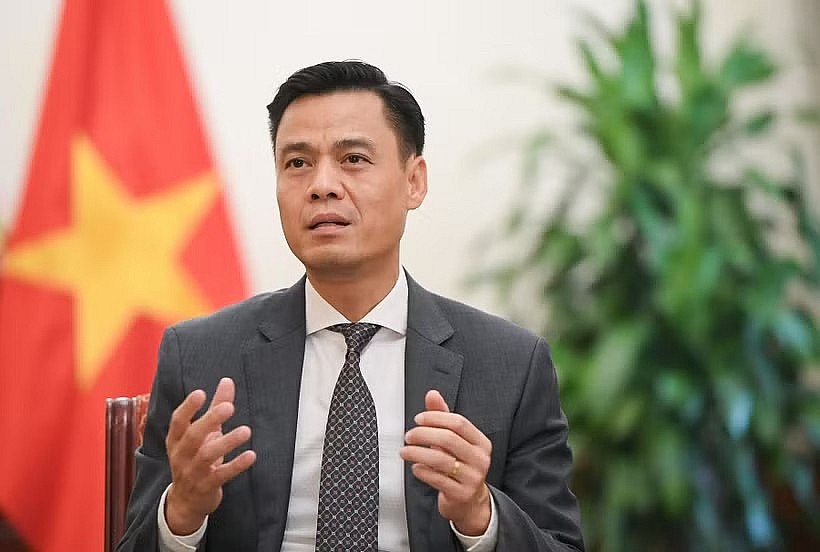 |
| Deputy Foreign Minister Dang Hoang Giang (Photo: Ministry of Foreign Affairs) |
The summit takes place against a backdrop of rapidly evolving and increasingly complex global and regional dynamics, including ongoing tensions in the Middle East, making ASEAN face mounting pressures to maintain stability, sustain growth, and realise its long-term development goals. Challenges related to strategic competition, supply chain disruptions, energy security, food security, and rising protectionism are impacting regional stability and people’s lives, Giang said.
In this context, the 48th ASEAN Summit will provide an opportunity for leaders of 11 ASEAN member states to conduct comprehensive discussions on regional and international issues, align strategic orientations, and adopt key decisions to strengthen solidarity, enhance resilience, and reaffirm ASEAN’s strategic value.
It is expected to focus on three major priorities: strengthening ASEAN’s solidarity, resilience, and response capacity in critical areas such as energy security, food security, supply chain stability, and citizen protection in emergencies; advancing the effective implementation of ASEAN’s strategic priorities, particularly the ASEAN Community Vision 2045 and the Philippines’ Chairmanship agenda; and further promoting ASEAN’s common voice and centrality through adherence to international law, support for multilateralism, and deeper engagement with partners, thereby contributing to peace, stability, and development, as well as to the bloc's stature and role in the region and the world.
The deputy minister expressed his confidence that with thorough preparations and a substantive agenda, PM Hung’s attendance at the summit will further project Vietnam’s image as a proactive, sincere, responsible, and constructive member of ASEAN ready to help with regional peace, stability, and development, thus elevating Vietnam’s international standing and strengthening its relations with other member states.
Vietnam maintains FDI inflows as investment quality improves
Amid fluctuations in global foreign direct investment (FDI) flows, with geopolitical tensions and trade uncertainty increasing, Vietnam has remained relatively stable while the quality of inflows is gradually improving and the country is moving deeper into global value chains.
Maintaining stability amid global headwinds
Between 2021 and 2025, registered FDI into Vietnam ranged from US$27 billion to US$38 billion per year, with 2025 reaching about US$38.4 billion. Disbursed capital totalled around US$27.6 billion, up 9% and the highest level in five years.
According to Nguyen Ba Hung, Chief Economist of the Asian Development Bank (ADB) in Vietnam, the increase in disbursed capital indicates that projects are not only committed but are being implemented in practice, demonstrating foreign investors’ confidence in the investment environment.
Newly registered capital and the number of newly licensed projects continued to rise, showing that Vietnam continues to attract the interest of many investors as they diversify supply chains. Major investors from Singapore, the Republic of Korea, China and Japan continued to account for a high share, reflecting Vietnam’s close integration into Asian production networks.
A clearer shift towards deeper investment has also emerged. In 2025, capital contributions and share purchases rose by 54.8%, showing that foreign investors are expanding operations and participating more deeply in the domestic market. This also indicates that FDI enterprises are “voting with their capital” on Vietnam’s investment environment, cited VOV.
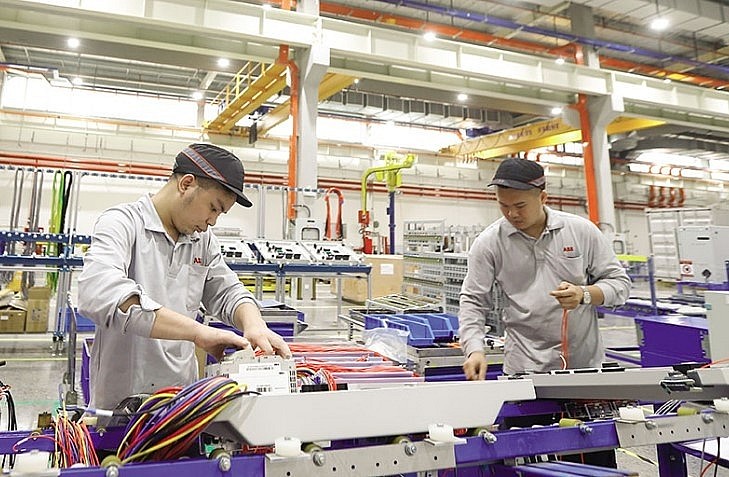 |
| Vietnam sustains FDI inflows while moving up the value chain (Photo: Illustrative image) |
In the first quarter of 2026, total registered FDI hit about US$15.2 billion, rising sharply year-on-year, while disbursed capital stood at around US$4.6 billion, up about 7-8%.
The FDI sector continues to serve as a pillar in exports, accounting for roughly 70-75% of total export turnover and maintaining a large trade surplus.
Shift towards higher technology and greater value added
In addition to maintaining scale, the quality of FDI inflows has improved. Manufacturing and processing remained the largest recipient, at around 55–60% of total registered capital in 2021–2025, rising to over 70% in early 2026. In 2025 alone, the sector made up more than 80% of disbursed capital.
The internal structure of the sector is shifting from labour-intensive and simple assembly activities towards higher-technology segments such as electronic components, semiconductors, precision equipment, data centres and digital technologies.
Recent large-scale projects, particularly in the first quarter of 2026, including a US$1.2 billion FCBGA substrate project by Samsung Electro-Mechanics in Thai Nguyen and a US$2.2 billion LNG power project in Nghe An, indicate that Vietnam is moving further into higher value-added segments of global supply chains.
Outlook depends on reform and adaptability
The World Bank (WB) and the Asian Development Bank (ADB) say global FDI flows will continue to face pressure from high interest rates, geopolitical tensions and economic fragmentation. However, Vietnam retains advantages to sustain its appeal.
According to Nguyen Quoc Viet, Head of the Macroeconomic Research Group at the University of Economics, Vietnam National University, Hanoi, the country needs to shift from offering tax incentives to “building a nest through institutions and infrastructure”.
He highlighted three pillars for next-generation FDI attraction: strategic infrastructure, including digital, data, energy and urban systems; a high-quality workforce; and a transparent, stable and predictable institutional framework.
Vietnam continues to benefit from macroeconomic and political stability, an extensive network of free trade agreements (FTAs), and the ongoing “China+1” shift in manufacturing.
Its FDI strategy is also moving towards selective attraction, prioritising high-technology, innovation-driven, green economy and digital transformation projects.
Vietnam Navy deepens integration while advancing modernization
Vice Admiral Nguyen An Phong, Political Commissar of the Vietnam People's Navy, has reaffirmed that the force is steadily deepening international integration while safeguarding national sovereignty “early and from afar”.
Marking the 71st anniversary of the Navy’s founding, he shared insights into its strategic direction in a rapidly evolving regional and global context.
According to Vice Admiral Nguyen An Phong, the Navy has in recent years maintained a firm grasp of maritime developments, provided timely strategic advice, and effectively handled situations at sea without being caught off guard. These efforts have contributed to protecting sovereignty and preserving a peaceful environment for national development.
A notable highlight has been the growing depth of defense diplomacy. In early 2026, Ship 17 undertook a voyage across the Lunar New Year period to participate in the MILAN exercise in India. Shortly after, Ship 016 - Quang Trung joined the Kakadu exercise and an international fleet review in Sydney, Australia, completing a safe journey of more than 11,000 nautical miles.
These activities not only demonstrate operational capability and coordination, but also enhance the Navy’s reputation and standing in international cooperation, particularly with strategic partners and traditional allies, VNN reported.
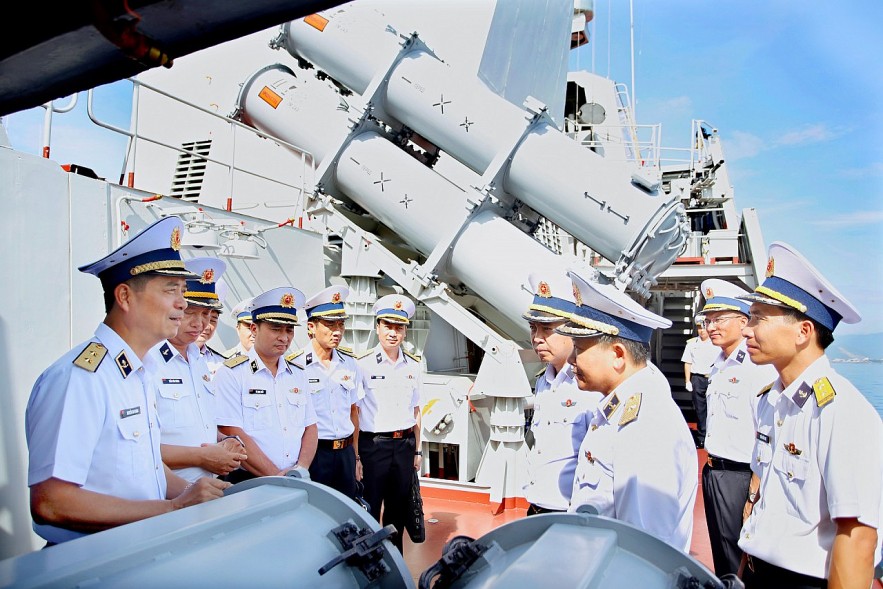 |
| Vice Admiral Nguyen An Phong (far left) inspects combat readiness at a surface ship unit under Naval Region 4. |
Participation in both bilateral and multilateral mechanisms, he noted, allows the Vietnam Navy to integrate more deeply while contributing to safeguarding the nation “early and from afar” in the maritime domain.
Linking sovereignty protection with maritime economic development
Beyond its core defense mission, the Navy continues to play a central role in building a maritime posture closely tied to people’s livelihoods.
Programs such as “The Vietnam Navy as a pillar for fishermen at sea” and “The Navy supporting fishermen’s children” have been actively implemented.
In key areas including Truong Sa, DK1 and the southwestern waters, naval forces not only protect sovereignty but also contribute to socio-economic development, disaster prevention, and search and rescue operations.
“The Vietnam People’s Navy not only firmly safeguards maritime sovereignty but is also working to realise the goal of turning Truong Sa into an economic, cultural and social hub at sea, as well as a strong defensive outpost contributing to the protection of the nation’s sacred maritime sovereignty,” Vice Admiral Nguyen An Phong said.
Amid increasingly complex and unpredictable global developments, the Navy is committed to building a force that is “revolutionary, regular, elite and modern”.
Key priorities include improving training quality and combat readiness, developing a highly capable officer corps adaptable to international environments, and accelerating digital transformation and administrative reform across the service.
The Navy is also placing emphasis on scientific research and technological application, gradually mastering modern weapons and equipment while enhancing self-reliance in logistics and technical support.
Drawing on Vietnam’s historical maritime warfare traditions, the force continues to adapt lessons from past conflicts while studying contemporary global military developments to refine naval doctrine.
The integration of military training with political education, discipline and standardisation has been identified as a decisive factor in strengthening overall combat power.
At the heart of this approach is the building of a strong “people’s posture at sea”. The Navy is intensifying mass mobilisation efforts, working closely with ministries, sectors and localities to promote maritime awareness and mobilise resources for development.
The spirit that “ships and islands are home, the sea is the homeland” is not merely symbolic. It is reflected in concrete efforts to support fishermen, develop the maritime economy and reinforce national unity.
Operational management is guided by a “six clear principles” approach: clear people, clear tasks, clear timelines, clear responsibilities, clear authority and clear outcomes - ensuring implementation is both effective and substantive.
With more than seven decades of development and a comprehensive modernization strategy, the Vietnam People’s Navy is steadily affirming its role as a core force in safeguarding maritime sovereignty, while contributing to maintaining peace and stability for national development.
 | Vietnam News Today (May 1): Vietnam's Engineering Unit Rotation 4 Marks New Milestone in Abyei Vietnam News Today (May 1): Venezuela, Vietnam promote tourism cooperation and expand cultural links; Vietnam's Engineering Unit Rotation 4 marks new milestone in Abyei; Vietnam ... |
 | Vietnam News Today (May 3): Vietnam, Japan Push for More Substantive, Effective Ties Vietnam News Today (May 3): Vietnam, Japan push for more substantive, effective ties; Vietnam calls for solidarity with Cuba at Non-Aligned Movement meeting; International Financial ... |
Related Stories
 National
Vietnam News Today (July 1): Vietnam and UAE Sign Defense Industry Cooperation Memorandum
 National
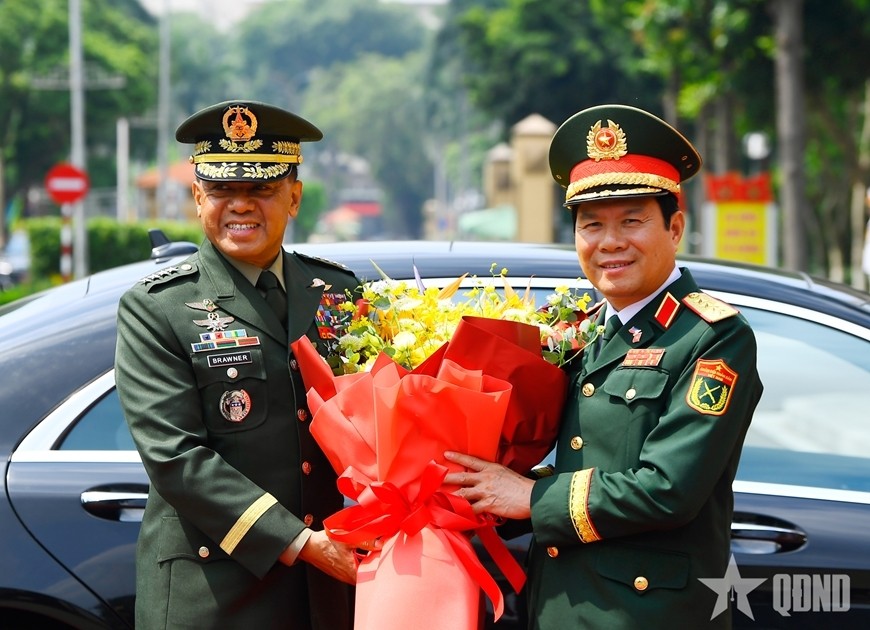
Vietnam News Today (Jun. 4): Vietnam, Philippines Enhance Defense Cooperation Following Upgraded Partnership
Recommended
 National
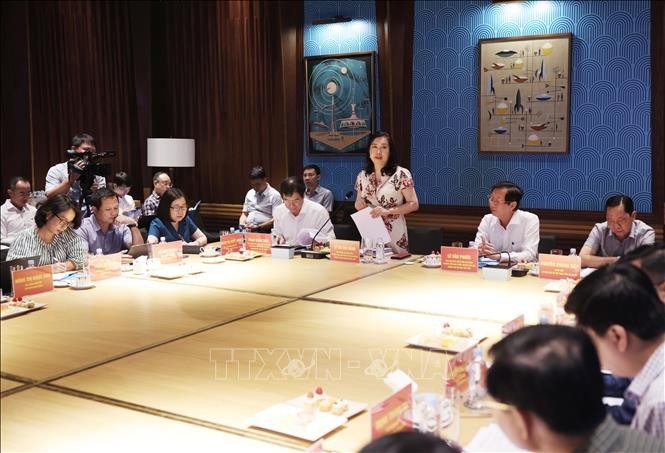
Preparing for APEC 2027: Accelerating Completion of Media Infrastructure to Support International Press
 National
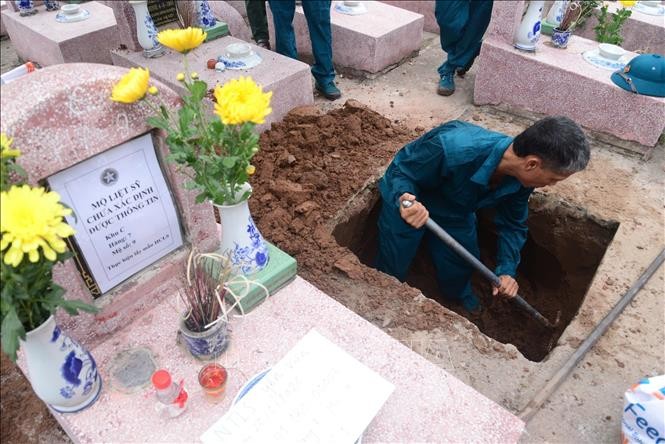
500-Day Campaign: Hope of Reunion Through DNA Evidence
 National
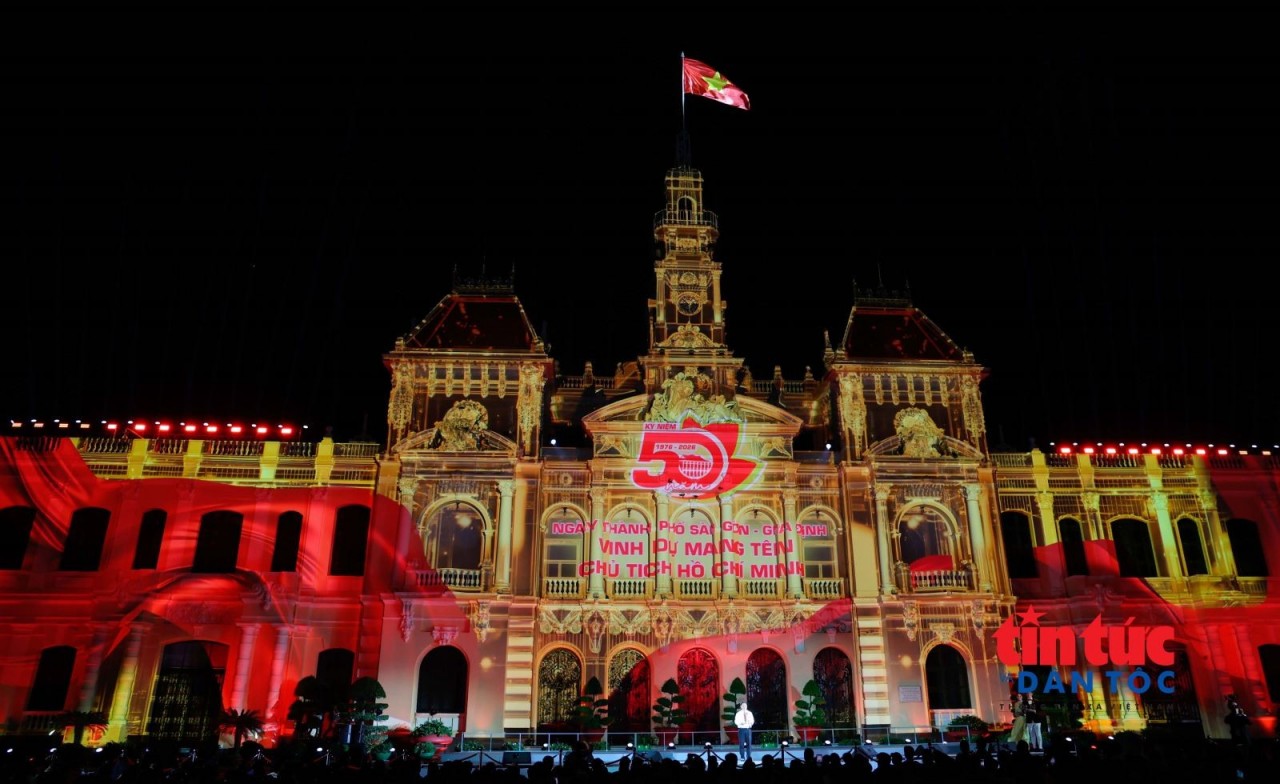
Ho Chi Minh City Marks 50 Years with 3D Mapping Light Show
 National
Full Remarks by General Secretary, President To Lam at 50th Anniversary of Sai Gon-Gia Dinh Named After President Ho Chi Minh
 National
Vietnam News Today (July 5): Vietnam Supports Global Efforts for Energy Efficiency at IEA Conference
 National
Vietnam News Today (July 4): International Tourist Arrivals to Vietnam Rise Nearly 15% in First Half of 2026
 National
New Advances in DNA Technology for Identifying Fallen Soldiers
 National