| Vietnam News Today (Sep. 5) notable headlines Australian Ambassador highlights Vietnam’s growing regional and global role Myanmar President arrives in Hanoi for three-day official visit to Vietnam Parliamentary exchanges help strengthen Vietnam–RoK people-to-people ties: scholar Vietnam’s trade with ASEAN expands as imports outpace exports Vietnam’s GDP surpasses Philippines, closes in on Thailand Ho Chi Minh City targets third-quarter growth of over 11% Domestic consumption up over 13%, tourism continues strong growth Top leader and spouse to visit Russia, France Vietnam Rong Xanh Awards create new cultural, heritage values |
 |
| Photo: VNA |
Australian Ambassador highlights Vietnam’s growing regional and global role
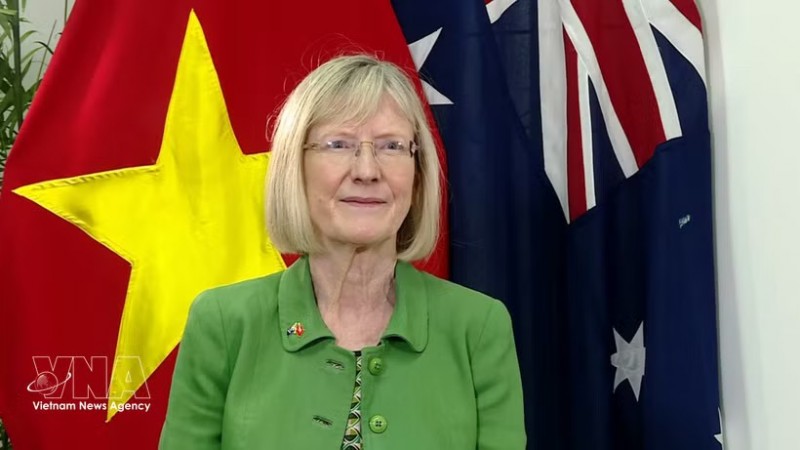
Vietnam’s growing engagement in regional and international affairs, in line with the Politburo’s Resolution No.59 -NQ/TW on international integration, is enabling the country to play a more active role in shaping the international environment and creating new opportunities to deepen the Vietnam-Australia Comprehensive Strategic Partnership, Australian Ambassador to Vietnam Gillian Bird said in a recent interview with the Vietnam News Agency (VNA).
The diplomat affirmed that Australia highly values Vietnam as an important regional partner. She welcomed Vietnam’s expanding engagement with international partners, including recent high-level visits by General Secretary of the Communist Party of Vietnam Central Committee and President To Lam.
The Ambassador was delighted to see Vietnam moving beyond simply participating in regional affairs to playing a more active role in helping shape the region. She noted that this was particularly significant given the two countries’ shared vision for a peaceful, stable and prosperous region.
This strategic shift in Vietnam’s approach to international integration has further facilitated the country’s cooperation with its partners in a wide range of areas, among which economic integration is a core pillar. Within the framework of Vietnam-Australia bilateral relations, economic ties are also regarded as a key area of collaboration between the two countries. The Ambassador affirmed that Australia strongly supports Vietnam’s ambition to become a high-income country by 2045 and is seeking to further expand economic cooperation.
Vietnam-Australia trade and investment have grown strongly in recent years. Two-way trade and investment have doubled since 2020, with two-way trade reaching a record 30 billion AUD (21.5 billion USD), she noted. Remarkably, during General Secretary and President To Lam’s state visit to Australia in August 2026, the two countries issued the Vietnam-Australia Joint Statement on Economic Resilience Cooperation, outlining ways to strengthen their economies amid a difficult and uncertain international environment.
Both sides also benefit from their participation in three major free trade agreements. The Ambassador highlighted Vietnam’s chairmanship of the Comprehensive and Progressive Agreement for Trans-Pacific Partnership (CPTPP) in 2026 and its upcoming chairmanship of APEC in 2027 as opportunities to further deepen bilateral economic cooperation.
However, she stressed that there is still room for further cooperation, particularly in digital transformation and the green economy.
Science, technology and innovation have been identified as another important pillar of the bilateral ties, according to the Ambassador.
She mentioned the Australia-Vietnam Strategic Technologies Centre (AVSTC) in Hanoi as a concrete example, noting that its second phase was announced during the Vietnamese top leader’s recent state visit to Australia. The two countries have also launched the Australia-Vietnam Science, Technology and Innovation Cooperation Initiative (AVSTICI), which supports joint research projects involving researchers, universities and businesses from both countries. These initiatives provide a strong basis for further cooperation in an increasingly important area of bilateral relations, she said.
The ambassador also stressed the importance of translating the Comprehensive Strategic Partnership into tangible results for both countries. She cited General Secretary and President To Lam’s state visit to Australia earlier in August as the perfect example of a substantive and outcomes-focused high-level visit, cited VNA.
She underscored the notable outcomes of the visit, including three new joint statements on deepening the Comprehensive Strategic Partnership, economic resilience cooperation, and science, technology and innovation connectivity. The visit also resulted in six memoranda of understanding (MoUs) covering border protection, maritime law enforcement, the digital economy, agriculture and sustainable development, health, and vocational education and training.
According to the Ambassador, new aviation opportunities also emerged from the visit, as the two countries signed the Protocol to Amend and Supplement the Air Services Agreement. Additionally, Vietnam Airlines celebrated the 35th anniversary of its operations to Australia, while Vietjet announced plans to operate new flight routes between Sydney and Ho Chi Minh City through the new Western Sydney International Airport.
Education was another area highlighted by the Ambassador. During the visit, it was announced that RMIT would establish a major new campus in Hanoi, which would significantly expand the university’s presence in Vietnam.
Another concrete outcome was the announcement that Australian kangaroo and deer meat would again be exported to Vietnam, which the Ambassador welcomed as a significant further development in bilateral cooperation.
The diplomat said the agreements reached during the visit would provide a platform for the two sides to continue advancing their Comprehensive Strategic Partnership.
The Ambassador’s assessment underscores Australia’s strong support for Vietnam’s increasingly active international engagement, while highlighting the potential for the two countries to translate their Comprehensive Strategic Partnership into more substantive and multifaceted cooperation.
Myanmar President arrives in Hanoi for three-day official visit to Vietnam
President of the Republic of the Union of Myanmar Min Aung Hlaing and his spouse arrived in Hanoi on September 4, starting their three-day official visit to Vietnam at the invitation of General Secretary of the Communist Party of Vietnam Central Committee and President To Lam and his spouse.
The Myanmar delegation was welcomed at the Noi Bai International Airport by Chairman of the Presidential Office Le Khanh Hai and Deputy Minister of Foreign Affairs Nguyen Hoang Long.
Those accompanying Myanmar President Min Aung Hlaing and his spouse, Kyu Kyu Hla, include Minister of the Office of the President Khin Maung Yi; Minister for Foreign Affairs Tin Maung Swe; Minister of Agriculture, Livestock and Irrigation Min Naung; Minister of Industry and Small, Medium and Micro Enterprises Development Charlie Than; Minister of Commerce Tun Ohn; Chief of General Staff, General Ko Ko Oo; Chief Minister of Yangon Region Aung Naing Thu; Chief of the Office of the Quartermaster General, Lieutenant General Zaw Myo Tin; Ambassador of Myanmar to Vietnam Wai Linn; among others.
Before becoming President of the Republic of the Union of Myanmar in April 10, 2026, Min Aung Hlaing had held various positions in the Myanmar Armed Forces, including Commander of a Light Infantry Division; Commander of the Bureau of Special Operations; and Chief of General Staff of the Army, Navy and Air Force. He served as Commander-in-Chief of the Armed Forces from 2011 to 2026, according to VOV.
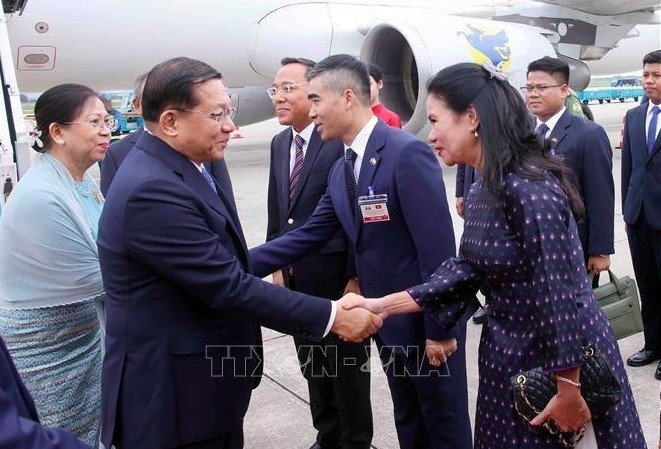 |
| President of the Republic of the Union of Myanmar Min Aung Hlaing and his spouse Kyu Kyu Hla arrive in Hanoi, beginning an official visit to Vietnam from September 4 to 6. (Photo: VNA) |
During his time heading the Myanmar Armed Forces, he made three trips to Vietnam.
According to Vietnamese Ambassador to Myanmar Nguyen Anh Duc, this is President Min Aung Hlaing's first official visit to Vietnam since Myanmar finalized its general election in January 2026 and established a new government in April 2026. It is also the highest-level exchange between the two countries since 2019.
The visit is of great importance, contributing to boosting the traditional friendship and comprehensive cooperative partnership between Vietnam and Myanmar, strengthening political trust, and expanding bilateral and all-around cooperation, the ambassador added.
Parliamentary exchanges help strengthen Vietnam–RoK people-to-people ties: scholar
Strengthening exchanges between the National Assemblies of Vietnam and the Republic of Korea (RoK) is important to ensuring that people’s voices and interests are reflected in bilateral relations, said Professor Park Yeon Kwan, Head of the Department of Vietnamese at Hankuk University of Foreign Studies.
In an interview granted to the Vietnam News Agency ahead of National Assembly President Tran Thanh Man’s official visit to the RoK from September 6 to 9, Park said parliamentary exchanges are particularly significant as the two legislatures represent their respective peoples.
He noted that parliamentary diplomacy complements high-level and government diplomacy while providing a channel to discuss issues directly affecting people’s lives, including education, employment, business, immigration and cultural exchanges.
Parliamentary exchanges between Vietnam and the RoK are not merely interactions between lawmakers, but also an important channel of people-to-people diplomacy that connects the two peoples and enhances bilateral ties, the scholar said.
About 190,000 Koreans are currently living in Vietnam while some 340,000 Vietnamese are residing in the RoK. In 2025, about 4.33 million Koreans visited Vietnam and around 630,000 Vietnamese travelled to the RoK, highlighting the scale of people-to-people exchanges, reported VNA.
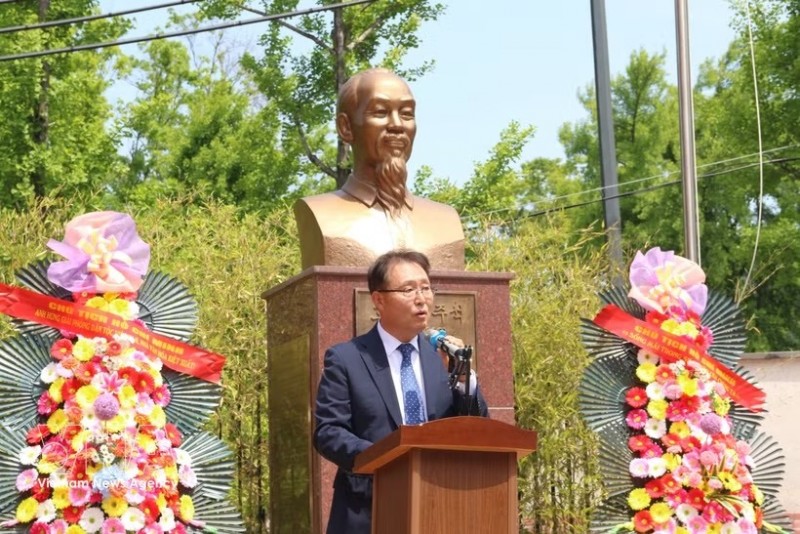 |
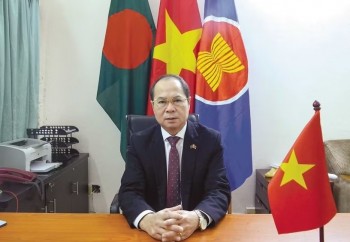
| Professor Park Yeon Kwan, Head of the Department of Vietnamese at Hankuk University of Foreign Studies (Photo: VNA) |
Against the backdrop of the Vietnam–RoK Comprehensive Strategic Partnership, Park underlined the importance of education, particularly language training, in ensuring the sustainable development of bilateral relations.
He cited the rapid expansion of Korean-language education in Vietnam as evidence. In 2025, 48 universities in Vietnam offered Korean language and/or Korean studies programmes, with 27,222 students enrolled. Including non-major learners, more than 50,000 people were studying Korean. If colleges and vocational education schools are included, the number of institutions offering Korean-related programmes totalled some 60.
This development shows that bilateral ties are expanding beyond government and business cooperation into education, employment and opportunities for young people, he said.
Meanwhile, Vietnamese-language graduates in the RoK have diverse career prospects. Graduates of the Department of Vietnamese at Hankuk University of Foreign Studies work at major corporations such as Samsung, Hyundai and POSCO, as well as in diplomacy, law, accounting and journalism.
Park said language education should therefore go beyond foreign-language proficiency to equip students with knowledge of the history, culture, economy and society of both countries. Such graduates can serve as crucial bridges between Vietnam and the RoK.
The scholar also highlighted the potential for deeper cooperation between universities and research institutions of the two countries. Hankuk University of Foreign Studies has maintained long-standing exchanges and academic cooperation with major Vietnamese universities such as Vietnam National University, Hanoi; Vietnam National University, Ho Chi Minh City; Hanoi National University of Education and Ho Chi Minh City University of Education.
Future cooperation should move beyond student and lecturer exchanges towards joint research and training programmes, including in emerging fields such as artificial intelligence, digital technology, semiconductors, biotechnology, healthcare, the environment and energy.
He said universities and research institutions should work together to train human resources and conduct research for the future, adding that Hankuk University of Foreign Studies, with its extensive network of Vietnamese partners, can play an important bridging role.
Recalling that he began studying Vietnamese in 1988, when Vietnam and the RoK had yet to establish diplomatic relations, Park encouraged young learners to view Vietnamese as more than a foreign language and deepen their understanding of Vietnam’s history, culture, economy and society as they will play a direct role in shaping bilateral relations in the future.
Vietnam’s trade with ASEAN expands as imports outpace exports
Vietnam’s trade with ASEAN continued to expand in the first eight months of 2026, with exports rising 20.1% year on year and imports growing faster at 26.4%, widening the country’s trade deficit with the regional bloc.
According to data from the National Statistics Office under the Ministry of Finance, Vietnam’s total goods trade reached about US$770.1 billion in the reviewed period, with exports at US$374 billion and imports at US$395 billion.
ASEAN was Vietnam’s fourth largest export market, with shipments generating US$30.7 billion, up 20.1% from the same period last year.
Meanwhile, Vietnam imported US$44.2 billion worth of goods from ASEAN in eight months, up 26.4% year on year. As a result, it recorded a trade deficit of about US$13.5 billion with ASEAN during the period, cited VOV.
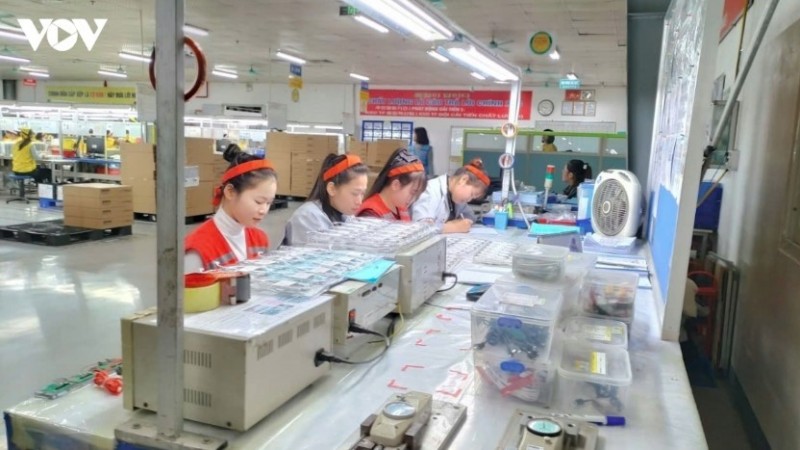 |
| Vietnam’s trade with ASEAN remains robust in the first eight months of 2026 with imports rising faster than exports. |
Notably, the growth rate of imports from ASEAN was 6.3 percentage points higher than that of exports to the bloc. This indicates that two-way trade is expanding strongly, although the trade balance continues to favour ASEAN suppliers.
Among Vietnam’s major import markets, China was the largest, with US$161.9 billion worth of goods, up 37.3%, followed by the Republic of Korea (US$60.1 billion); ASEAN (US$44.2 billion); Japan (US$18.1 billion), the United States (US$15.4 billion) and the European Union (US$12.9 billion).
The United States was Vietnam’s largest export market, with shipments reaching US$122 billion, up 23.2%. It was followed by China (US$54.2 billion); the European Union (US$44.3 billion); ASEAN (US$30.7 billion); the Republic of Korea (US$22.3 billion), and Japan (US$20.5 billion).
Vietnam’s GDP surpasses Philippines, closes in on Thailand
From an economy barely one-eighth the size of the Philippines in 1990, Vietnam has surged ahead of its regional peer, moved closer to Thailand and narrowed its income gap with Indonesia. Yet the journey toward high-income status remains challenging.
Few would have imagined just over three decades ago that Vietnam, then among the world’s poorest countries, would eventually overtake the Philippines, once regarded as a development model in Southeast Asia.
In 1990, Vietnam’s GDP stood at only around $6.5 billion, close to one-eighth of the Philippines’ roughly $50.5 billion economy. Vietnam’s per capita income was then about $120, only around one-sixth to one-seventh of the Philippines’ level of more than $800.
The gap remained substantial in 2000, when Philippine GDP reached nearly $84 billion, almost three times Vietnam’s figure of more than $31 billion.
From the early 1990s, however, Vietnam began a period of strong growth driven by the Doi Moi reforms, economic opening and deeper international integration.
The gap steadily narrowed until the two economies were almost level in size by 2020, VNN reported.
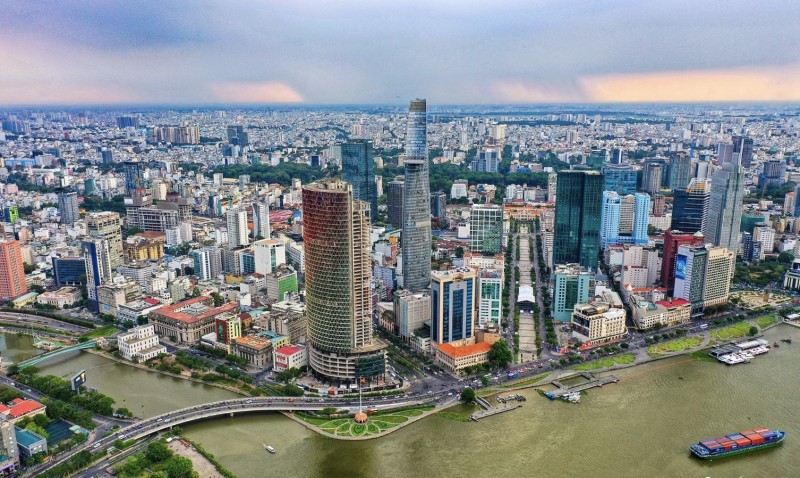 |
| Photo: VNN |
A turning point came in 2022, when Vietnam’s GDP surpassed that of the Philippines for the first time.
According to IMF estimates, Vietnam’s GDP reached around $514 billion in 2025, compared with approximately $487 billion for the Philippines.
That same year, Vietnam officially entered the World Bank’s upper-middle-income group, with gross national income per capita reaching $4,970, providing a foundation for its ambition to become a high-income country by 2045.
The transformation is even more striking in trade.
While the Philippines was once one of Southeast Asia’s leading exporters, its merchandise exports reached nearly $84.5 billion in 2025, compared with $473 billion for Vietnam.
According to the WTO, Vietnam accounted for around 1.8% of global merchandise exports in 2024, ranking 18th worldwide and second in ASEAN. The Philippines accounted for about 0.3%, ranking 44th.
Notably, Vietnam generates only around 0.5% of global GDP but accounts for nearly 1.8% of the world’s merchandise exports.
The figures underscore how the Vietnamese economy has become an important link in global supply chains and one of the world’s most trade-oriented economies.
Compared with other countries in the region, Vietnam ranked fourth in Southeast Asia by GDP in 2025, with an economy of more than $514 billion and steadily closing the gap with Thailand and Indonesia.
Its GNI per capita ranked sixth in the region and was also approaching Indonesia’s level, at $4,970 compared with $5,120.
Behind that rise has been a series of market-opening reforms, Vietnam’s transition toward a market economy, political stability, strong inflows of foreign direct investment, expansion of manufacturing and processing industries, and one of the world’s broadest networks of free trade agreements.
As multinational corporations restructure their supply chains, Vietnam has also emerged as a new manufacturing hub in Asia.
From upper-middle income toward escaping the middle-income trap
In 2025, the Financial Times observed that, given its current trajectory, a reform-minded government and a dynamic workforce, Vietnam was among the relatively few countries with a chance of escaping the middle-income trap, something many developing economies have struggled to achieve.
After officially entering the upper-middle-income group in 2025, with GNI per capita rising from $4,490 to $4,970, Vietnam has set its sights on becoming a high-income country by 2045.
The road ahead, however, has never been easy.
Economies including Thailand, Brazil, Argentina, South Africa and Malaysia have remained caught in the middle-income trap for decades.
Thailand, once described as a new Asian tiger, has still not entered the high-income group.
In an earlier interview with VietNamNet, economist Le Duy Binh said Vietnam’s institutional and economic reforms had helped the country identify an appropriate growth model, laying the groundwork for subsequent waves of reform.
From an economy operating under a centrally subsidized system, Vietnam gradually shifted toward a market economy while opening both its domestic market and its economy to the world.
According to Binh, this created an important foundation for expanding production, attracting investment and generating momentum for growth.
Alongside market expansion, he said, Vietnam diversified the participants in its economy, creating greater opportunities for the private sector as well as domestic and foreign investors to play a stronger role.
“When there is a market, there will be production, and production will drive investment,” Binh said.
Nguyen Huu Huan, associate professor at the University of Economics Ho Chi Minh City, said Vietnam first needs to continue making breakthroughs in institutional reform, creating a transparent business environment with fair competition, protecting property rights and more effectively unlocking resources across society.
The state, he said, needs to accelerate its shift from a management-oriented mindset toward one focused on enabling development, with businesses and citizens at the center.
Vietnam must also improve labor productivity and the quality of its human resources, focusing on training highly skilled workers in areas such as technology, artificial intelligence, data, semiconductors, logistics, green energy and international management.
Greater priority should be given to higher education, vocational training, applied research and stronger links between educational institutions and businesses.
The trajectories of Vietnam and the Philippines show that an early advantage does not guarantee lasting success.
Thailand’s experience offers another lesson.
In the late 1980s, Thailand recorded annual GDP growth of more than 13% in one year and was regarded as an emerging Asian tiger. Nearly four decades later, however, it has yet to join the high-income group, due to factors including slow productivity growth, an aging population and reliance on industries that have yet to generate sufficiently high added value.
For Vietnam, rapid growth will be necessary to become a high-income country by 2045, but it may not be enough.
To sustain its momentum, the country will need to continue institutional reforms, develop science and technology, raise labor productivity, build globally competitive businesses and maintain macroeconomic stability.
Only by improving the quality of growth alongside its pace can Vietnam avoid the middle-income trap that has held back many economies before it.