
Blossoming ablaze red bombax ceiba paints Thay Pagoda a highlighted sketch.
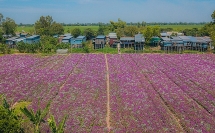
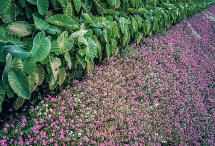
| Blooming full of Periwinkle flowers in Mekong Delta | |
| Blooming flowers catch your sense of delight in Vietnam | |
| Scarlet flowers colors the dreamy Hue |
 |
| Photo by Hà Thành/Vnexpress |
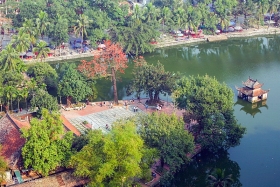
The bird-eye view of the whole premise of Thay Pagoda located on Sai Son mountain, Quoc Oai district, Hanoi. Legend is said that the pagoda was built on the dragon land with its main gate looking to the South while the left side of the religious relic is the Long Dau mountain and its back and right sides lie on Sai Son mountain.
 |
| Photo by Hà Thành/Vnexpress |
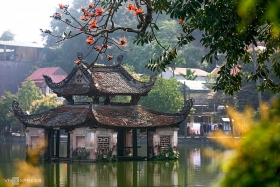
A branch of bombax ceiba swoops down the water communal on the lake. This is a symbolic architecture of the Thay pagoda. During festive periods, the area usually becomes a stage for water puppet shows.
 |
| Photo by Hà Thành/Vnexpress |
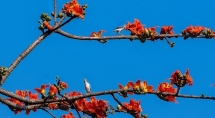
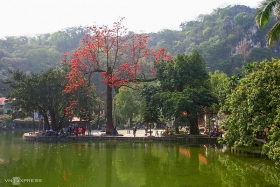
Every March, the bombax ceiba blossoms flourish paiting a highlighted sketch for the ancient pagoda.
 |
| Photo by Hà Thành/Vnexpress |
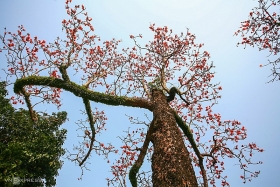
According to traditional Chinese medicine, the whole parts of the bombax ceiba tree can be used for hydration and detoxifying. Particularly, flowers are used to treat many diseases such as peptic ulcers.
 |
| Photo by Hà Thành/Vnexpress |
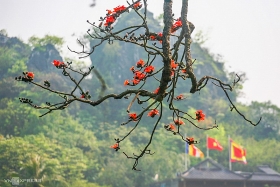
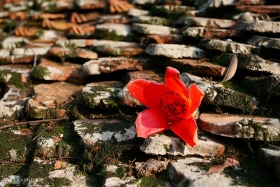
During the flowering season, all leaves fall while only bright red flowers on the branches. The bombax ceiba trees here are believed to be more special because of their swooping branches.
 |
| Photo by Hà Thành/Vnexpress |
The flowering season lasts nearly a month and gradually fades until the tree produces tender leaves. The flower is also known by many other names such as po-lang.
Related Stories
 Travel
Leveraging Cuisine to Elevate Vietnam's Tourism Brand
 Travel
Ho Chi Minh City Boosts Tourism Revenue Through High-Value Visitor Strategy
Recommended
 Travel
Top Coral Reef Diving Destinations in Viet Nam for Summer 2026
Travel
Ho Chi Minh City Boosts Tourism Revenue Through High-Value Visitor Strategy
 Travel
Vietnam Ranks First in Number of Foreigners with Long-Term Stays in RoK
 Travel
Bringing Essence of Vietnamese Cuisine Closer to Europe and the World
 Travel
Russian Arrivals to Vietnam Nearly Triple in First Half of 2026
 Travel
French Magazine Highlights Must-Try Dishes of Vietnam Cuisine
 Travel
Vietnam Gains Growing Appeal on the Regional Tourism Map
 Travel