
Bringing Election Information to Every Village, Parish, and Border Area
 | Early Voting Organized for Forces Performing Duties at Sea |
| Application of Population Data and VNeID Enhances Efficiency of Election Organization |
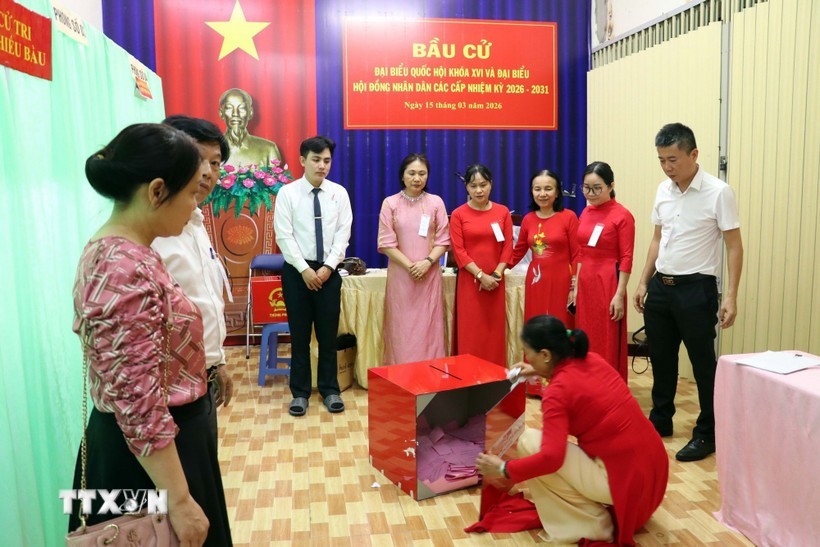
According to the Vietnam News Agency (VNA), Duc Nong Commune is one of nine border localities in Quang Ngai Province, belonging to Electoral Unit No. 4 of the province. The commune has nearly 10,000 voters casting ballots at 23 polling stations, including 22 stations located in villages and hamlets, and one at the Duc Nong Border Guard Station.
Although it is currently the peak season for coffee cultivation, the communal Rong house in Dak Hu Village remains a gathering place for residents to follow publicly posted information on the voter list and the list of candidates.
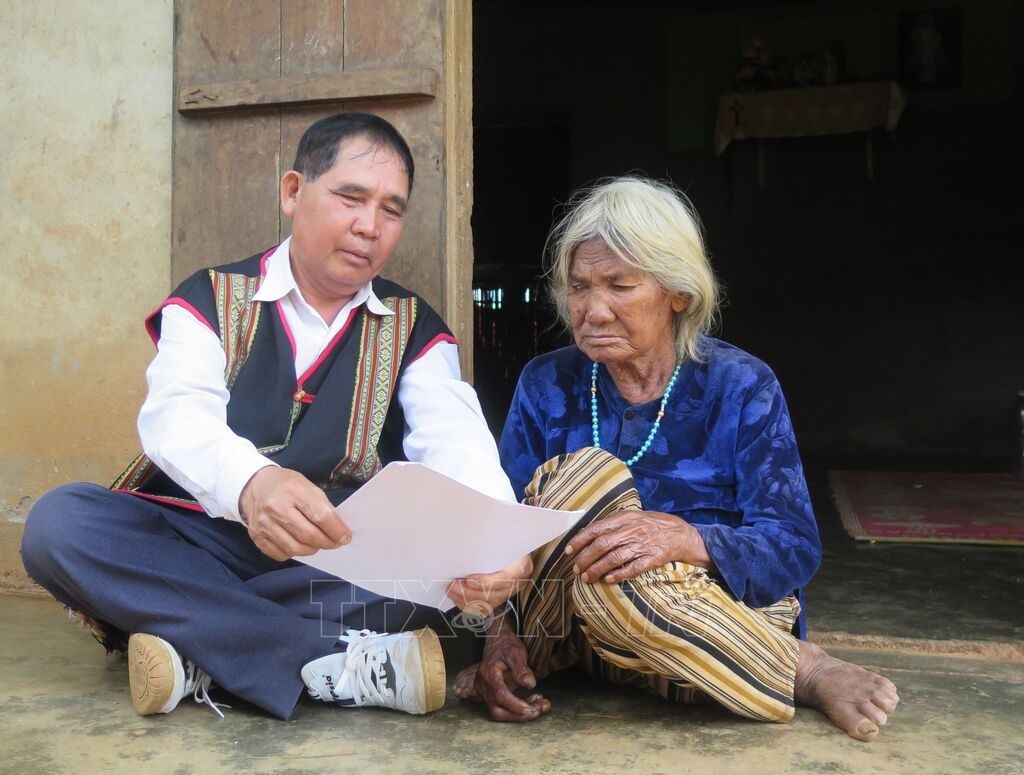 |
| For elderly voters, officials from Ngok Reo Commune in Quang Ngai Province visit their homes to conduct election outreach. (Photo: VNA) |
At village meetings, election-related content is integrated into discussions, and questions are addressed. A Toan, Secretary of the Party Cell and Head of Dak Hu Village, said he consistently provides comprehensive information on voters’ rights and responsibilities, as well as on the candidates, to give residents a sound basis for making their choices. The list of candidates for the 16th National Assembly has been closely followed by residents ahead of polling day.
Tran Cao Bao Viet, Chairman of the People’s Committee of Duc Nong Commune, stated that to ensure the effective organization of the election in the locality, the Party committee and local authorities promptly established leadership bodies, including the Commune Election Steering Committee and the Commune Election Committee. Six Election Boards, 23 Polling Teams, and one assisting working group were also formed to provide advisory and support functions. In addition, the commune has promptly implemented guiding documents and election-related tasks in accordance with regulations, issuing detailed plans specifying content, timelines, implementing agencies, and coordinating bodies as prescribed.
“Election communication is integrated into village and hamlet meetings. At the same time, election information is regularly disseminated via the public loudspeaker system, the commune’s electronic information portal, and the social media pages of each village so that every resident can fully grasp all information related to the election of deputies to the 16th National Assembly and members of People’s Councils at all levels for the 2026-2031 term. As a result, any difficulties or obstacles have been thoroughly addressed through coordination between local authorities and villages, ensuring readiness for this major national event,” Tran Cao Bao Viet said.
In Ngok Reo Commune (Quang Ngai Province), which has more than 6,900 voters, nine electoral units, and 16 polling stations, communication methods have been diversified. In addition to loudspeakers, posters, and banners, commune officials directly visit elderly voters and those with mobility difficulties to provide candidate lists. A mobile outreach model is maintained twice daily, in the morning and afternoon. Voter lists and candidate lists are publicly posted at the central Rong house for convenient monitoring and review.
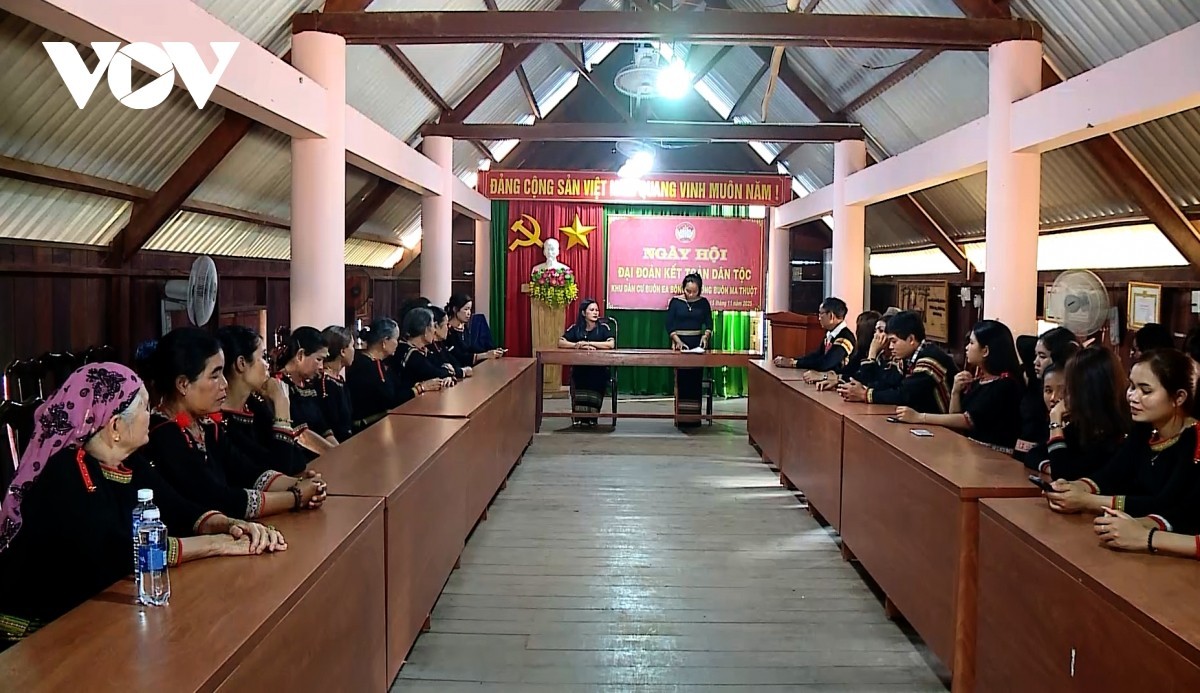 |
| Election information is disseminated to residents during community gatherings. (Photo: VOV) |
In Dak Lak Province, communication efforts are being carried out comprehensively in parishes and villages with large ethnic minority populations. According to Voice of Vietnam (VOV), in Ea Bong Village (Buon Ma Thuot City), at the end of each afternoon, when residents return from their fields, members of the self-governance board divide into groups to visit each household to provide information about the election date, eligibility criteria for deputies, and key provisions of the Election Law. The content is delivered in both the common language and the Ede language to ensure clarity and practical relevance.
In parishes, election information is also disseminated during religious activities and voter meetings. The shared spirit is that each parishioner is also a citizen, and participating in the election is the fulfillment of one’s responsibility to the nation.
In border communes such as Ia Lop (Dak Lak Province), where the area is vast and the population dispersed, Fatherland Front officials coordinate with village heads and reputable community figures to visit residential clusters, distribute leaflets, and guide the review of voter lists, ensuring that citizens’ rights and obligations are fully upheld.
In Ha Tinh Province, where around 700 households with more than 3,000 ethnic minority residents live along the Vietnam-Laos border, rugged terrain limits access to information. In this context, reputable individuals play a pivotal role. They not only disseminate legal regulations but also “translate” policies into stories closely connected to daily life, explaining citizens’ rights in everyday language linked to production and economic development.
In the era of social media, these reputable figures also serve as grassroots “information filters,” promptly guiding public opinion and helping prevent rumors and misinformation related to the election process and personnel. At the same time, they actively participate in the consultation process, providing the Fatherland Front at various levels with additional grounds for selecting and nominating qualified candidates.
 | The 1946 General Election: A Choice Made by Leaders for the Nation’s Future Exactly 80 years ago today, on January 6, 1946, Vietnam held its first General Election to elect the National Assembly. On the occasion of this ... |
 | 80 years of Vietnam’s first General Election Exactly 80 years ago, on January 6, 1946, a landmark event in Vietnam’s history took place as Vietnamese people, for the first time, exercised their ... |


Most read
Related Stories
 National
Results of 16th National Assembly Election Expected to be Announced on March 22
 Economy
Confidence of Foreign Business Community in Vietnam
 Friendship
The Election in Vietnam Through Eyes of International Friends: Foundation for Stability and Cooperation
 Friendship
Dr. Michael Parsons (Australia): Election Day in Vietnam Has Festival-like Atmosphere
Recommended
 Viet's Home
Integrating Local Cultural Values Into Tourism Activities
 Viet's Home
Champasak Proposes Expanded Cooperation with Can Tho Across Multiple Sectors
 Viet's Home
Olympic Champion Shooter Hoang Xuan Vinh Aspires New Viet-RoK Film Project
 Viet's Home
Vietnam Intensifies Monitoring Drug Use Crimes at Private Rental Accommodations
Popular article
 Viet's Home
Quang Tri Provincial Authority Widen Scope For Search of Fallen Soldiers’ Remain Amidst Limited Information
 Viet's Home
Promoting Cooperative Relations Between Hokkaido (Japan) and Quang Ninh
 Viet's Home
Vietnam, Bulgaria Promote Future Legal And Judicial Cooperation
 Viet's Home