
Community Information Sources Help Locate Numerous Fallen Soldiers' Graves
| VNeID Adds Feature for Searching Information on Fallen Soldiers' Family Members Memories That Lead Vietnam’s Fallen Soldiers Home |
According to the Steering Committee for the 500-Day Campaign to Accelerate the Search, Recovery and Identification of Fallen Soldiers' Remains, after four months of implementation, communications efforts have generated strong public outreach, helping mobilize the participation of the entire political system, citizens, the business community and international friends.
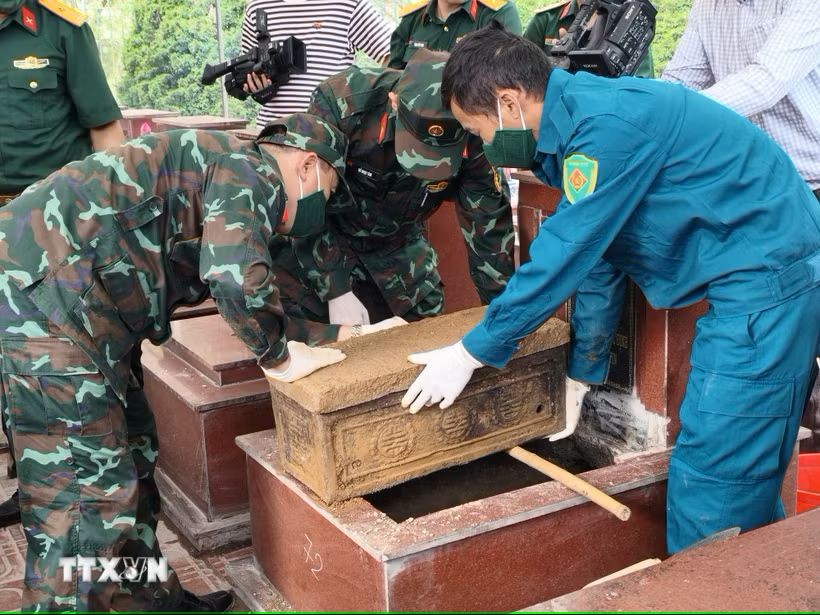 |
| Authorities collect samples, hand over specimens and digitize information about fallen soldiers' remains. (Photo: Duc Tho/VNA) |
The Campaign has established a multi-platform information reception network operating continuously 24/7. The Steering Committee's hotline receives information through two telephone numbers, 1800.8022 and (+84) 965.001.222, serving relatives of fallen soldiers, veterans, witnesses and others with information related to fallen soldiers.
The reception team based at the Military Radio and Television Center receives relatives, veterans and witnesses every day who come to provide information about fallen soldiers, their graves and related personal belongings. The center serves as a direct information channel, enabling people with information about fallen soldiers to connect with the relevant authorities.
Alongside the hotline, the Campaign receives information through email, Facebook, Zalo, YouTube and other digital platforms. Coordination among the hotline system, digital media, press agencies and social media influencers has significantly expanded the Campaign's reach.
From June 15 to August 12, 2026, the hotline and the Campaign's digital platforms received a large volume of information from relatives of fallen soldiers, veterans and members of the public.
After being received, the information is classified, digitized, compiled, standardized and transferred to relevant agencies and units for review, cross-checking and verification, supporting the search for and recovery of fallen soldiers' remains.
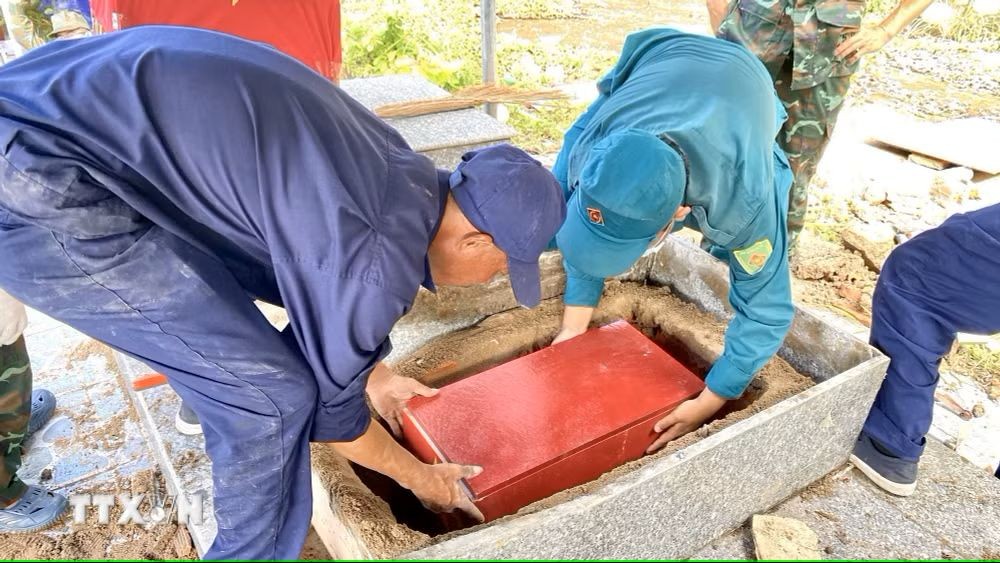 |
| The An Giang Steering Committee for the search, recovery and identification of fallen soldiers' remains collects bone samples for DNA testing at Tri Ton Martyrs' Cemetery. (Photo: Thanh Sang/VNA) |
Through the hotline, more than 39,600 calls were received, including over 13,200 calls from relatives of fallen soldiers seeking information about graves. Veterans and members of the public made 1,800 calls providing information about burial sites, resulting in approximately 500 leads concerning fallen soldiers' graves.
Around 2,500 calls requested guidance on procedures for collecting biological samples and conducting DNA tests for relatives of fallen soldiers. More than 10,000 calls sought advice on policies for people with meritorious service, policies related to fallen soldiers' graves, search procedures, information about the Campaign and other relevant matters.
In addition to the hotline, the Military Radio and Television Center received more than 6,000 paper dossiers submitted by relatives of fallen soldiers seeking assistance in locating graves.
Through Zalo, Zalo Official Account and other digital platforms, the Campaign received nearly 1,000 pieces of information, mainly concerning fallen soldiers, burial locations and requests from relatives seeking their graves.
The Facebook group “500-Day Campaign” was established to connect relatives of fallen soldiers with people who have information and experience in supporting searches.
After five weeks, the group had nearly 17,600 members, 96,600 followers, nearly 3,400 contributors, more than 4,000 posts, 13,200 comments and 61,600 reactions.
Throughout the Campaign, its hotline has become a direct channel connecting relatives of fallen soldiers, veterans and members of the public with relevant authorities. Numerous leads received through the hotline and other channels have been verified and used to support the search for and recovery of fallen soldiers' remains.
Through the information received, the Steering Committee coordinated with the Da Nang Military Command to process information concerning Hang Da Sap, resulting in the discovery of the remains of nine fallen soldiers. Information from the Cau Lau dossier also led to the discovery of two fallen soldiers. In addition, many families have located the graves of fallen soldiers through information received and connections established during the Campaign.
Central and local press agencies have actively participated in the effort, focusing on key issues and creating a widespread campaign of communication and remembrance. Their approach has also evolved, moving beyond reporting on Campaign activities to proactively connecting information sources, locating witnesses, verifying information and following stories through to their conclusion.
In recent months, central and local press agencies have published and broadcast more than 20,000 reports and articles about the Campaign, creating a large-scale communications effort that has helped turn the Campaign into a broad social movement with strong outreach and attracted attention from people across Vietnam and international friends.
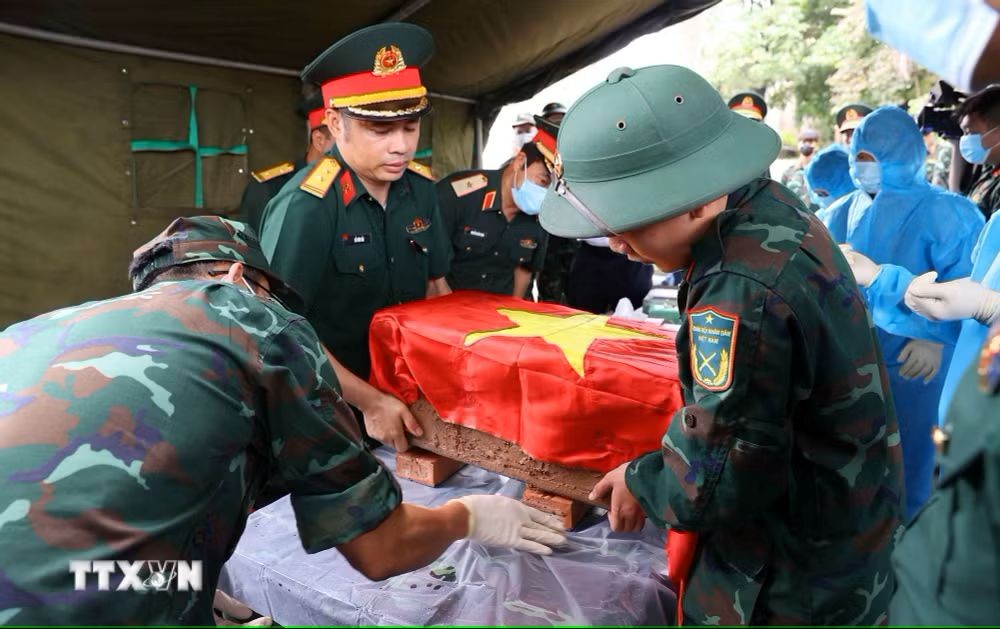 |
| Authorities solemnly carry out the excavation process and transfer the unidentified remains of fallen soldiers to the area for collecting biological samples at Ngoc Hoi Martyrs' Cemetery in Thanh Tri Commune. (Photo: Van Diep/VNA) |
The 79th anniversary of War Invalids and Martyrs' Day on July 27 served as a major highlight of the communications campaign. Radio and television programs, press coverage and digital content brought stories about the search, recovery and identification of fallen soldiers' remains closer to the public.
A televised bridge connecting four locations on the evening of July 26 provided a comprehensive portrayal of the Campaign's achievements, evoking strong emotions and spreading a profound message of gratitude.
Communications activities and information collection through digital platforms have helped expand the Campaign's reach, encouraging relatives of fallen soldiers, veterans and members of the public to provide information and thereby generating additional data to support the search, recovery and identification of fallen soldiers' remains.
 Nghe An's 500-Day and Night Campaign Collects 17,831 DNA Samples Nghe An's 500-Day and Night Campaign Collects 17,831 DNA Samples |
 Over 50 Calls and Messages Help Search for Fallen Soldiers at Tan Son Nhat Airport Over 50 Calls and Messages Help Search for Fallen Soldiers at Tan Son Nhat Airport |


Most read


Poland Inaugurates Memorial Plaque Honouring Architect Who Helped Preserve Hoi An

First Congress of the Dong Thap Union of Friendship Organizations for the 2026-2031 Term


Related Stories
 National
An Giang Collects DNA Samples to Identify Fallen Soldiers
 National
DNA Collection Offers Hope to Families of Fallen Soldiers
 Vietnamese Culture
Eight Additional Remains of Fallen Soldiers Discovered at Le Thi Rieng Park
 National
15,401 Fallen Soldiers’ Remains Samples Transported by Military Aircraft
Recommended
 Expats in Vietnam
I Chose to Stay Because There Is Still So Much I Don’t Know About Viet Nam
 Vietnamese Culture
Learning to Livestream Agricultural Products
 Vietnamese Culture
Italian Ambassador to Viet Nam: Culture Brings Peoples of Two Countries Closer Together
 Vietnamese Culture
The Joy of Work for Agent Orange Victims
Popular article
 Expats in Vietnam
Football and Friendship Unite 20 International Teams in Hanoi
 Vietnamese Culture
Over 2,300 Hai Phong Students Gain Access to STEAM Learning Spaces and Psychological Counseling
 Vietnamese Culture
260 Households in Lai Chau Receive Emergency Aid Following Floods and Landslides
 Vietnamese Culture