
General Secretary and President To Lam: Viet Nam Union of Friendship Organizations Must Fully Recognize and Resolutely Promote Its Role as Core, Specialized and Pillar Organization in People-to-People Diplomacy
The meeting took place immediately after the successful 7th National Congress of the Viet Nam Union of Friendship Organizations for the 2026-2031 term.
The meeting was attended by Politburo Member, Party Central Committee Secretary, Secretary of the Party Committee of the Viet Nam Fatherland Front and central-level mass organizations, and President of the Central Committee of the Viet Nam Fatherland Front Bui Thi Minh Hoai; Member of the Party Central Committee and Chief of the Party Central Committee Office Nguyen Hai Ninh; and representatives of numerous central-level agencies.
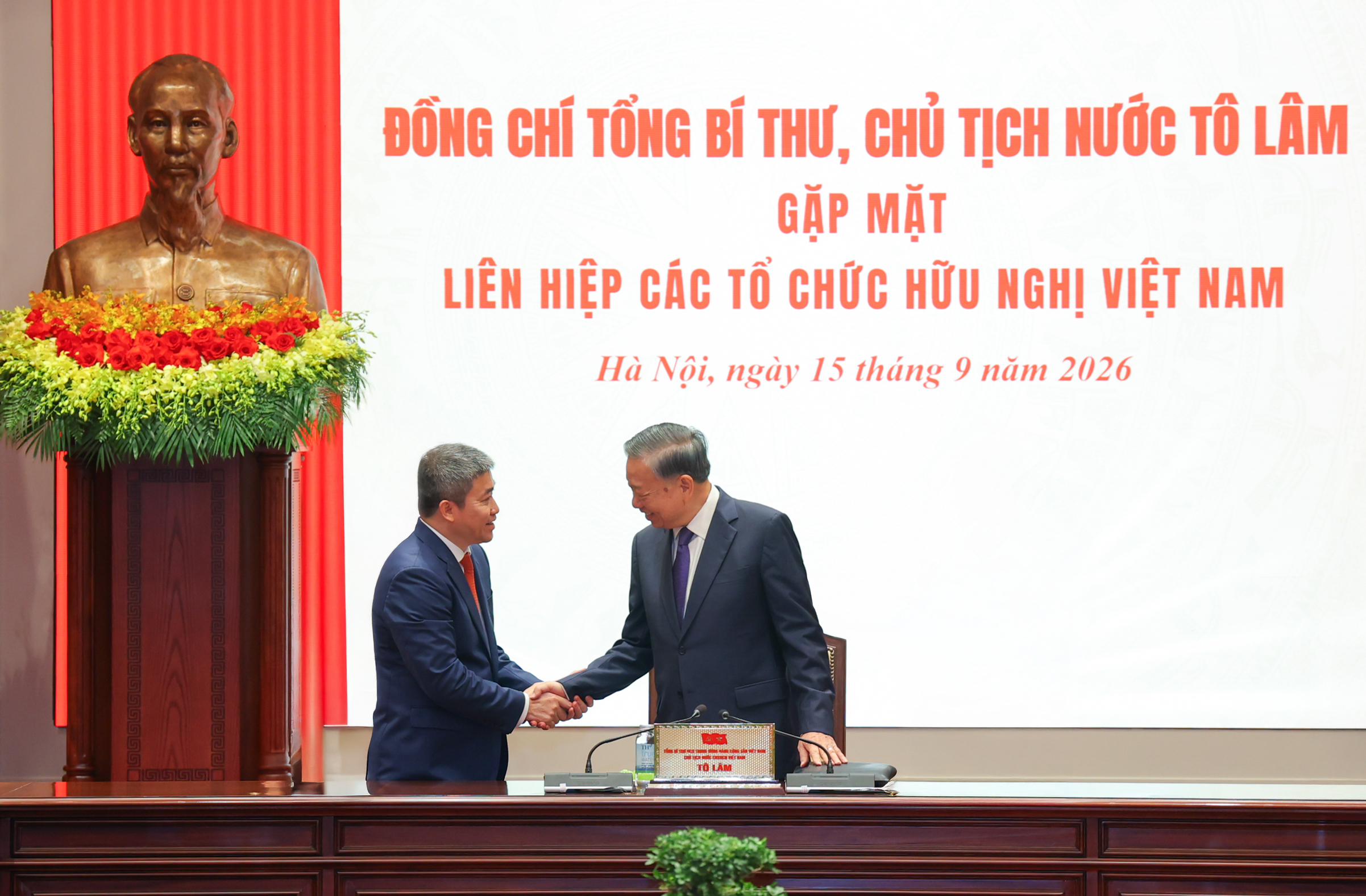 |
| General Secretary and President To Lam congratulated President of the Viet Nam Union of Friendship Organizations Phan Anh Son following the success of the 7th National Congress. (Photo: Dinh Hoa) |
Reporting on the outcomes of the 7th National Congress for the 2026-2031 term, President of the Viet Nam Union of Friendship Organizations Phan Anh Son highlighted the key achievements of the previous term. Accordingly, the Viet Nam Union of Friendship Organizations proactively provided policy advice and integrated people-to-people diplomacy activities into high-level external relations activities, helping enrich their content and deepen external relations, firmly consolidating political trust and strengthening friendship between Viet Nam and the peoples of other countries. The Viet Nam Union of Friendship Organizations’ people-to-people diplomacy work has undergone innovation in its thinking, content and methods, shifting from “purely friendship exchanges” to “creating political content.” Its network of international friends has been expanded in a more diversified direction, with greater depth and substantive outcomes, contributing to the building of a firm “people’s support base,” creating a favorable social foundation for relations between Viet Nam and other countries, and enhancing Viet Nam’s prestige and position in the international arena.
Work on foreign non-governmental organizations has been carried out proactively, with clear priorities and a focus on key areas, closely aligned with the country’s development goals and major campaigns and programs launched by the Government and the Central Committee of the Viet Nam Fatherland Front.
There have been positive changes in monitoring developments, conducting research and providing policy advice. The quality of reports has effectively supported leadership and direction, and the formulation of orientations for people-to-people diplomacy.
The organizational structures of the Viet Nam Union of Friendship Organizations and its member organizations, from the central to local levels, have been consolidated and reorganized toward greater streamlining, capacity, effectiveness and efficiency. Particular attention has been paid to the training and professional development of personnel.
Comrade Phan Anh Son also seriously acknowledged the weaknesses, limitations and even bottlenecks that need to be addressed soon. These include the fact that the connection between people-to-people diplomacy and the implementation of economic, science and technology development goals has not yet produced many concrete, quantifiable results or made clear contributions to the socio-economic development of localities and the country; the structure of the partner network remains imbalanced, with uneven development across regions and fields; the expansion of relations with intellectuals, young entrepreneurs and influential individuals has been slow; the quality of activities of member organizations at both the central and local levels remains uneven, with many at times remaining passive, having a mindset of waiting to be reminded, assigned tasks or given work; and, in particular, awareness of the role of people-to-people diplomacy remains uneven across sectors, levels and localities.
Comrade Phan Anh Son reported to General Secretary and President To Lam on five major orientations of the Viet Nam Union of Friendship Organizations for the new term.
First, strive to promote its core role in people-to-people diplomacy, advising the Central Committee of the Viet Nam Fatherland Front on developing strategies and organizing the implementation of work programs and plans so that people-to-people diplomacy can truly become a pillar of Viet Nam’s diplomacy.
Second, continue to renew thinking, approaches, content and methods in people-to-people diplomacy, the mobilization of foreign non-governmental organizations, research and policy advice, external information and work on overseas Vietnamese people, with a stronger shift in focus toward substantive effectiveness, with specific products and measurable results that make practical contributions to the country’s and localities’ development goals.
Third, proactively build a “new-generation partner network,” contributing to gradually and closely linking people-to-people diplomacy with the country’s economic, security, technological and other interests; further promoting the effectiveness of “heart-to-heart diplomacy” to attract forces and influential individuals who have an impact on the political and social affairs of other countries; and focusing on connecting young people globally through specific projects and cooperation mechanisms. This partner network will both help facilitate access to resources and effectively protect Viet Nam’s interests in various forums, while addressing complex issues at an early stage and from a distance.
Fourth, transforming soft power into a resource for development: making a decisive shift from fragmented, short-term approaches to resource mobilization toward proactively building long-term, substantive and effective development partnerships; diversifying the resources of foreign non-governmental organizations and international partners, including financial resources, knowledge, technology, expertise and global networks, to support the sustainable development goals and Viet Nam’s development priorities in line with the needs of each locality. Efforts to mobilize aid should continue to be closely combined with political and external-relations engagement, contributing to the promotion and protection of national interests.
Fifth, focus on building and consolidating a synchronized, streamlined and effective organizational structure from the central to local levels; with particular attention to building a contingent of officials who possess firm political resolve and consistently take national interests as their guiding principle for action, while mastering new knowledge and technologies, foreign languages, international law, and the economies and cultures of partner countries, in line with the direction of the General Secretary and President.
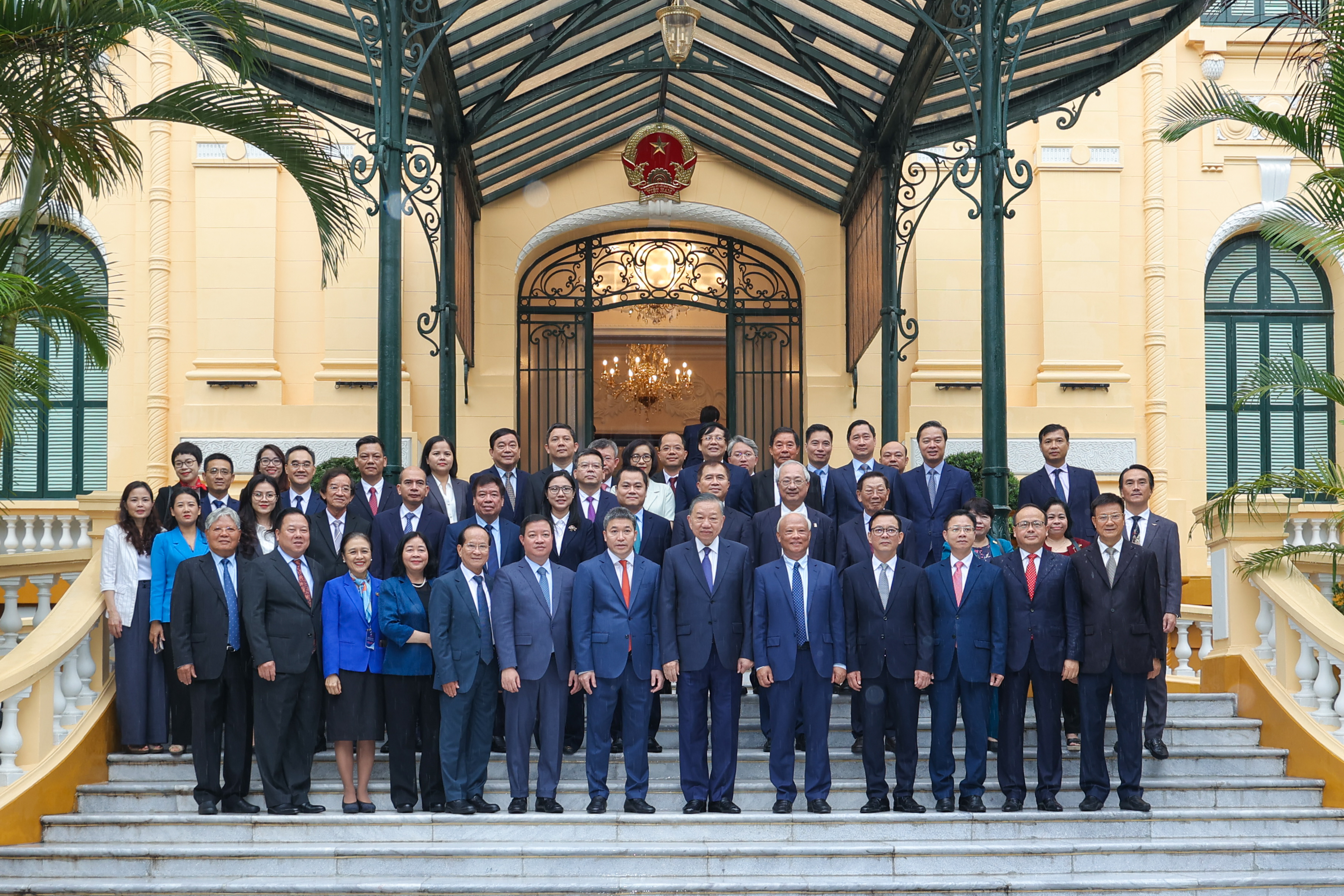 |
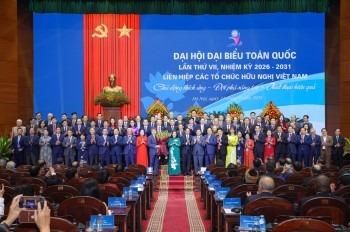
| General Secretary and President To Lam took a group photo with the 7th-tenure Executive Committee of the Viet Nam Union of Friendship Organizations and delegates attending the meeting. (Photo: Dinh Hoa) |
After hearing the report on the outcomes of the Congress and the major proposals and orientations for the next term, General Secretary and President To Lam highly appreciated the Viet Nam Union of Friendship Organizations for having thoroughly grasped and comprehensively synthesized all the Party’s contents, viewpoints and policies in a very complete and profound manner; for seriously and appropriately examining its limitations, shortcomings and bottlenecks, while assessing the new context and new requirements for people-to-people diplomacy as the country enters a new stage of development, thereby contributing efforts toward successfully achieving the country’s development goals.
More importantly, General Secretary and President To Lam emphasized, the organization had drawn lessons from what had and had not been accomplished, and identified its vision, strategic orientations, content and methods for organizing implementation more effectively and making more substantive contributions to the country. This approach, he said, was very appropriate and well-targeted, in line with the new requirements.
According to the General Secretary and President, we are now at a moment of historic significance. After a period of renewal, we have achieved major accomplishments, and the country is entering a new stage of development amid a rapidly changing international environment. We cannot fail to keep pace with the world’s development. If we stand still or move slowly, we will fall behind; even if we develop gradually, step by step, we will still lag behind the development of other countries.
The General Secretary and President affirmed that, in order to integrate successfully, external relations must lead the way and open up new paths. Among the three pillars of diplomacy, people-to-people diplomacy, particularly in the cultural field, must move ahead of State diplomacy.
A country’s external relations are not conducted solely through official contacts between states and political parties. Behind international relations are people, social foundations and trust. “That is the exclusive advantage and unique space of people-to-people diplomacy”; The strength of the people is invincible, and we must proactively tap into and actively promote that strength, General Secretary and President To Lam emphasized.
General Secretary and President To Lam emphasized that, as the core, specialized and pillar organization for people-to-people diplomacy, as defined by the Party, State and people, the Viet Nam Union of Friendship Organizations must deliver concrete results and meet the very high requirements that we have clearly identified.
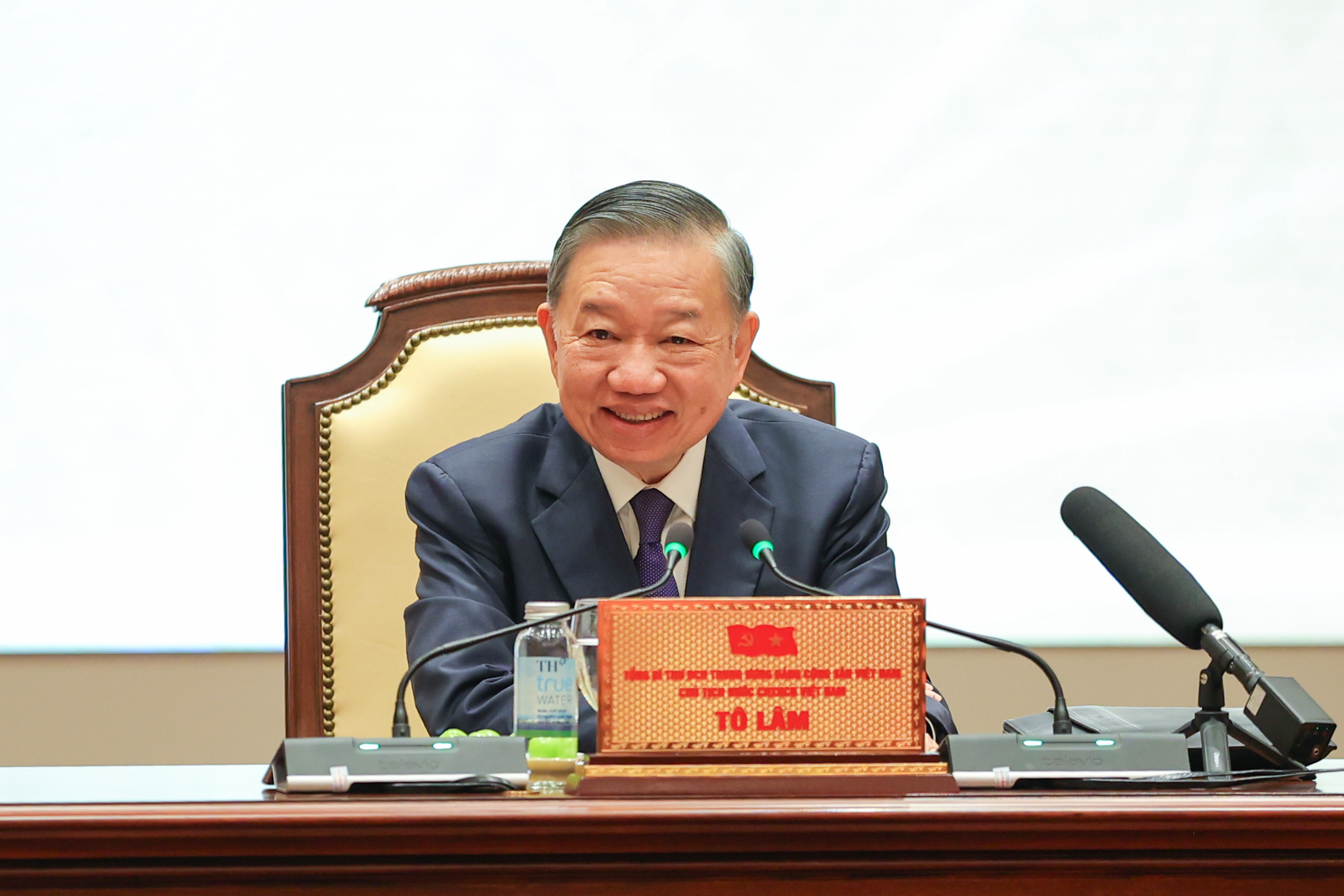 |
| General Secretary and President To Lam. (Photo: Dinh Hoa) |
Based on the report of the Viet Nam Union of Friendship Organizations, General Secretary and President To Lam assigned the 7th-tenure Executive Committee of the Viet Nam Union of Friendship Organizations to address five major “tasks”:
First, regarding awareness of the role, mission and responsibility of people-to-people diplomacy. General Secretary and President To Lam pointed out that the Party and State have identified people-to-people diplomacy as one of the three pillars of external relations. However, for this role to truly be recognized by all levels, sectors and society as a whole, the shift in awareness must begin with the Viet Nam Union of Friendship Organizations. Awareness must not stop at the Executive Committee but must reach every official, civil servant and member.
Second, the capacity for research must be elevated, and coordination with Party diplomacy and State diplomacy must be strengthened to address complex issues in relations between countries. To engage effectively in dialogue, when faced with major issues or international policy-making, there must be information and sound arguments. The Viet Nam Union of Friendship Organizations needs to make full use of its advantages in accessing diverse sources of information, verifying and analyzing them to identify genuine trends and correctly understand partners’ attitudes, thereby providing timely advice to the Party and State and contributing to the protection of national interests.
Third, General Secretary and President To Lam highly appreciated the Viet Nam Union of Friendship Organizations’ identification of “the connection between the elite and the masses” as a means of building an international “people’s support base.” The General Secretary and President said that creating a new-generation partner network, including elites, parliamentarians, scholars and international CEOs, is a breakthrough and highly necessary direction in the digital era. However, the source of strength of people-to-people diplomacy remains the “people”; efforts must be made to nurture the sentiments of all segments of the population, particularly the younger generation. In addition, more than 6.5 million Vietnamese people overseas are an inseparable part of the Vietnamese nation. They serve as a bridge between the “great national unity bloc” and “the solidarity and support of people around the world.” Attracting overseas Vietnamese intellectuals and entrepreneurs is not only for economic purposes, but also to strengthen the power of the great national unity bloc, enabling them to become the country’s natural “goodwill ambassadors.” This is the connection between the overseas Vietnamese elite and international friends to create a solid foundation for people-to-people diplomacy.
Fourth, regarding the promotion of its role in coordinating the combined strength, General Secretary and President To Lam said that if the goal is to connect knowledge and technology, expand international relations for agencies and localities, contribute to national development and enhance Viet Nam’s position, the Viet Nam Union of Friendship Organizations cannot do so alone. The greatest resource lies in the ability to bring together and coordinate the entire system. The Viet Nam Union of Friendship Organizations needs to demonstrate its core role in advising the Viet Nam Fatherland Front on bringing together the external relations bodies of socio-political organizations, representing veterans, artists and cultural figures, intellectuals, religious groups, ethnic groups, young people, women, trade unions and others.
Fifth, regarding mechanisms, policies, facilities and personnel, General Secretary and President To Lam requested that central-level and local Party committees, ministries, sectors and agencies urgently coordinate and provide advice to the Party and State on completing the institutional framework for people-to-people diplomacy. Obstacles in information sharing, inter-sectoral coordination, and personnel training and professional development need to be addressed; flexible financial mechanisms should be established and social mobilization strengthened. At the same time, conditions should be created for the Viet Nam Union of Friendship Organizations to participate in appropriate national coordination mechanisms in accordance with its functions and responsibilities.
General Secretary and President To Lam reminded the Executive Committee of the Viet Nam Union of Friendship Organizations to pay attention to the decisive factors of organizational structure and people. A new generation of people-to-people diplomacy officials must possess firm political resolve, profound cultural understanding, strong professional expertise, proficiency in foreign languages and sensitivity to current affairs. They must continuously renew themselves and, in particular, the organization must have young officials and provide them with appropriate training so that they can serve as successors and ensure continued development.
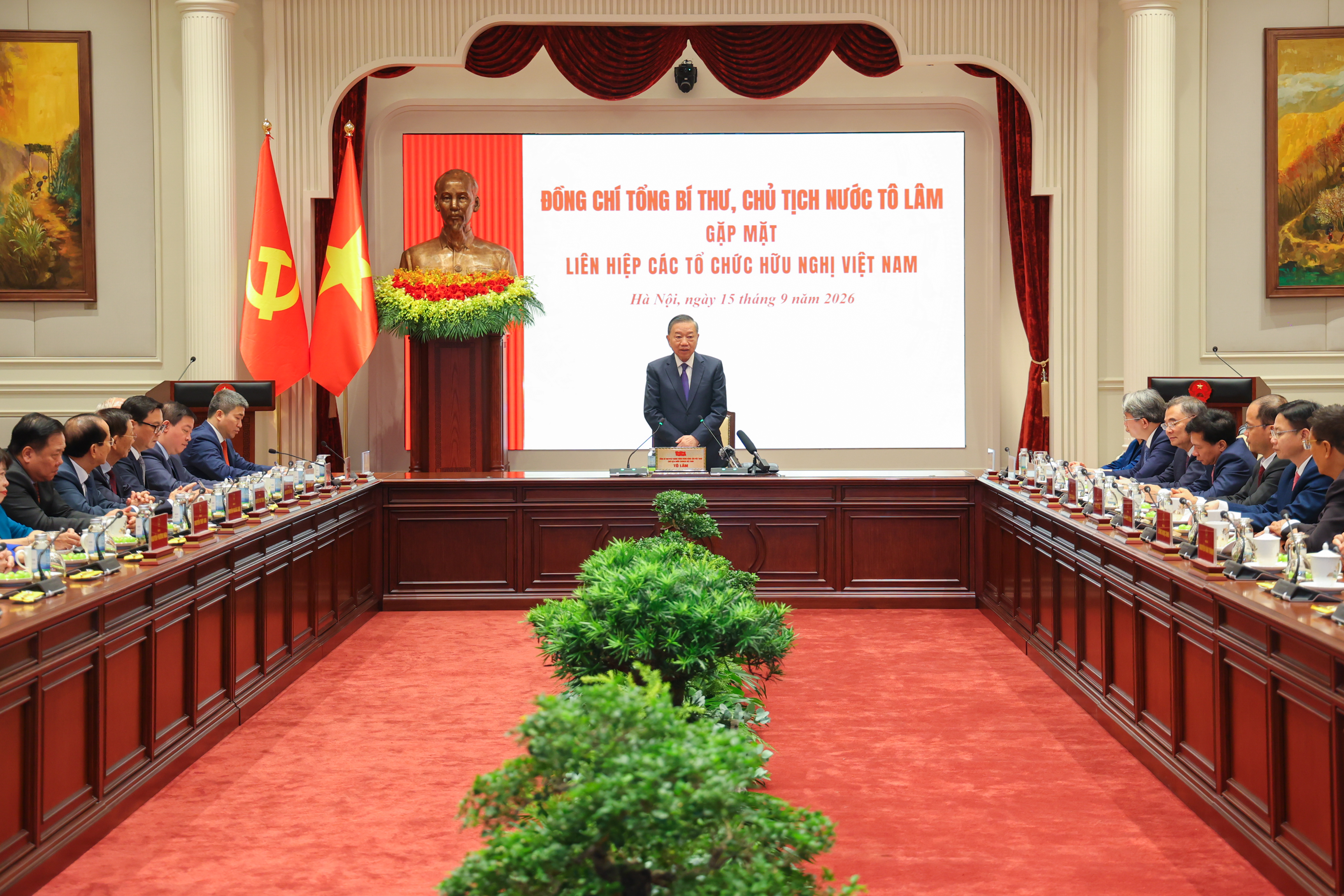 |
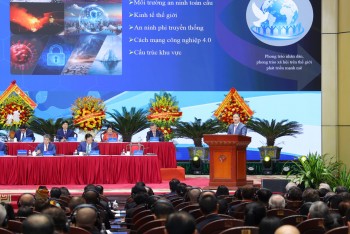
| General Secretary and President To Lam delivered remarks at the meeting. (Photo: Dinh Hoa) |
General Secretary and President To Lam requested that the Viet Nam Union of Friendship Organizations soon translate these requirements into an action program immediately following the Congress, and focus on immediately implementing each important task, clearly defining the products, outcomes and responsibilities, regularly reviewing and evaluating results at each stage and in each period and for each task, and drawing lessons from the process.
General Secretary and President To Lam requested that, five years from now, the Viet Nam Union of Friendship Organizations must be able to answer specific questions: What substantive projects has the Viet Nam Union of Friendship Organizations created? How effectively has its international people-to-people partner network contributed to safeguarding the Fatherland from an early stage and from afar? How has people-to-people diplomacy contributed to the overall position of Viet Nam’s diplomacy?
President of the Viet Nam Union of Friendship Organizations Phan Anh Son expressed the determination of the 7th-tenure Executive Committee of the Viet Nam Union of Friendship Organizations and committed to embracing and thoroughly implementing the orientations and directives of the General Secretary and President, as well as the trust placed in the organization. He also affirmed that the Viet Nam Union of Friendship Organizations would develop an action program and seriously and proactively implement the directives it had just received.
 Phan Anh Son Elected President of Viet Nam Union of Friendship Organizations for 2026-2031 Term Phan Anh Son Elected President of Viet Nam Union of Friendship Organizations for 2026-2031 Term On September 14 in Hanoi, the 7th National Congress of the Viet Nam Union of Friendship Organizations (VUFO), for the 2026-2031 term, successfully concluded. Phan Anh Son, Secretary of the Party Committee and President of the Viet Nam Union of Friendship Organizations for the 6th term, was elected President of the Viet Nam Union of Friendship Organizations for the 7th term. |
 Six Key Tasks of the Viet Nam Union of Friendship Organizations for 2026-2031 Term Six Key Tasks of the Viet Nam Union of Friendship Organizations for 2026-2031 Term For the 2026-2031 term, the Viet Nam Union of Friendship Organizations has identified a shift in focus towards substantive effectiveness, with concrete, measurable products and results. The Political Report sets out six key tasks and solutions, along with three strategic breakthroughs. |

Most read

General Secretary and President To Lam: Viet Nam Union of Friendship Organizations Must Fully Recognize and Resolutely Promote Its Role as Core, Specialized and Pillar Organization in People-to-People Diplomacy


Six Key Tasks of the Viet Nam Union of Friendship Organizations for 2026-2031 Term


Related Stories
Friendship
Six Key Tasks of the Viet Nam Union of Friendship Organizations for 2026-2031 Term
 Focus
Focus
Phan Anh Son Elected President of Viet Nam Union of Friendship Organizations for 2026-2031 Term
 Friendship
Speech by President of the Viet Nam Fatherland Front Central Committee Bui Thi Minh Hoai at the National Congress of the Viet Nam Union of Friendship Organizations
 Friendship
Amendments and Supplements to the Charter of the Viet Nam Union of Friendship Organizations
Popular article
 Friendship
Ensuring French Resources Continue to Contribute to Viet Nam
 Friendship
Effective Cooperation, Stronger People-to-People Ties between Viet Nam and Russia
 Friendship
International Friends and Partners Congratulate Viet Nam Union of Friendship Organizations’ Congress
 Friendship