
Giving Wings to Ta Long’s Green Vegetable Dream
| Plan International Vietnam Supports Students in Flood-affected Areas in Lai Chau Green Circularity in Ta Rut: Sustainable Path Forward Through Indigenous Black Pigs |
An initiative from student leaders
At the end of April 2026, Plan International Viet Nam received an initiative proposal from the youth leaders’ group at Ta Long Ethnic Minority Semi-Boarding Lower Secondary School. In the proposal, the group wrote that the school needed to grow vegetables to supplement food for its semi-boarding students, but the local climate was extremely harsh. The intense summer heat and prolonged rainy season made it difficult for crops to grow and develop. The group proposed building a roofing system to reduce temperatures during the hot season, provide protection from rain, and create a better growing environment for vegetables. The facility would also provide a space for hands-on activities, helping educate students and raise their awareness of ways to adapt to climate change.
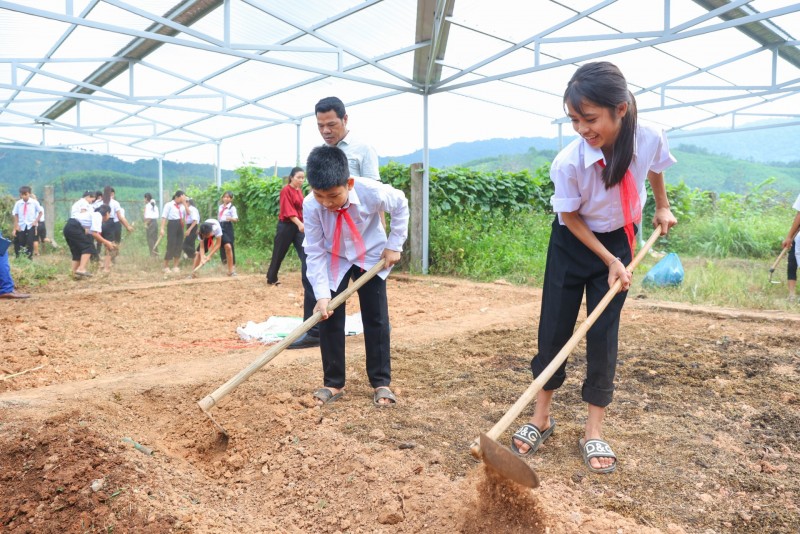 |
| Students at Ta Long Ethnic Minority Semi-Boarding Lower Secondary School prepare the soil under the roof for the vegetable garden for the new school year. (Photo: Dinh Hoa) |
Immediately after receiving the proposal, Plan International Viet Nam took action. The organization held discussions with the group and the school. At the same time, based on the school safety plan, it conducted a survey and supported the implementation of the proposal.
Dang Ba Loc, a project officer with Plan International Viet Nam in Quang Tri, said the roof would protect crops from the weather, specifically by reducing the intensity of the harsh summer sunlight and limiting the impact of heavy showers that could damage young vegetables or cause erosion of nutrient-rich soil. This would ensure a stable supply of fresh, clean and safe vegetables for the school’s boarding kitchen. At the same time, it would enable the school to proactively grow out-of-season vegetables and fruits or shade-loving vegetables that would normally be difficult to cultivate outdoors. In particular, the roof would create a safe space for hands-on activities, providing students and teachers with a cooler environment when they take part in gardening and garden-care activities outside class hours.
Practical value of green vegetable gardens
At ethnic minority boarding and semi-boarding schools in the mountainous areas of Quang Tri, the “Vegetable garden for students” model carries significant meaning. Not only does it improve the quality of students’ daily meals, but it also provides a space where they can develop their labour skills and nurture a love of nature.
Dakrong is an area with harsh weather conditions: scorching summers accompanied by the hot, dry Lao wind, cold winters, and large amounts of rainfall during the storm season. Therefore, investing in a roofing system for the vegetable garden brings highly practical value.
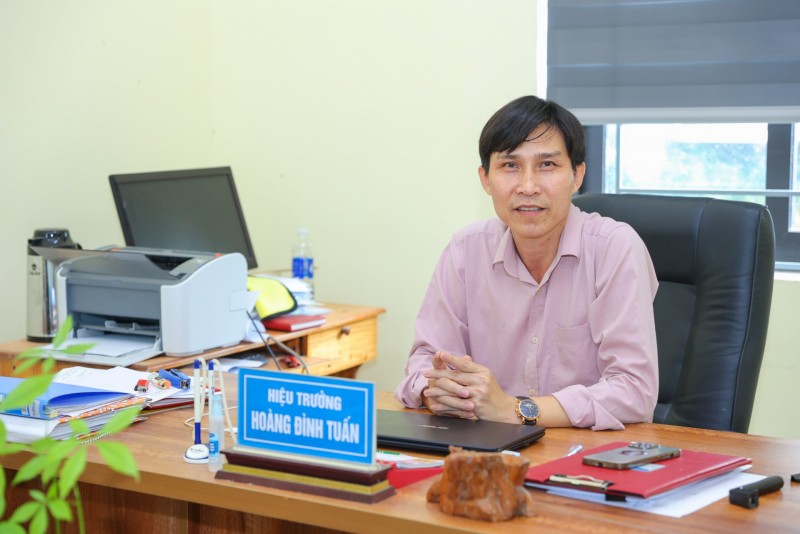 |
| Hoang Dinh Tuan, Principal of Ta Long Ethnic Minority Semi-Boarding Lower Secondary School. (Photo: Dinh Hoa) |
Hoang Dinh Tuan, Principal of Ta Long Ethnic Minority Semi-Boarding Lower Secondary School, said the school’s clean vegetable-growing model had been maintained for many years. In the early years, the school experimented with various types of vegetables, including katuk, mustard greens, sweet potatoes and lemongrass. However, due to the harsh weather and the lack of protective equipment, vegetable yields were low and fell short of the targets set. In the new 2026-2027 school year, with the vegetable garden’s roofing system now completed, the school will begin growing various vegetables to meet students’ needs.
Tuan also hopes that the garden will become a source of clean and safe food for students’ meals. Beyond improving nutrition, the vegetable garden will serve as a practical classroom where students can develop self-discipline and a sense of responsibility. Through each growing season, students will develop a greater appreciation for labour, a closer connection with nature, and a deeper understanding of the value of their own work.
According to a representative of Plan International Viet Nam, a notable aspect of the school’s initiative is the promotion of climate change adaptation initiatives linked to students’ hands-on practice. Through communication and environmental protection education activities, students directly participate in caring for the school’s vegetable garden. The youth leaders’ group plays a core role in managing and maintaining the garden, while also taking part in activities to raise awareness of climate change.
In addition, Ta Long Ethnic Minority Semi-Boarding Lower Secondary School has proactively developed and implemented a Safe School Plan to strengthen students’ and teachers’ capacity for disaster prevention and preparedness, risk reduction, and adaptation to climate change. Key activities include reviewing school-related risks, developing emergency response plans, conducting communication and education activities on climate change and environmental protection, waste separation at source, and resource conservation, while integrating these topics into teaching and students’ experiential learning activities.
| The installation of the roofing system at Ta Long Ethnic Minority Semi-Boarding Lower Secondary School is part of a series of activities under the “Resilience First” project. The project is funded by the Government of Ireland’s International Development Assistance Programme through the Embassy of Ireland in Hanoi and implemented by Plan International Viet Nam in coordination with local partners. |
 Black Sticky Rice Brings Greater Prosperity to Ta Lao Black Sticky Rice Brings Greater Prosperity to Ta Lao Women who know how to build social media channels to promote their hometown’s culture; women who have become small-scale traders with stable incomes of tens of millions of Vietnamese dong; women who participate in community activities; and women who preserve their ethnic culture - these are the women of Ta Lao (Quang Tri). They are taking part in a black sticky rice cultivation model under the Resilience First project, taking charge of their own lives and changing their destinies amid the lush forests and rugged mountains. |
 Lighting Way: Bringing Peace of Mind to A Tuc Highland Village Lighting Way: Bringing Peace of Mind to A Tuc Highland Village Bringing light to remote villages deep in the Truong Son mountain range, contributing to security and national defence in border areas, while also promoting local socio-economic development - these are the practical values brought by the lighting project to residents of A Tuc Village (Lia Commune, Quang Province). |




Related Stories
 Viets Home
Healthy Body, Strong Mind
 Viets Home
Career Guidance Through Familiar Everyday Activities
 Viets Home
Sports Bring Students, Families and Schools Together
 Viets Home
Learning to Be Parents
Recommended
 Viets Home
UAE Culture Comes Alive in Hanoi
 Viets Home
WVI and Dien Bien Chart Next Chapter in Support for Children
 Viets Home
Tuyen Quang: New Space for Reading, Experiential Learning and Career Guidance for Kim Xuyen Students
 Viets Home
Finding Confidence in Learning English
Popular article
 Viets Home
Dien Bien Buries Remains of 10 Fallen Soldiers at Tong Khao Martyrs' Cemetery
 Viets Home
My New Home: An Invitation to Visit
 Viets Home
Foreigners Tell Vietnam’s Stories in Vietnamese
 Viets Home