
Expanding Scientific and Educational Cooperation for Vietnam-Russia Development
| Vietnam-Russia Friendship Association to Consolidate Local Chapters Following Administrative Merger Russian Veterans Reunite at Vietnamese Embassy to Honor Enduring Friendship |
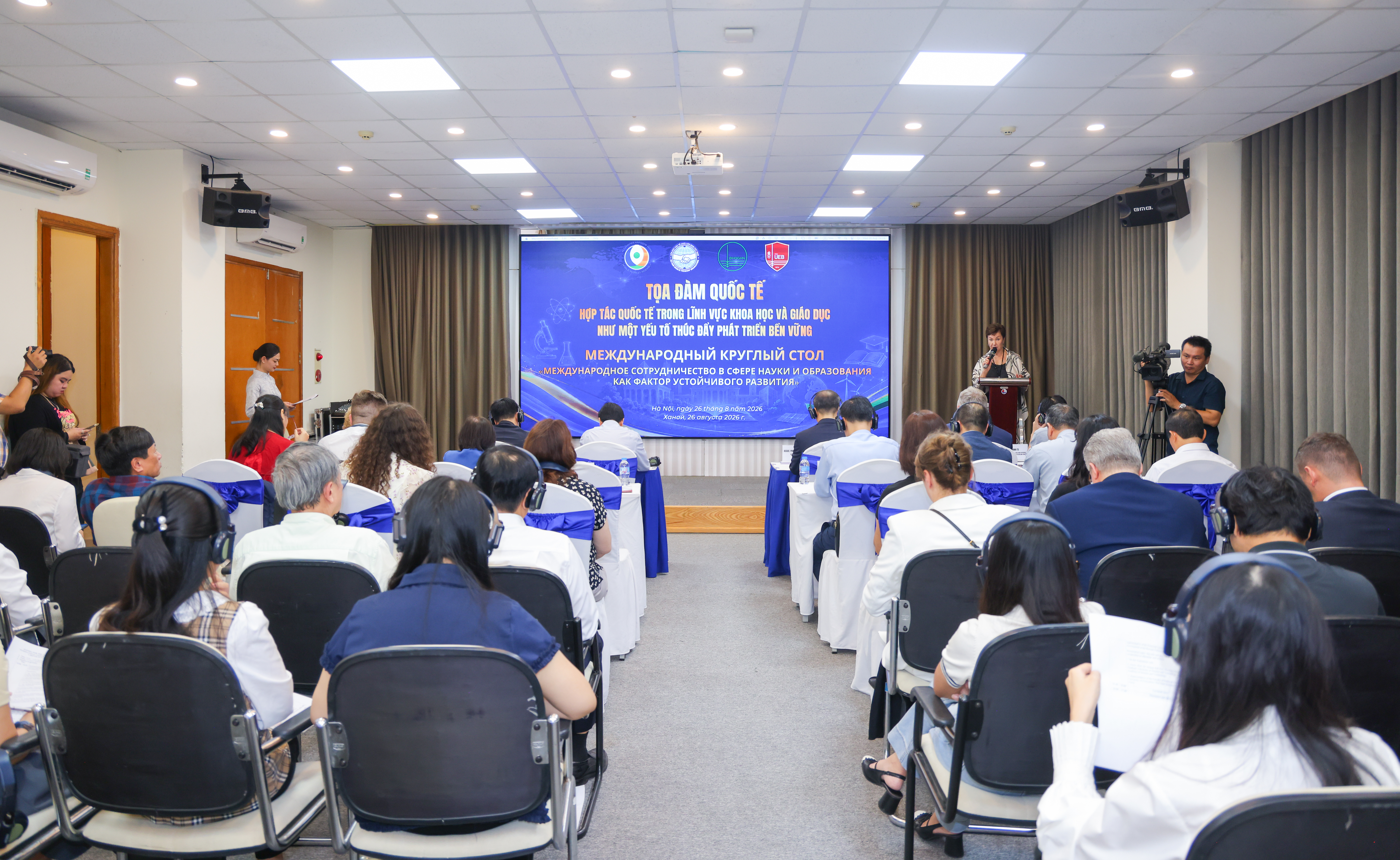 |
| An overview of the seminar “International Cooperation in Science and Education as a Driver of Sustainable Development.” (Photo: Dinh Hoa) |
Connecting knowledge for sustainable development
Speaking at the seminar, Associate Professor Dr. Le Trung Thanh, Vice President of the University of Economics and Business, Vietnam National University, Hanoi, said the world is entering a period of profound transformation. Artificial intelligence, digital transformation, the green economy and climate change are reshaping the ways in which research, work and cooperation are conducted. Sustainable development goals cannot be achieved by any single country or organization. They require international cooperation networks to share knowledge, connect experience and mobilize resources. In this context, international cooperation in science and education serves as an important foundation for advancing sustainable development.
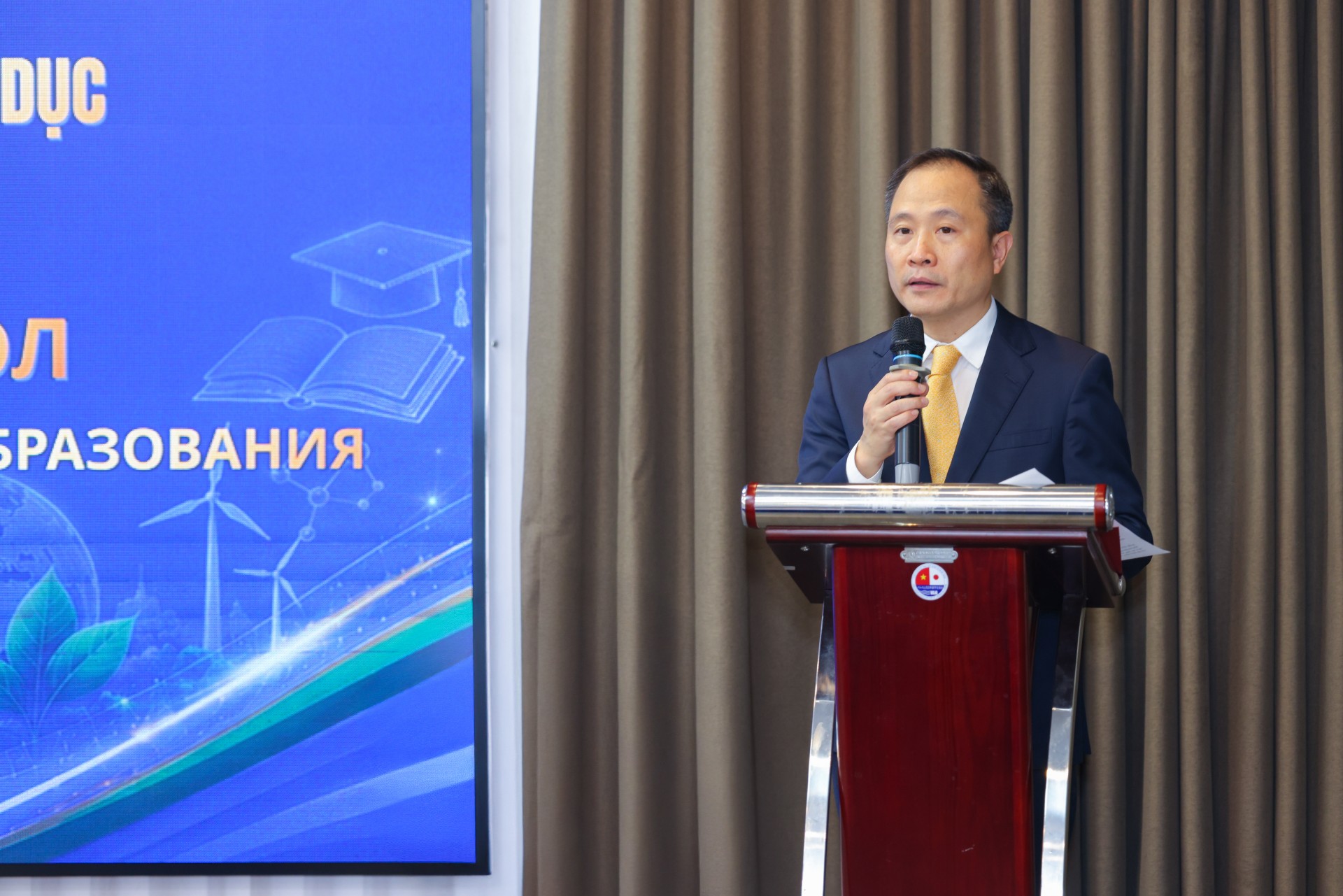 |
| Associate Professor Dr. Le Trung Thanh, Vice President of the University of Economics and Business, Vietnam National University, Hanoi, speaks at the seminar. (Photo: Dinh Hoa) |
Against this backdrop, the seminar aimed to provide a forum for academic exchange, broaden dialogue and explore new models of cooperation. The focus was on strengthening connections among universities; linking scientific research with innovation and social needs; and promoting the role of international organizations in connecting educational institutions, scientists and international partners. Through these efforts, the participants sought to build multilateral cooperation networks, contributing to the resolution of socio-economic challenges and promoting sustainable development.
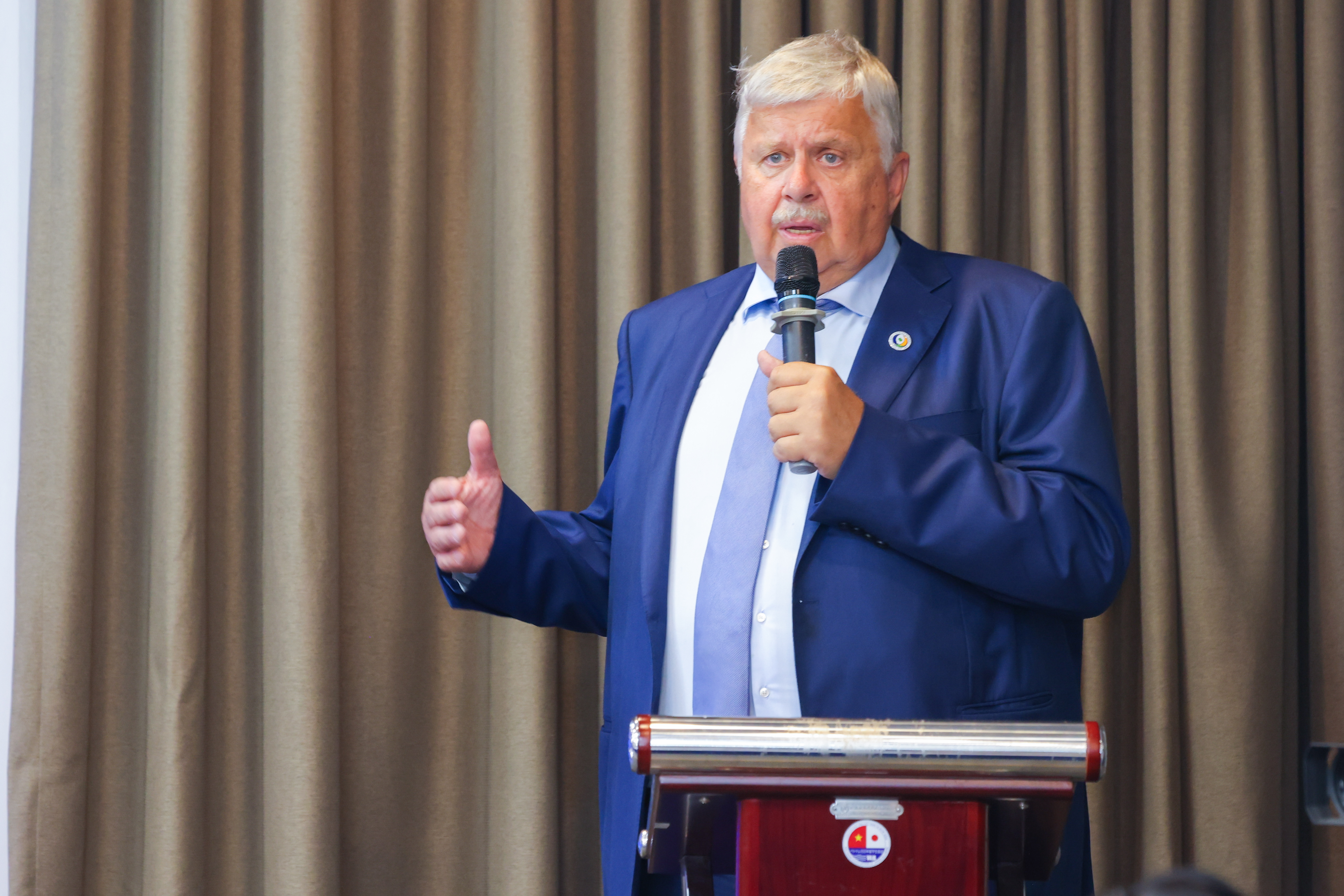 |
| Andrey Belyaninov, Secretary-General of the World Peoples Assembly, speaks at the seminar. (Photo: Dinh Hoa) |
Andrey Belyaninov, Secretary-General of the World Peoples Assembly, highlighted the responsibility of researchers and educators toward the future of their countries. He said education should equip young people with the ability to identify and verify information and strengthen their resilience against the negative impact of fake news in cyberspace. Scientific achievements should also be directed toward peace, sustainable development and serving humanity. He emphasized the role of people-to-people diplomacy in promoting dialogue, strengthening cooperation and jointly addressing challenges for a peaceful future.
Alexandra Ochirova, UNESCO Goodwill Ambassador, said international cooperation in education and science could serve as an academic foundation for strengthening connections among countries. She said this process should be based on an understanding of history, the interaction among social, cultural and scientific factors, and respect for the distinct values of each nation.
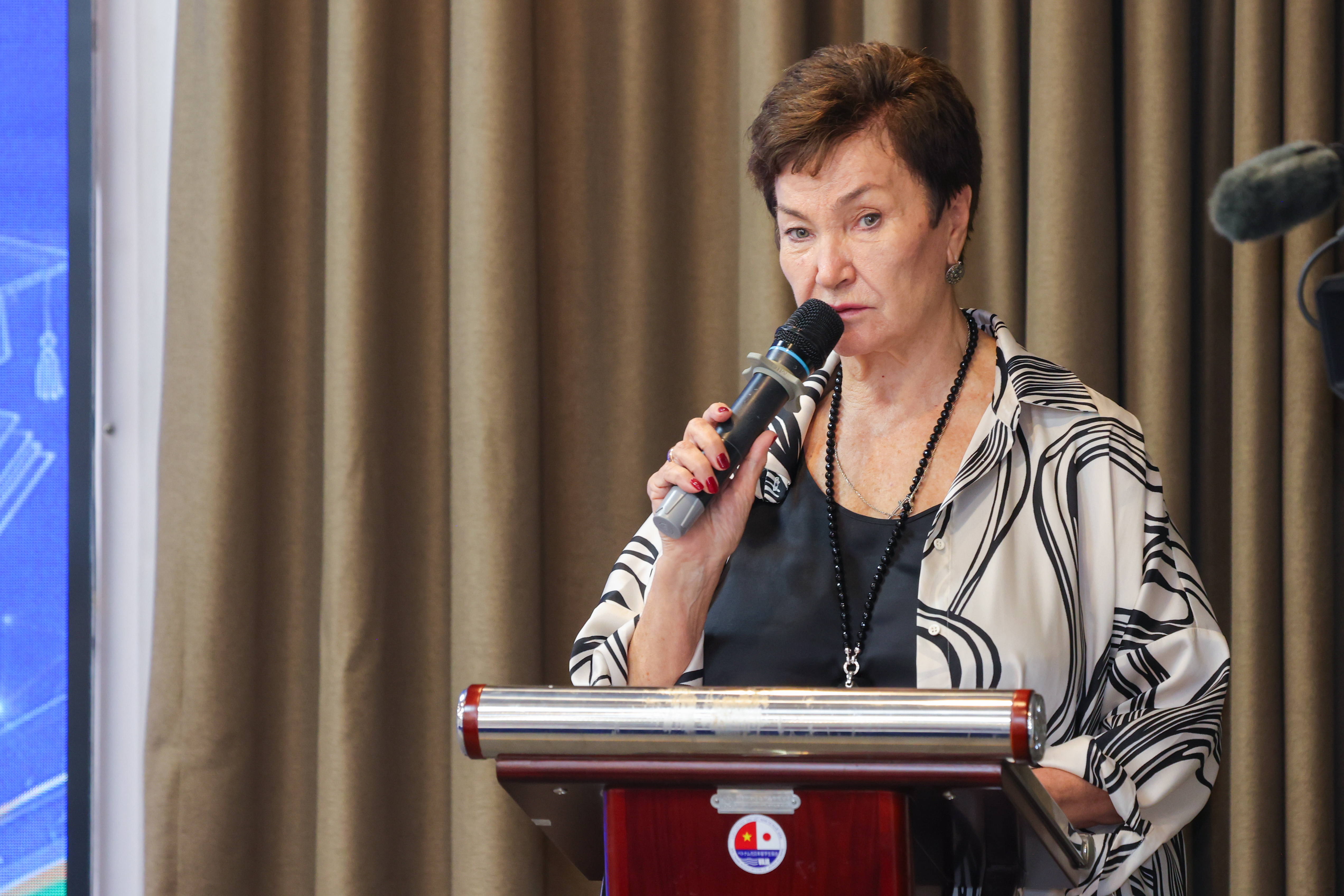 |
| Alexandra Ochirova, UNESCO Goodwill Ambassador, presents her paper at the seminar. (Photo: Dinh Hoa) |
She emphasized that culture helps generations preserve their identity and creates momentum for development. Therefore, education and science should be closely linked to humanitarian values, ethics and responsibility toward the community. In the current context, Alexandra Ochirova said scientists, cultural figures and social organizations should promote fact-based information sharing, enhance mutual understanding and preserve cultural identities.
Expanding Vietnam-Russia cooperation in education and technology
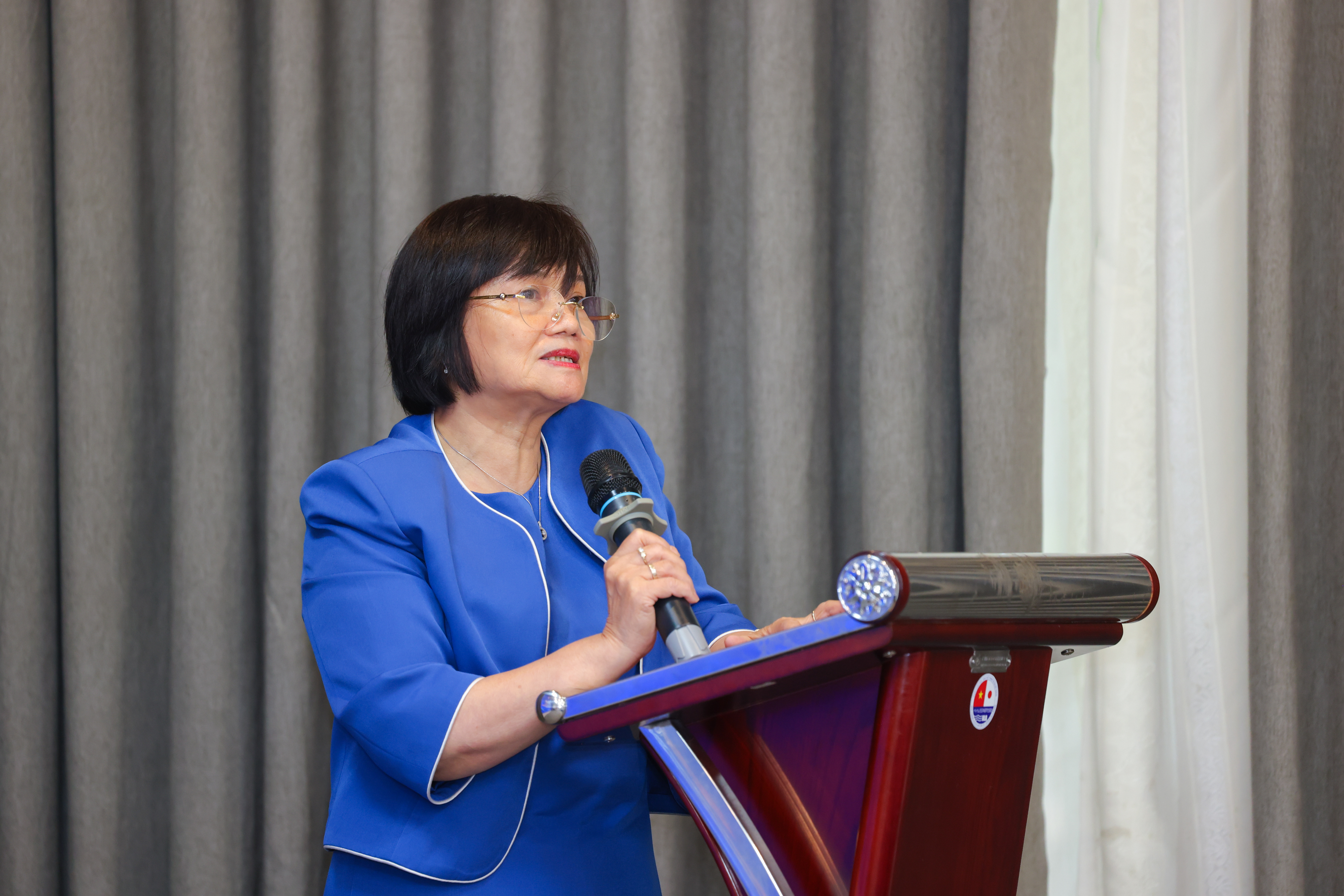 |
| Russian Ambassador for Education and Science To Thi Tuyet Khanh presents her paper at the seminar. (Photo: Dinh Hoa) |
At the seminar, Russian Ambassador for Education and Science To Thi Tuyet Khanh emphasized that education, training, science and technology are important fields that contribute to human resource development and promote Vietnam-Russia relations. Each year, the Russian Federation provides 1,000 training slots for Vietnamese pupils and students in various fields, including engineering, medicine, energy and economics. At the same time, demand for Vietnamese-language study in Russia is growing, particularly as more Russians take an interest in the Vietnamese market.
Looking ahead, she proposed that universities in the two countries step up exchanges of students, lecturers and scientific publications, and organize international conferences. In addition to bilateral cooperation, educational institutions could expand multilateral connections with international partners in education, training and scientific research. The development of spaces introducing Russian culture and language at universities could also help students gain a better understanding of study, research and career opportunities related to the Russian language. This would provide a foundation for developing broader and deeper international educational cooperation.
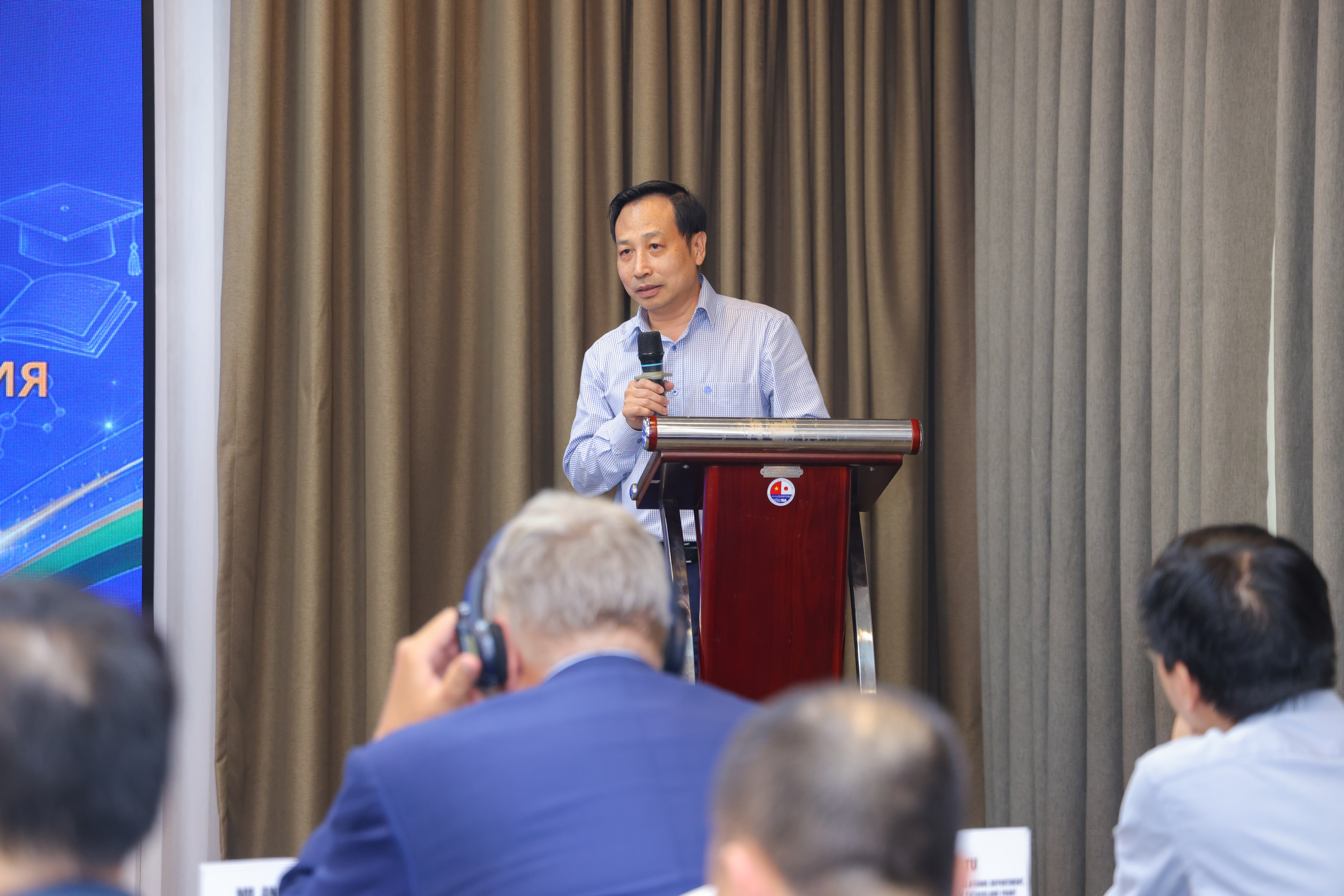 |
| Associate Professor Dr. Hoang Anh Son, Director of the Graduate University of Science and Technology, Vietnam Academy of Science and Technology, presents his paper. (Photo: Dinh Hoa) |
From a science and technology perspective, Associate Professor Dr. Hoang Anh Son, Director of the Graduate University of Science and Technology, Vietnam Academy of Science and Technology, said science, technology and innovation are playing an increasingly important role in countries’ development strategies.
International cooperation, including cooperation with Russia, is important for Vietnam’s development of strategic technologies. It enables Vietnamese scientists to gain greater access to knowledge, technologies, equipment and international research networks. Technology diplomacy also plays an important role in connecting experts and attracting international knowledge and resources. According to him, the World Peoples Assembly could serve as a bridge connecting Vietnamese and Russian research institutes, universities and partners in science, technology and digital transformation.
To improve the effectiveness of cooperation with partners, Hoang Anh Son proposed strengthening research and the training of highly qualified human resources. Priority areas include artificial intelligence, semiconductors, biotechnology, quantum technology and new energy. At the same time, efforts should be made to promote technology transfer and technological mastery, complete the legal framework and leverage public-private partnership models.
 |
| Discussion session at the seminar “International Cooperation in Science and Education as a Driver of Sustainable Development.” (Photo: Dinh Hoa) |
Discussions at the seminar emphasized the need to shift from short-term cooperation activities to programs with long-term impact. Joint training programs, dual-degree programs and visiting professorships were highlighted as effective forms of cooperation.
Participants proposed strengthening Vietnam-Russia cooperation in emerging fields such as artificial intelligence, AI ethics and governance, biotechnology, engineering and healthcare. Through these efforts, the two countries can leverage the strengths of their respective education systems, expand academic connections and lay the foundation for more in-depth cooperation programs that contribute to sustainable development.
 World Peoples Assembly Days in Viet Nam: Connecting Resources, Turning Ideas into Concrete Cooperation World Peoples Assembly Days in Viet Nam: Connecting Resources, Turning Ideas into Concrete Cooperation Held in Viet Nam for the first time, the “World Peoples Assembly Days” aim to expand spaces for dialogue, connect resources and promote cooperation initiatives through people-to-people channels, thereby gradually moving from exchanges to substantive cooperation, and from ideas to concrete programs and projects. |
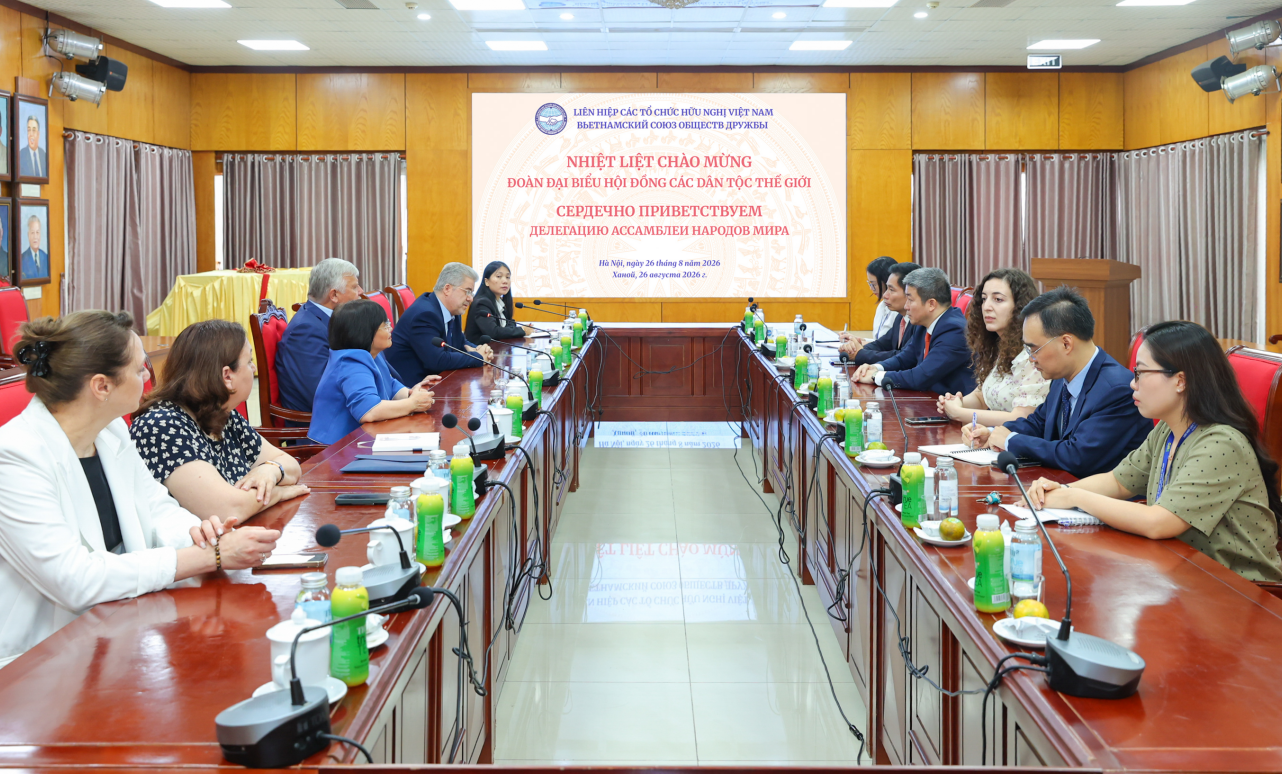 Viet Nam Union of Friendship Organizations and World Peoples Assembly Maintain Regular Cooperation Viet Nam Union of Friendship Organizations and World Peoples Assembly Maintain Regular Cooperation On August 26 in Hanoi, Phan Anh Son, President of the Viet Nam Union of Friendship Organizations, received a courtesy visit from a delegation of the World Peoples Assembly led by Andrey Belyaninov, Secretary-General of the World Peoples Assembly and a member of the UNESCO Committee of the Russian Federation. The two sides exchanged a number of proposals to maintain regular cooperation and expand connections in education, culture, local-level cooperation and the economy. |

Most read


Related Stories
 World
World
EU Updates Rules on Environmental Claims
 Friendship
Effective Cooperation, Stronger People-to-People Ties between Viet Nam and Russia
 Friendship
Young Generations of Viet Nam and Russia Connect Through Education and Culture
 Friendship
Vietnam, Russia Issue Joint Statement on Further Strengthening Ties in New Period
Recommended
 Friendship
Hai Phong: Vietnamese and International Melodies Foster Friendship
 Friendship
I Was Never Just Passing Through Viet Nam
 Friendship
Strengthening People-to-People Exchanges, Nurturing Viet Nam-RoK Friendship
 Friendship
More Than VND 1.46 Billion Supports School Meals for Children in Quang Tri
Popular article
 Friendship
HCMC Promotes People-to-People Diplomacy to Mobilize International Resources
 Friendship
Some Volunteers Cannot Hold Back Their Tears When Saying Goodbye to Viet Nam
 Friendship
Strengthening Ties with Hungarian Friends Who Love Viet Nam
 Friendship