
Renewable Energy Cooperation Is ASEAN’s Future
| Vietnam Promotes Stronger ASEAN Partnerships with Australia and New Zealand ASEAN Celebrates 59th Anniversary in Budapest, Reaffirming Regional Solidarity |
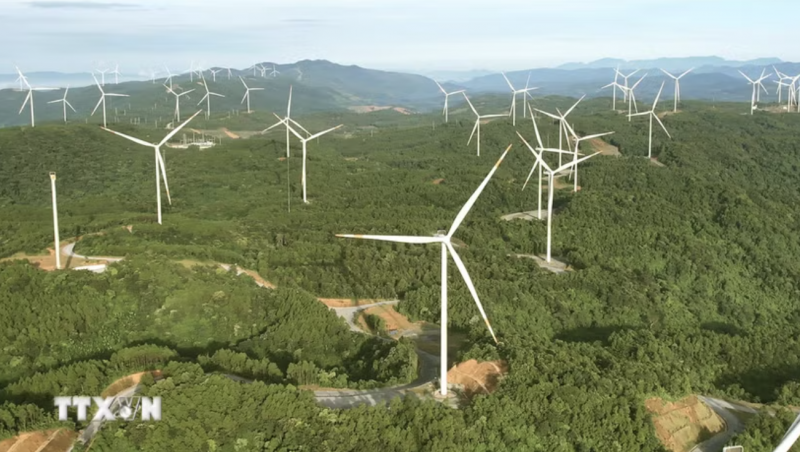 |
| Wind turbines. (Photo: Nguyen Linh/VNA) |
According to the VNA correspondent in Kuala Lumpur, by connecting the diverse energy resources of the Association of Southeast Asian Nations (ASEAN) and enabling electricity to flow more efficiently across borders, ASEAN Member States can strengthen regional resilience and harness renewable energy on a larger scale. This is the affirmation of Malaysia’s Minister of Economy Akmal Nasrullah at the opening of the International Sustainable Energy Summit (ISES) 2026, held in Kuala Lumpur from August 11 to August 12.
Speaking at ISES on August 11, Minister Akmal Nasrullah said ASEAN countries need to work together to accelerate the implementation of the ASEAN Power Grid. This is not merely an electricity transmission network, but also requires compatible regulations, transparent market rules, bankable commercial arrangements, credible renewable energy attributes, and a fair allocation of costs and benefits.
Minister Akmal Nasrullah emphasised that ASEAN needs to build trust through reliable systems that can track renewable energy features, prevent double counting, and verify environmental claims.
Minister Akmal Nasrullah affirmed that Malaysia welcomed deeper cooperation in cross-border electricity trading, grid modernisation, energy storage, sustainable finance, research, technology transfer, and talent development, as well as credible regional renewable energy frameworks.
Malaysia stands ready to cooperate and take action towards an energy future that is secure, affordable, sustainable and shared. Through the Energy Exchange Malaysia (ENEGEM), the country is strengthening its framework for cross-border renewable electricity trading by making use of existing interconnections.
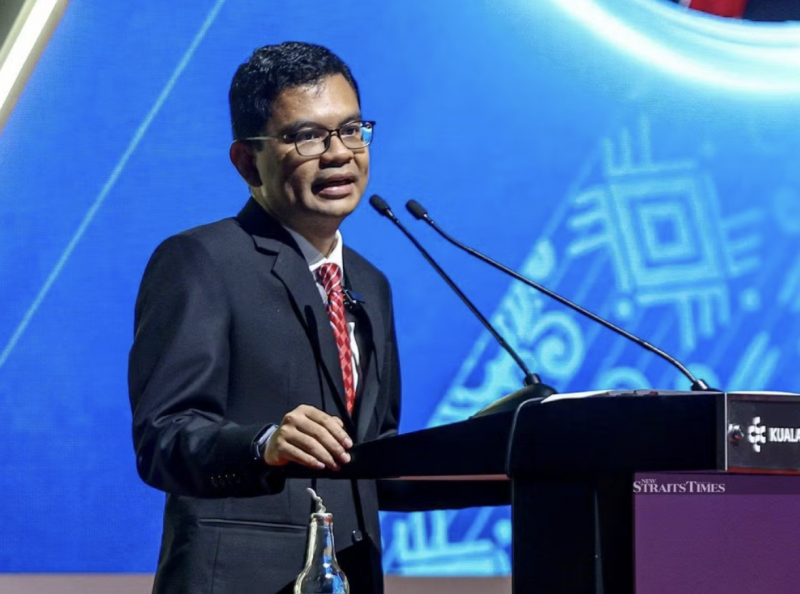 |
| Malaysia’s Minister of Economy Akmal Nasrullah. (Photo: VNA) |
Minister Akmal Nasrullah said Malaysia’s National Energy Transition Roadmap aims for renewable energy to account for 70% of installed power generation capacity by 2050, with an interim target of 35% by 2030. These goals will require investment in generation, power grids, storage, technology, and skills. However, Minister Akmal Nasrullah stressed that no country can achieve long-term energy resilience without regional cooperation.
During discussions, speakers agreed that regional energy integration, particularly through a robust ASEAN Power Grid, is an “obvious” necessity for economic development, energy security and a just energy transition. They also identified opportunities and challenges in implementation. Among the solutions, there is developing Power Purchase Agreement (PPA) templates, improving grid interconnections, and simplifying land acquisition and licensing procedures.
Speaking to the VNA correspondent on the sidelines of ISES 2026, CEO of the ASEAN Centre for Energy (ACE) Abdul Razib Dawood stressed that Member States need to accelerate implementation of the ASEAN Action plan for Energy Cooperation across seven identified areas: the ASEAN Power Grid, renewable energy, energy efficiency and conservation, clean coal transition, natural gas cooperation, civilian nuclear energy, and policy and planning cooperation.
Dawood affirmed the urgency of the Plan and the need to diversify energy supplies, particularly by shifting towards renewable sources. He said the ASEAN Energy Ministers’ Meeting in Manila (Philippines), this October would emphasise the urgency of accelerating the energy transition across all 11 Member States.
At ISES 2026, the Malaysian Government announced dozens of biogas, biomass, and small hydropower projects eligible for the country’s 2026 renewable energy investment package under the Feed-in Tariff (FiT) programme, with a total value of RM 4.3 billion, or more than 1 billion USD.
Particularly, Malaysia also officially launched the National Energy Efficiency Policy and Action Plan 2026-2035 (NEEAP 2.0), developed by the Ministry of Energy Transition and Water Transformation (PETRA), outlining the next phase of the country’s energy-saving initiatives. Under the plan, Malaysia aims to save more than RM85 billion in utility costs and reduce energy demand by 11.6%, equivalent to 26,108 kilotonnes (kt), by 2035.
Previously, implementation of NEEAP 1.0 for the 2016-2025 period resulted in electricity savings of 60,886 GWh, exceeding the target of 52,233 GWh. This was equivalent to an estimated reduction of 35.6 million tonnes of carbon dioxide emissions and savings of around RM16.1 billion.
ISES 2026 themed “Envisioning Sustainable Energy Beyond Borders” is hosted by Malaysia’s Ministry of Energy Transition and Water Transformation and includes expert discussions on regional energy cooperation, grid flexibility, energy storage, sustainable finance, bioenergy, energy efficiency and demand management, next-generation renewable energy, clean fuels, and innovative solutions to accelerate ASEAN’s sustainable energy transition.
 India Reaffirms Commitment to Strengthening ASEAN-India Relations India Reaffirms Commitment to Strengthening ASEAN-India Relations India’s Foreign Minister reaffirmed New Delhi’s commitment to further deepening the ASEAN-India Comprehensive Strategic Partnership in line with the Act East Policy. |
 ASEAN at 59: Enhancing unity and integration towards vision 2045 ASEAN at 59: Enhancing unity and integration towards vision 2045 The Association of South-East Asian Nations marked its 59th anniversary on Aug 8; the grouping finds itself at a pivotal time as it navigates new geopolitical realities reshaping the region. |




Related Stories
 National
Viet Nam News Today (Oct. 8): Viet Nam Sees Panama as Key Partner in Latin America
 National
Vietnam News Today (Sep. 5): Parliamentary Exchanges Help Strengthen Vietnam–RoK People-to-people Ties
 National
Vietnam News Today (Sep. 3): Vietnam Proposes Five Priorities for ASEAN-Russia Cooperation
 National
Vietnam News Today (Aug. 28): Vietnam to Continue Substantive Contributions to ASEAN Cooperation
Recommended
 World
World
India-Indonesia Relations in the BRICS Context
 World
World
Poland Inaugurates Memorial Plaque Honouring Architect Who Helped Preserve Hoi An
 World
World
India enlarged defense cooperation with Tajikistan, Turkmenistan in Central Asia
 World
World
Viet Nam-Japan Concert Raises Funds for Agent Orange Victims
Popular article
 World
World
India, US plan strategic cooperation in Indian Ocean with focus on ports, maritime and digital infrastructure
 World
World
Arctic Warming Accelerates, Sea Ice Shrinks by Nearly 500,000 sq km Every Decade
 World
World
Viet Nam Hosts Dialogue on Promoting Older Persons’ Right to Health
 World
World