Vietnam commits to ASEAN community-building process
Prime Minister Le Minh Hung’s participation in the 48th ASEAN Summit and related summits from May 7 to 8 in Cebu, the Philippines, conveys a clear message of Vietnam’s commitment to the ASEAN Community-building process, said Deputy Foreign Minister Dang Hoang Giang.
Speaking to reporters ahead of the visit, Dang said Vietnam's participation in ASEAN features proactive and responsible spirit and substantive contributions to the bloc’s common work.
Le's participation stands as a testament to Vietnam's consistent pursuance of the foreign policy of independence, self-reliance, peace, cooperation, and development, alongside diversification and multilateralization of external relations, in line with the 14th National Party Congress. It also reaffirms ASEAN as a top strategic priority in Vietnam's foreign policy.
Vietnam aims to work closely with ASEAN members to maintain peace and stability, uphold ASEAN's unity and centrality, and strengthen the bloc's capacity to address emerging challenges. This, in turn, will support sustainable development across the region and deepen Vietnam's bilateral ties within ASEAN.
Vietnam will prioritize effective implementation of the 2026 Chairmanship agenda and the ASEAN Community Vision 2045, contributing to a resilient, dynamic, innovative, and people-centered ASEAN. It will also promote a peaceful and stable environment, uphold international law and multilateralism, enhance regional connectivity, and deepen ties with partners to reinforce ASEAN's central role, VGP reported.
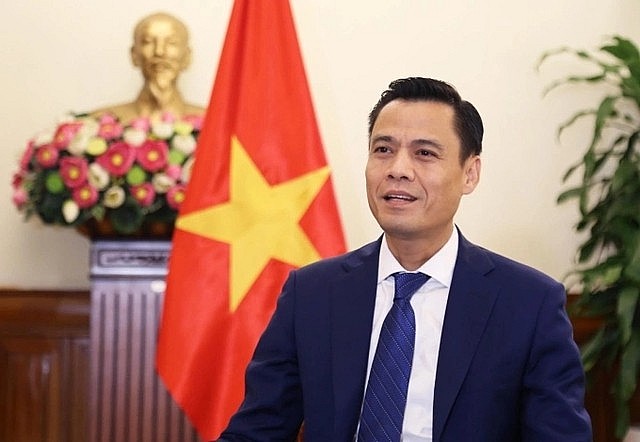 |
| Deputy Foreign Minister Dang Hoang Giang. |
In addition, Vietnam plans to actively contribute to key agenda items, particularly pressing issues such as energy security, food security, and citizen protection, while advancing practical initiatives to help ASEAN respond to increasingly complex external challenges.
On the sidelines of the summit, Prime Minister Le Minh Hung is set to hold bilateral meetings with other ASEAN leaders to strengthen friendship, enhance political trust, and promote effective cooperation. These will also be his first direct engagements with regional leaders in his new position.
Regarding the 48th ASEAN Summit, themed "Navigating Our Future, Together," Dang noted that it marks the first summit of the Philippines' ASEAN Chairmanship Year 2026 and the beginning of a new development phase following a decade of ASEAN Community-building from 2015 to 2025.
As 2026 launches the implementation of the ASEAN Community Vision 2045 and its strategic plans across key pillars, these frameworks will guide efforts to build a united, resilient ASEAN that continues to play a central role in regional cooperation.
The summit takes place amid rapidly evolving global and regional landscape, including tensions in the Middle East and challenges such as strategic competition, supply chain disruptions, energy and food security concerns, and rising protectionism—all of which are affecting regional stability and livelihoods.
Against this backdrop, the summit will provide a platform for ASEAN leaders to discuss key issues, align strategic directions, and adopt measures to strengthen solidarity, resilience, and ASEAN's overall role. It is expected to focus on enhancing unity and response capacity in critical areas, advancing strategic priorities including the Vision 2045, and reinforcing ASEAN's centrality through international law, multilateralism, and stronger partnerships.
Philippines looks to Vietnam for meaningful contributions to ASEAN development: Ambassador
Philippine Ambassador to Vietnam Francisco Noel R. Fernandez III expressed his belief that Prime Minister Le Minh Hung will be contributing his thoughts and opinions on particular issues as the leaders will be discussing the evolving political and regional challenges that we are facing outside of our region
The Philippines expects Vietnam to make substantive contributions to the development of the Association of Southeast Asian Nations (ASEAN), according to Philippine Ambassador to Vietnam Francisco Noel R. Fernandez III.
In an interview with the Vietnam News Agency ahead of Prime Minister Le Minh Hung’s upcoming trip to the Philippines, the diplomat expressed hope that the Vietnamese leader would share his views on how ASEAN can sustain economic growth and development despite challenges arising from ongoing regional conflicts.
PM Hung is scheduled to attend the 48th ASEAN Summit, to be held on May 7 – 8 in Cebu, at the invitation of Philippine President Ferdinand Romualdez Marcos Jr, Chair of ASEAN 2026.
According to the diplomat, one of the strengths of ASEAN lies in the diversity of its member states, which would enable them to contribute to the discussion and learn from the others to address some of their own weaknesses.
"Vietnam has always exhibited a remarkable annual growth," he noted.
He observed that in the area of international law, Vietnam has been consistent in promoting multilateralism and adhering to the rule of law and promoting international law, reported VNA.
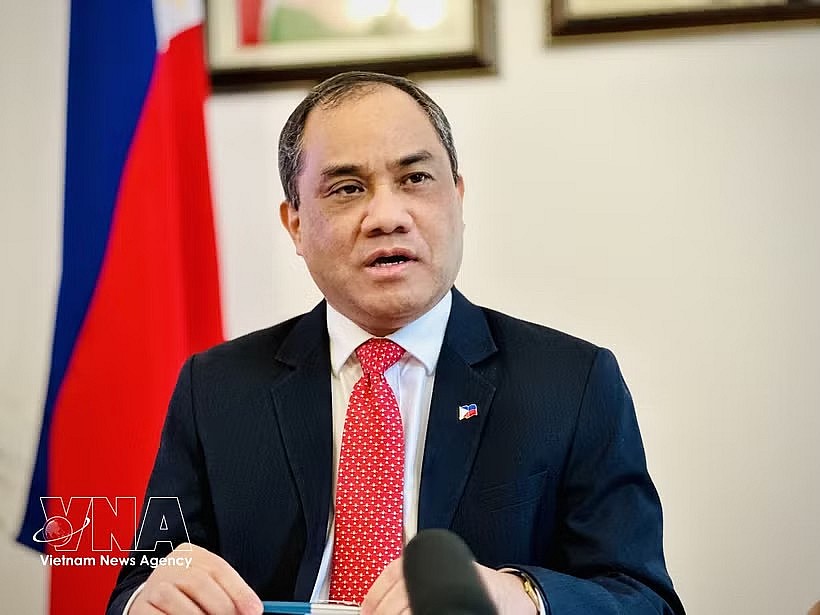 |
| Philippine Ambassador to Vietnam Francisco Noel R. Fernandez III in an interview with the Vietnam News Agency (Photo: VNA) |
“We are certain that the Prime Minister will be contributing his thoughts and opinions on these particular issues as the leaders will be discussing the evolving political and regional challenges that we are facing outside of our region.”
The ambassador said with varying opinions and the sharing of the experiences, the host is looking forward to having a productive discussion among the leaders in the area of trade and international law. “We look at Vietnam to provide substantive contribution on these issues.”
According to him, this year’s theme “Navigating our Future, Together” would be discussed under three overarching priorities. The first is the peace and security anchor. The second is on prosperity corridors and the third is on people empowerment. The Cebu Protocol to Amend the Charter of the Association of Southeast Asian Nations is expected to be adopted at the event.
"This Summit is also very significant because, for the first time, we will have 11 Heads of Government or State attending, with the admission last year of Timor Leste," he said, calling this is another milestone in ASEAN history.
Commenting on the spirit of unity and efforts to realise the ASEAN Community Vision, the diplomat said the Philippines, together with other ASEAN member states, ensures discussions and priorities are geared towards promoting and strengthening the bloc’s three pillars - the political-security community, the economic community, and the socio-cultural community.
The ambassador noted the belief that on the basis of the three pillars ASEAN continues to be able to sustain economic growth and development through mutual assistance.
"We are going to be contributing to the achievement of peace and security in the region and continue to contribute our opinions on other global issues which may be discussed by leaders outside of ASEAN."
"We are hopeful that, with the participation of Vietnam, particularly in responding to the challenges this year in the areas of trade and economic development, we will be listening from each other and contributing towards sustaining the relevance of ASEAN in the evolving political architecture, not only of the region but also outside the region".
ASEAN praises Vietnam’s experience in enhancing peacekeeping training capacity
Vietnam has taken steps to strengthen self-reliance and standardise specialised training courses to meet international benchmarks. Notably, the country has established its first International Trauma Life Support (ITLS) Training Center.
Delegates at the 10th meeting of the ASEAN Peacekeeping Centers Network (APCN) have commended Vietnam’s contributions, highlighting its practical and wide-ranging experience in improving peacekeeping training capacity.
At the plenary session on May 6, held as part of the conference conducted online from May 4–8, Major General Pham Manh Thang, Director of the Vietnam Department of Peacekeeping Operations and head of the Vietnamese Ministry of National Defence delegation, said the event provided an important forum for ASEAN member states to sustain momentum and strengthen cooperation in capacity-building through training. This, he noted, would enable more effective contributions to United Nations peacekeeping missions, particularly amid emerging challenges.
Vietnam has actively implemented the UN’s Action for Peacekeeping and Action for Peacekeeping Plus initiatives, aimed at enhancing effectiveness through greater accountability, stronger capabilities and deeper partnerships among member states, improving training quality and deployment readiness, VNA reported.
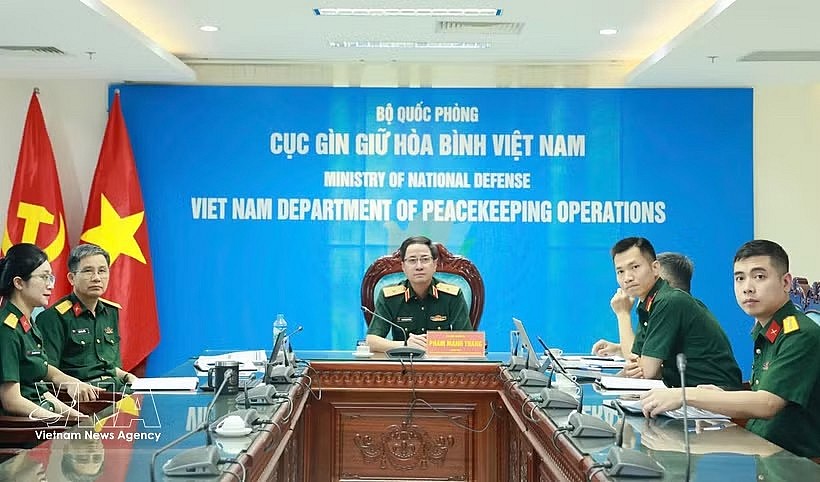 |
| The Vietnamese delegation led by Major General Pham Manh Thang, Director of the Vietnam Department of Peacekeeping Operations, at the 10th meeting of the ASEAN Peacekeeping Centers Network (APCN), held online from May 4–8. (Photo: VNA) |
Emphasizing that training quality is a decisive factor in mission effectiveness, Thang outlined several of Vietnam’s key lessons. These include developing comprehensive pre-deployment training programmes for both individuals and units in line with UN standards; building a pool of internationally qualified instructors; applying modern training methods and tools; implementing simulation-based training models; and regularly updating and sharing lessons learned from UN missions.
He added that Vietnam has taken steps to strengthen self-reliance and standardise specialised training courses to meet international benchmarks. Notably, the country has established its first International Trauma Life Support (ITLS) Training Center.
In March 2026, the United Nations Staff Officer Course (UNSOC) organised by the Vietnam Department of Peacekeeping Operations was certified by the UN Department of Peace Operations as meeting pre-deployment training standards – marking a significant qualitative milestone. This achievement underscores Vietnam’s growing training capacity and its contribution to enhancing the capabilities of the regional peacekeeping training network.
Participants at the conference expressed strong interest in Vietnam’s successful experience, particularly in organising training, preparing forces for deployment, and developing high-quality instructors through international cooperation.
A representative of the Philippines, the host of the meeting, proposed that Vietnam deploy mobile training teams to share its expertise with other countries in the region.
The conference brought together more than 40 delegates from 11 APCN member states, as well as representatives from the ASEAN Secretariat and the Integrated Training Service under the UN Department of Peace Operations.
Da Nang among Asia’s top nine summer destinations: Lonely Planet
Da Nang has continued to gain international recognition, ranking second in a list of the nine best places in Asia to visit during June, July and August, released by travel guide Lonely Planet on May 1.
The list highlights the diversity of summer travel experiences across Asia, from destinations with pleasant sunshine and favourable weather to cities with hot and humid climates. Amid rising travel demand, choosing suitable destinations has become increasingly important, with Da Nang identified as one of the top choices.
The guide describes Da Nang as an outdoor lover’s paradise, whether visitors choose to relax on beaches such as My Khe and Non Nuoc or explore distinctive architecture at sites like the Dragon Bridge. It also notes the city’s rich Cham heritage, showcased at the Museum of Cham Sculpture.
The harmonious combination of natural resources, cultural values, and well-developed tourism infrastructure has helped Da Nang maintain its appeal. Beyond being a resort destination, the city offers diverse experiences ranging from nature and culture exploration to cuisine and high-quality tourism services.
Being featured in Lonely Planet’s ranking has helped elevate Da Nang’s image on the international tourism map, while opening up opportunities to attract more visitors, particularly from Australia and those seeking beach and outdoor experiences.
During the Hung Kings Commemoration Day, Reunification Day (April 30), and International Labour Day (May 1) holidays in 2026, Da Nang welcomed over 1.46 million visitors, up more than 35% year-on-year. A wide range of cultural, sports, and tourism activities, along with effective promotional programmes, helped boost the city’s tourism growth.
Nguyen Thi Hoai An, Deputy Director of the municipal Department of Culture, Sports and Tourism, said that in 2026 the city expects to welcome nearly 20 million domestic and international visitors, continuing to affirm its appeal as a dynamic and distinctive destination in Vietnam and the region.
 | Vietnam News Today (May 3): Vietnam, Japan Push for More Substantive, Effective Ties Vietnam News Today (May 3): Vietnam, Japan push for more substantive, effective ties; Vietnam calls for solidarity with Cuba at Non-Aligned Movement meeting; International Financial ... |
 | Vietnam News Today (May 4): Vietnam Trade Deficit Reaches US$7.11bln as Imports Surge in Early 2026 Vietnam News Today (May 4): Vietnam–India ties poised for new strategic breakthrough; FDI inflows and disbursement in January-April reach five-year high; Vietnam trade deficit reaches ... |