
Vietnam Accelerates Digital Transformation in Tourism Development
 | Heritage-Based Tourism Unlocks New Development Resources |
| Vietnam’s Endless Charm Attracts International Tourists |
Tourism is among the key sectors identified for expanded adoption of digital technologies in the management and operation of tourism facilities, including accommodation, travel services, dining establishments, and tourist attractions, with the aim of enhancing visitor experiences.
This is one of the central priorities outlined in the Government-approved Program for Digital Economy and Digital Society Development for the 2026-2030 period. The program envisions a dynamic digital economy built on digital platforms, data, and artificial intelligence (AI).
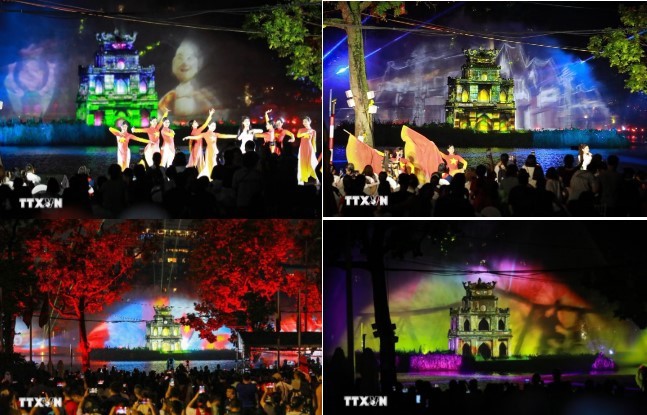 |
| 3D mapping light shows projected onto Turtle Tower in the heart of the capital, combined with a water-screen system, offer visitors a unique and engaging experience. (Photo: VNA) |
How, then, will Vietnam’s “smokeless industry” advance its digital transformation, and what progress is already being made at destinations and tourist attractions across the country.
Key Priorities
One of the tourism sector’s major tasks is the development of a national digital tourism data platform and information systems that support tourism promotion and marketing in the digital environment. Virtual tourism, digital tours, and online experiences will continue to be expanded to increase access to destinations and enhance the appeal of Vietnam’s tourism offerings for both domestic and international travelers.
The program places particular emphasis on applying artificial intelligence (AI) in tourism to develop smart destinations and deliver personalized visitor experiences.
Developing a digitally skilled tourism workforce has also been identified as a priority. Tourism employees will receive training to improve their ability to use tourism management and business platforms, while also meeting domestic and international professional standards.
By 2030, the program aims for at least 70 percent of tourism establishments to use digital platforms for management and business operations. The Ministry of Culture, Sports and Tourism will be responsible for monitoring this target.
To achieve this goal, the ministry has been tasked with building and operating tourism-specific digital information systems and databases, as well as publishing open-data catalogs for businesses and communities to develop new tourism products and services. It will also implement support programs to help small and medium-sized enterprises undertake digital transformation in accommodation, travel services, food and beverage businesses, and smart destinations.
The ministry will further modernize tourism programs through diversified tour formats, virtual visits, extended reality experiences, journey simulations, and 360-degree immersive experiences. It will also promote interoperability among digital tourism platforms across ASEAN, paving the way for an “ASEAN Digital Tourism” ecosystem that enables travelers to complete their entire journey digitally - from information searches and service bookings to payments and service evaluations.
These new directions present significant opportunities for the tourism sector to accelerate comprehensive digital transformation. Digital data and AI are becoming key drivers of modern and scientific management, enabling the creation of smart tourism products, services, and experiences that enhance Vietnam’s competitiveness and attractiveness in a new era.
A New Look Through Tourism Digitalization
The Government’s 2026-2030 Digital Economy and Digital Society Development Program further reinforces the digitalization efforts already underway across the tourism sector.
According to Nguyen Trung Khanh, Director General of the Vietnam National Authority of Tourism, the agency has gradually laid the foundation for a nationwide smart tourism ecosystem through the development of shared digital platforms for the entire industry.
Key initiatives include the establishment and operation of Vietnam’s tourism database system connected with localities and businesses, the development of the Tourism Management and Business Platform, and the national tourism application “Vietnam Travel,” which offers digital services such as destination information, tourism maps, service booking, online payments, and service-quality feedback.
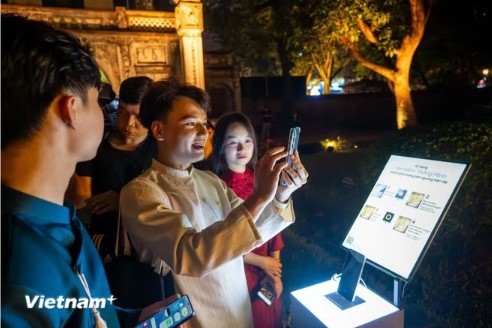 |
| In recent years, the Temple of Literature has become a destination for unique visitor experiences. (Photo: Minh Son/Vietnam+) |
Notable achievements also include the digital promotion of Vietnam’s tourism image on online platforms, the introduction of electronic ticketing systems at many tourist sites, and the wider adoption of cashless payment solutions.
As government policies are translated into practice and Resolution No. 57-NQ/TW on science and technology development, innovation, and digital transformation continues to shape the tourism sector, these guiding principles are helping destinations and localities improve operational efficiency while opening up new opportunities in the digital age.
Long queues of visitors waiting at ticket counters with paper tickets that could easily be damaged or lost are gradually becoming a thing of the past.
Electronic ticketing systems are now being introduced at many famous heritage sites and attractions, including the Temple of Literature, the Ho Chi Minh Relic Site at the Presidential Palace, Quan Thanh Temple, the National Museum of History, and the Vietnam Fine Arts Museum.
Electronic ticketing is more than a technological solution - it represents an important step toward building smart tourism centered on visitors, while modernizing management practices, improving service quality, and advancing digital transformation across the industry.
For international visitors, sightseeing experiences have become more convenient and efficient. Group-ticket features, in particular, allow an entire tour group to use a single ticket, providing greater flexibility and ease of use.
Electronic ticketing systems also offer valuable support to destination management authorities. Through real-time data updates, managers can monitor and analyze visitor demand, behavior, and trends across different customer groups, helping them improve services and develop more suitable tourism products.
These practical examples demonstrate that digital transformation is not simply about technology. It is creating momentum for more convenient experiences, better services, and more attractive destinations.
In the near future, as tourist sites, heritage areas, and scenic attractions continue to embrace digital transformation, digitalization will become the key that unlocks a new chapter for Vietnam’s tourism industry in an era of growth and innovation.
 | Vietnam Taps Wellness Tourism as a Rising Travel Trend The rapid rise of wellness tourism is opening up opportunities for Vietnam to become a destination for comprehensive restorative travel. |
 | Vietnam Tourism Launches Comprehensive Industry Inspections The Vietnam National Authority of Tourism aims to create significant improvements in professionalism and service quality while accelerating tourism development toward becoming a key economic ... |







Related Stories
 Travel
Vietnam Accelerates Tourism Digitalization with AI and Data Technologies
 Travel
Vietnam Welcomes Record Number of International Tourists
 Travel
Vietnam’s Endless Charm Attracts International Tourists
 National
Vietnam News Today (Jun. 6): Vietnam, Russia Expand Energy Cooperation
Recommended
 Travel
French Magazine Highlights Must-Try Dishes of Vietnam Cuisine
 Travel
Vietnam Gains Growing Appeal on the Regional Tourism Map
 Travel
Can Tho Diversifies Tourism Products to Attract More Visitors
 Travel
Developing Phong Nha-Ke Bang into a World-Class Tourist Destination
Popular article
 Travel
Indian Media Highlights Vietnam's Growing Appeal to Tourists
 Travel
Ninh Binh: Traditional Festivals as Powerful Tourism Draw
 Travel
American Tourist Delighted by Act of Kindness from Boatman in Hoi An
Travel