
Vietnam Tightens Tourism Safety Measures Amid Flood Risks
| Different Way to Experience Hue Greeting Sunrise from Thoi Loi Mountain - Unmissable Moment on Ly Son |
According to information issued on the morning of August 22 by the Department of Meteorology and Hydrology under the Ministry of Agriculture and Environment, flash floods, landslides and land subsidence caused by heavy rain, flooding or water flows were forecast in the northern region and Thanh Hoa province.
To ensure tourist safety, the Ministry of Culture, Sports and Tourism asked provincial and municipal People’s Committees to urgently review and assess risks at tourist areas and attractions, along tourism routes and tours, forest and waterway tourism activities, and in areas potentially affected by heavy rain, flash floods, landslides and flooding.
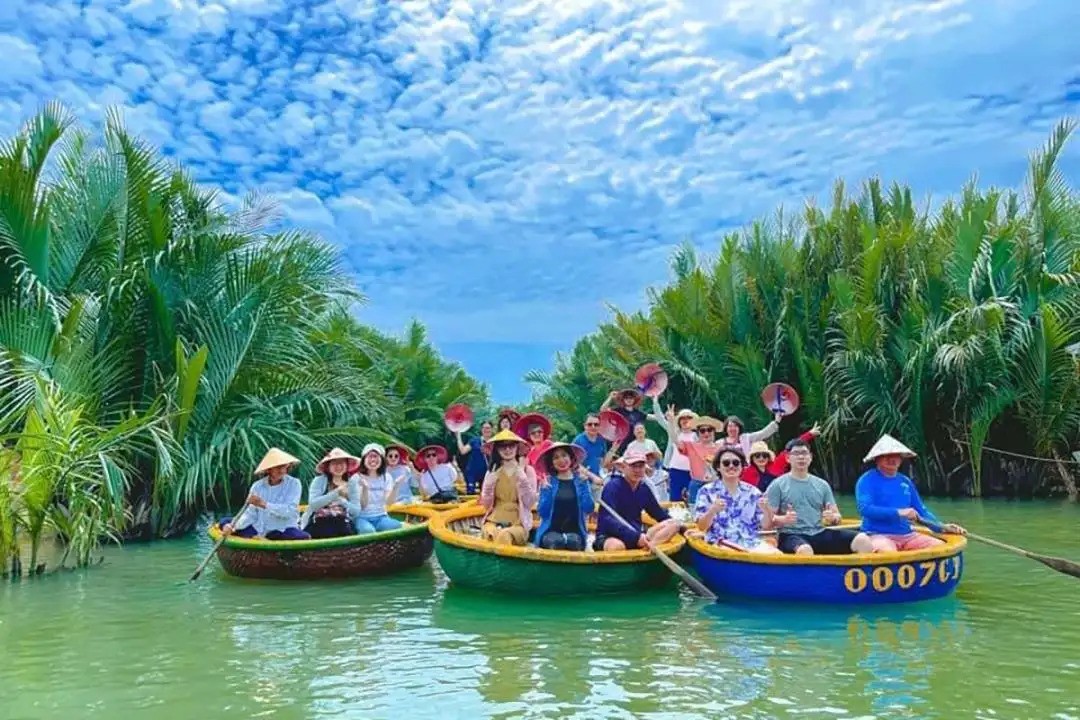 |
| The Ministry of Culture, Sports and Tourism asked provincial and municipal People’s Committees to urgently review and assess risks at tourist areas and attractions to ensure tourist safety. |
Areas that do not meet safety requirements must temporarily suspend receiving visitors and must not organize or take tourists to such areas. Particular attention should be paid to mountainous areas; areas along rivers and streams; waterfalls, lakes and coastal areas; locations with steep terrain; and tourist attractions at risk of landslides and flash floods.
Tour operators and tourists should closely monitor weather conditions and remain vigilant against natural disasters, land subsidence, landslides and flash floods caused by prolonged rainfall in the northern mountainous provinces.
The Ministry of Culture, Sports and Tourism asked local authorities to review and publicly disclose information on tourist areas, attractions, routes and tours that have temporarily suspended operations. Relevant agencies should coordinate with tourism businesses, managers of tourist areas and attractions, and local authorities to compile lists of tourist areas, attractions, routes, tours and tourism activities that must be temporarily suspended or have their operations restricted.
The lists must clearly specify the affected areas, scope, types of activities to be suspended, duration of the suspension and conditions for reopening. The information must be updated regularly in line with actual developments.
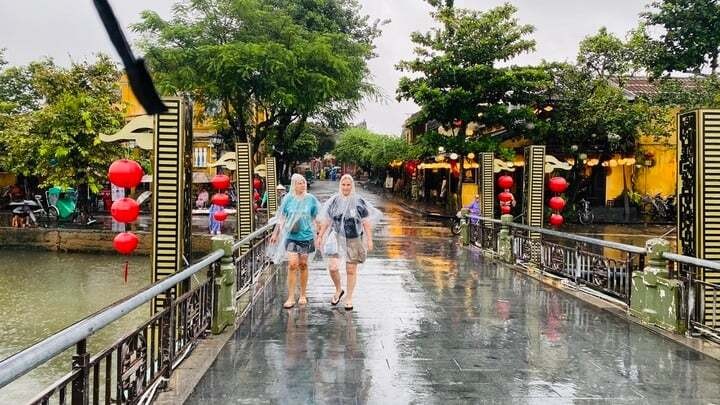 |
| The Ministry of Culture, Sports and Tourism requested that localities maintain timely information and warning mechanisms and ensure that tourists receive information on weather developments, natural disaster risks. |
The Ministry of Culture, Sports and Tourism requested that localities maintain timely information and warning mechanisms and ensure that tourists receive information on weather developments, natural disaster risks, areas where visitor reception has been suspended, and routes that are unsafe. Warnings should be communicated through websites, social media, tourism applications, information systems at destinations, accommodation establishments, tour operators and other media channels.
For tourists already in the affected areas or currently undertaking travel programs, relevant entities must provide information directly, clearly and promptly. Tourists must not be allowed to continue traveling into dangerous areas due to a lack of information or delays in updating warnings.
Provincial and municipal People’s Committees should strengthen the responsibilities of tourism service providers and instruct tour operators, accommodation establishments, passenger transport providers, tourist areas and attractions, and other relevant service businesses to proactively monitor weather forecasts, natural disaster warnings and information from competent authorities to adjust business plans and tour programs accordingly.
Businesses must not organize or continue tours when actual conditions fail to ensure safety. Based on local conditions and warnings, businesses should proactively change, postpone, shorten or cancel tours and directly provide complete and timely notifications to affected tourists. Policies on changing, postponing or cancelling tours, refunds and other related entitlements must be publicly disclosed and transparent.
Businesses should also prepare plans to evacuate tourists from dangerous areas, assist people who are stranded or affected by natural disasters, and closely coordinate with local authorities and competent forces when incidents occur.
For tourist areas and attractions at high risk, local authorities should develop, review and update disaster response plans to ensure that incidents can be handled immediately on site. The plans must clearly identify areas at risk of becoming unsafe; methods for warning and evacuating tourists; safe routes and assembly points; forces responsible for on-site response; vehicles and equipment for rescue and emergency response; lists of and contact methods for competent forces; and measures to maintain communications in the event of power outages, loss of internet connectivity or disrupted transportation.
Departments of Culture, Sports and Tourism or Departments of Tourism should coordinate with relevant authorities to strengthen inspections and supervision of compliance with safety regulations in tourism activities, particularly in high-risk areas. They should resolutely handle, or propose action against, organizations and individuals that deliberately take tourists into areas that have been warned to be dangerous or areas where visitor reception has been suspended when safety conditions are not ensured.
Tourism management agencies should coordinate with disaster prevention and response forces, police, the military, transport and health authorities, local administrations and other relevant forces to update the situation, agree on response plans and promptly address emerging incidents. They should proactively provide accurate and timely information to the press and media agencies and guide residents and tourists in implementing safety measures. Information provided to tourists and businesses must be accurate, avoiding delays, omissions or the creation of unnecessary anxiety.
The Ministry of Culture, Sports and Tourism requested that localities maintain 24-hour duty contacts during periods of heavy rain and when natural disasters develop in a complex manner, and promptly receive and handle incidents involving tourists in accordance. Situations beyond their authority must be reported immediately.
 Lam Dong Seeks to Expand Tourism Cooperation with India Lam Dong Seeks to Expand Tourism Cooperation with India On August 13, at Xuan Huong ward (Da Lat), the Department of Culture, Sports and Tourism of Lam Dong province and the Indian Consulate General in Ho Chi Minh City organised the “Tourism exchange, networking and cooperation program between Lam Dong Province and Indian partners”. |
 OCOP Products Drive New Growth in Vietnam’s Rural Tourism OCOP Products Drive New Growth in Vietnam’s Rural Tourism Beyond promoting rural economic development, the OCOP brand can also connect products with raw material-producing areas, craft villages, and local culture. Once these elements are organized into experiential tours, OCOP products can become a reason for tourists to seek out a destination, rather than simply something they purchase after each trip. |
Most read


Poland Inaugurates Memorial Plaque Honouring Architect Who Helped Preserve Hoi An

First Congress of the Dong Thap Union of Friendship Organizations for the 2026-2031 Term


Related Stories
 Travel
Viet Nam Promotes Tourism in Hungary
 Travel
Phu Quoc Tops Asia’s Most Beloved Islands List for 2026
 Travel
Routard (France) Hails Ha Long Bay’s Timeless Beauty
 Travel
Viet Nam Welcomes More Than 17.7 Million International Visitors in First Nine Months
Recommended
 Travel
Viet Nam Promotes Tourism at Warsaw International Travel Fair (Poland)
 Travel
Viet Nam, Austria Boost Tourism Cooperation and Destination Connectivity
 Travel
A Colorful Celebration of South Korea and Vietnam Cultures in Phu Quoc
 Travel
Turning Vietnamese Cuisine into Tourism Asset
Popular article
 Travel
Explore Central Vietnam Aboard the Hue-Phong Nha Heritage Train
 Travel
Vietnam Leads World's Top Culinary Destinations
 Travel
Hue and Da Nang Offer Free Admission at Numerous Attractions for National Day
 Travel